Tarquin and Lucretia
Titian · 1571
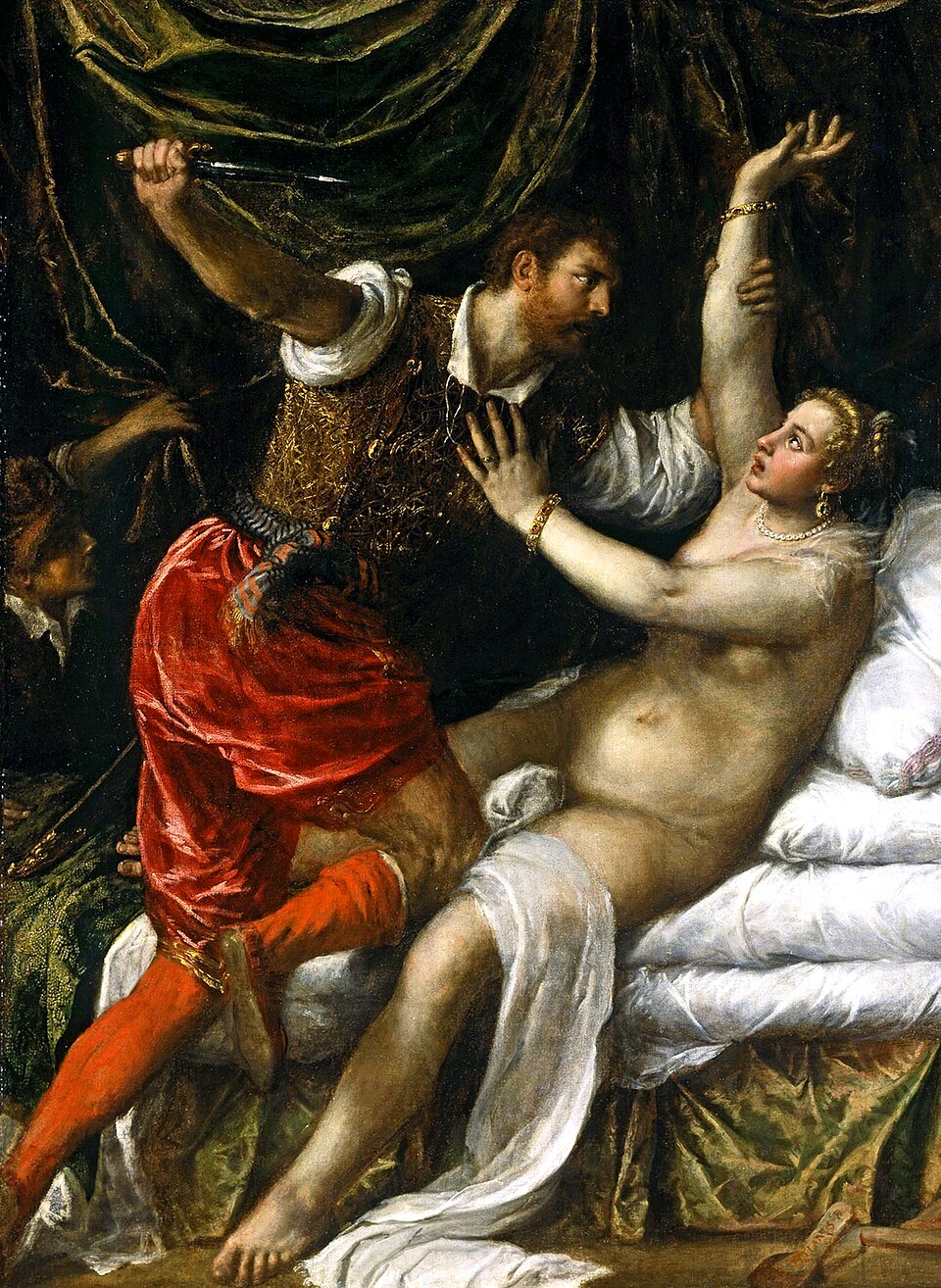
Painted by Titian in his eighties, this near life-size canvas confronts one of the darkest stories of ancient Rome, a crime that, according to tradition, ended a monarchy.
The story behind the painting
Titian completed this painting in 1571, when he was in his eighties, for Philip II of Spain. It is signed and considered to be entirely by his own hand. The subject comes from early Roman history or legend: Sextus Tarquinius, son of the king, threatened Lucretia with death if she refused him, and then raped her. The next day she exposed him and took her own life, which prompted the Romans to overthrow the last king, Tarquin the Proud, and establish the Republic, traditionally in 509 BC. Titian's own title, from a letter, was Lucretia of Rome raped by Tarquinius. In 1568 he wrote that it involved greater labour and artifice than anything he had made for many years.
What to look for
The painting shows the moment of the assault, with a directness that stands out even among the violent subjects of Titian's last years. Tarquin, in rich modern clothes, raises a dagger over Lucretia, who still wears her jewellery in bed. Small touches of pure white, at the tip of the dagger and in both figures' eyes, sharpen the drama. At the left, a head and hand enter the scene: a male slave, recalling Livy's account in which Tarquin threatened to kill both Lucretia and the slave and claim he had caught them together. Look at the slipper at lower right, where Titian signed. X-rays show the dagger arm was once tried lower, and the canvas has been trimmed on all sides.
Meaning and intent
Renaissance artists usually showed either the attack or Lucretia alone at her death. Titian chose the attack, and the article notes that his treatment is closer to Ovid's account than to Livy's. Lucretia belonged to a group of subjects showing women from legend or the Bible who were powerless, or could escape only through death, such as Susanna, Dido and Verginia. These formed a counterpoint to the Power of Women theme, in which women dominate men. Viewed today, the painting is a hard image of coercion and violence, and its force is not softened. As one of the latest documented and fully finished works by Titian, it also helps scholars judge whether other late paintings were ever finished.
Legacy
An engraving by Cornelius Cort dated 1571 popularised the composition at once, and a pirated Roman print reversed it back again. A workshop copy in Bordeaux preserves an earlier design, and an unfinished study in Vienna is debated between Titian and an assistant. The painting itself had a restless history. It stayed in the Spanish royal collection until 1813, when Joseph Bonaparte took it to France, probably to America, and after his death it was sold in London in 1845. It changed hands six times, probably because of its shocking power. Charles Fairfax Murray bought it in 1886, sold it, bought it again, and gave it to the Fitzwilliam Museum in Cambridge in 1918.
Lo sapevi?
- Completed in 1571 for Philip II of Spain, when Titian was in his eighties.
- Titian signed the painting on the slipper at lower right.
- Cornelius Cort's engraving of 1571 spread the composition across Europe.
- Charles Fairfax Murray gave it to the Fitzwilliam Museum, Cambridge, in 1918.
L'artista
Titian (1488-1576)
man · mythological painting · Venetian school · history painting · curtain · Lucretia · clothed male, naked female
Altre opere di Titian
.jpg) Venus of Urbino - Titian (1538)
Venus of Urbino - Titian (1538)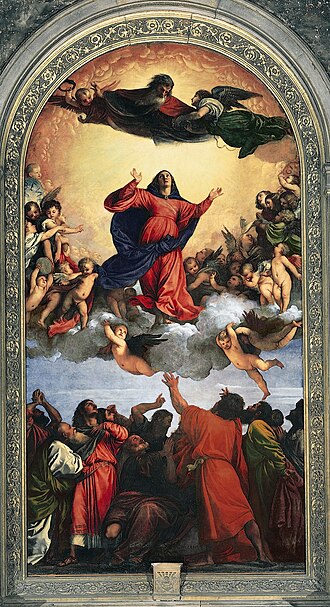 Assumption of the Virgin - Titian (1510s)
FXD.jpg) Sacred and Profane Love - Titian (1510s)
Sacred and Profane Love - Titian (1510s)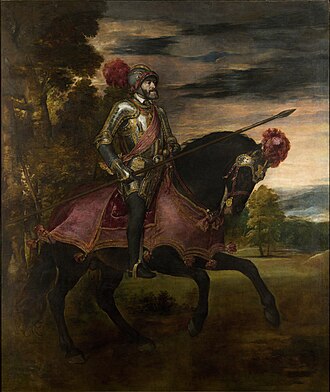 Equestrian Portrait of Charles V - Titian (1548)
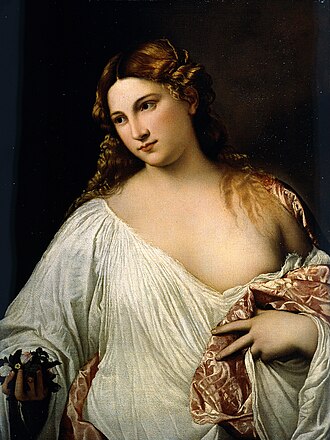 Flora - Titian (1517)
 Allegory of Prudence - Titian (1550)
 Bacchus and Ariadne - Titian (1520s)
%20nave%20left%20-%20Altar%20of%20Madona%20di%20Ca'Pesaro.jpg) Pesaro Madonna - Titian
Pesaro Madonna - Titian