Diana and Actaeon
Titian · 1550s
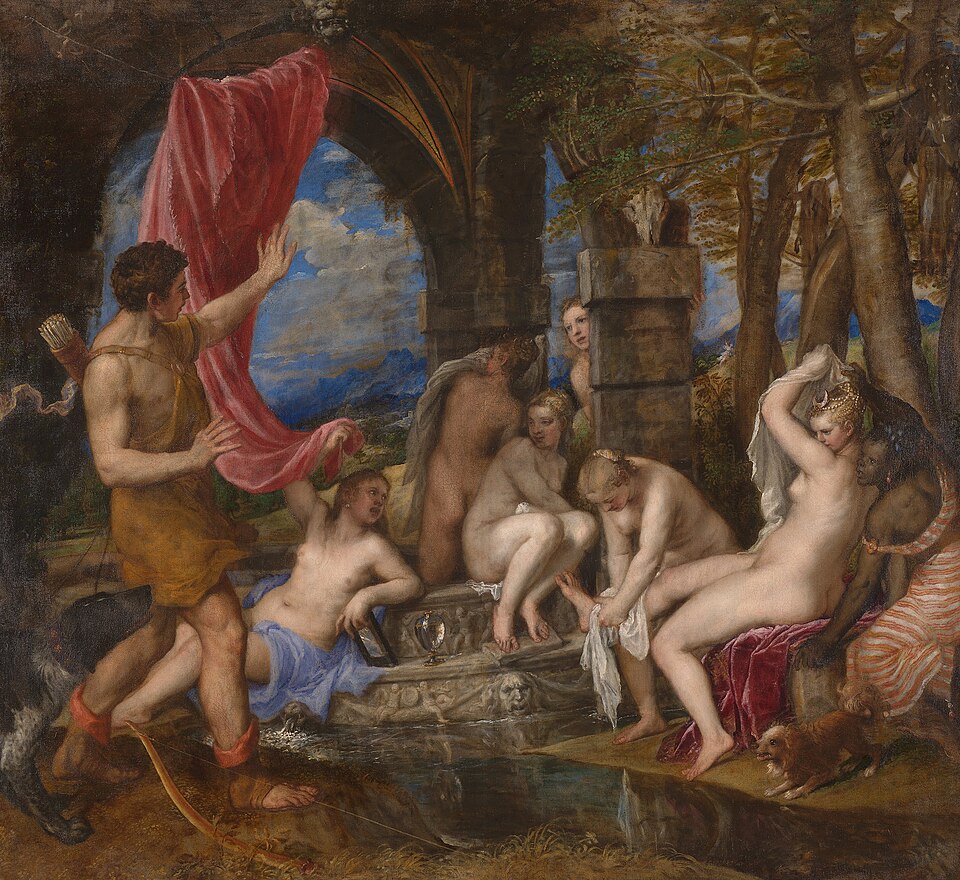
A hunter pushes back a curtain and walks into the one place he should never see: the goddess Diana and her nymphs, bathing. In a heartbeat he will become a stag, torn apart by his own hounds. Titian froze the instant before.
The story behind the painting
Titian finished this large canvas between 1556 and 1559 for Philip II of Spain, as the fourth of seven poesie, mythological scenes drawn from Ovid's Metamorphoses. He painted it at the same time and in the same style as its pair, Diana and Callisto. Ovid tells how Actaeon, grandson of Cadmus, calls off his friends after a hunt in the heat, wanders into the sacred valley of Gargaphia, follows a stream and stumbles into the grotto where Diana and her nymphs are bathing. Furious at being seen naked by a man, the goddess will splash him with water and turn him into a stag. It is counted among Titian's greatest works.
What to look for
Actaeon enters from the left with his dogs crowding at his feet. The startled nymphs in the centre rush to cover themselves while looking to Diana. She sits at the far right, pale, a crescent moon on her head, turning as if to hide, while a dark-skinned maidservant covers her and a small brown dog barks at the intruder. Instead of a natural grotto, Titian sets the scene in the ruined arches of a stone temple. Look up at the column: a stag's skull sits on top, with deer pelts hanging nearby, foretelling Actaeon's fate. A lion's face on the keystone may nod to Venice, Titian's adopted city.
Meaning and intent
The painting holds the exact moment of conflict before Diana acts. The nymphs show a range of reactions and nude poses, and the source reads many details as symbols: the small mirror and Venetian glass carafe on the fountain step, signs of chastity and of clarity; the maid and the dog, emblems of fidelity. X-rays show the maid was first painted white and later made dark, probably to set her apart from the nymphs, and the pairing of pale goddess and dark servant has been read as the light and dark sides of the moon. Titian's signature on the column was mistaken for graffiti and removed by conservators in 1932.
Legacy
Titian later painted the sequel, The Death of Actaeon, now in the National Gallery. In 2008 to 2009 the National Gallery in London and the National Galleries of Scotland campaigned together and acquired this painting from the Bridgewater Collection, so that it and Diana and Callisto stay on view in the United Kingdom. The two galleries now share it, alternating between London and Edinburgh in five-year terms; in late 2024 it hung in Room 29 of the National Gallery. Wikidata gives its size as about 184.5 by 202.2 cm.
Lo sapevi?
- Painted 1556 to 1559 for Philip II of Spain.
- Fourth of Titian's seven poesie, paired with Diana and Callisto.
- A stag's skull on the column foreshadows Actaeon's fate.
- Jointly owned by the National Gallery and National Galleries of Scotland since 2009.
L'artista
Titian (1488-1576)
mythological painting · National Gallery · National Galleries Scotland · Diana
Altre opere di Titian
.jpg) Venus of Urbino - Titian (1538)
Venus of Urbino - Titian (1538)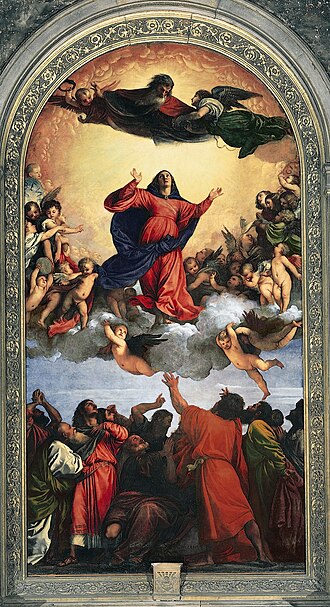 Assumption of the Virgin - Titian (1510s)
FXD.jpg) Sacred and Profane Love - Titian (1510s)
Sacred and Profane Love - Titian (1510s)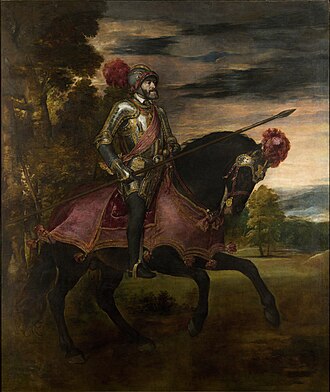 Equestrian Portrait of Charles V - Titian (1548)
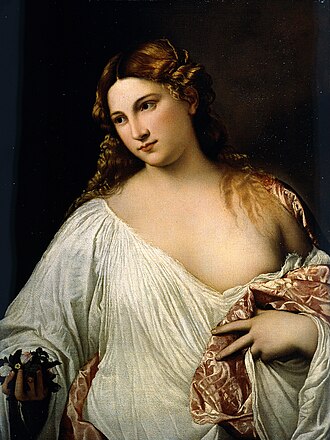 Flora - Titian (1517)
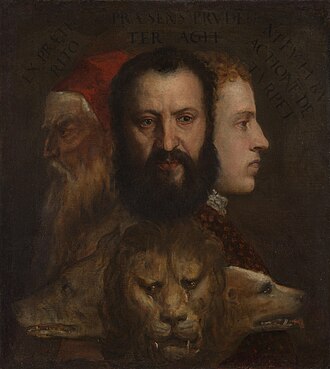 Allegory of Prudence - Titian (1550)
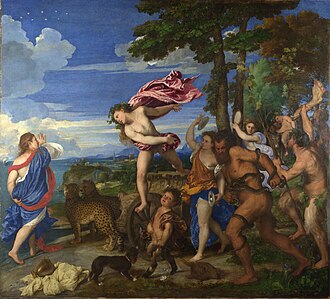 Bacchus and Ariadne - Titian (1520s)
%20nave%20left%20-%20Altar%20of%20Madona%20di%20Ca'Pesaro.jpg) Pesaro Madonna - Titian
Pesaro Madonna - Titian
Dipinti di artisti collegati
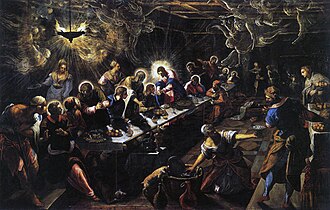 Last Supper - Jacopo Tintoretto (1563)
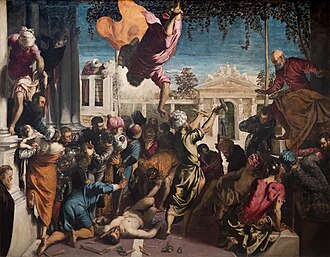 Miracle of the Slave - Jacopo Tintoretto (1540s)