Spring
Edvard Munch · 1889
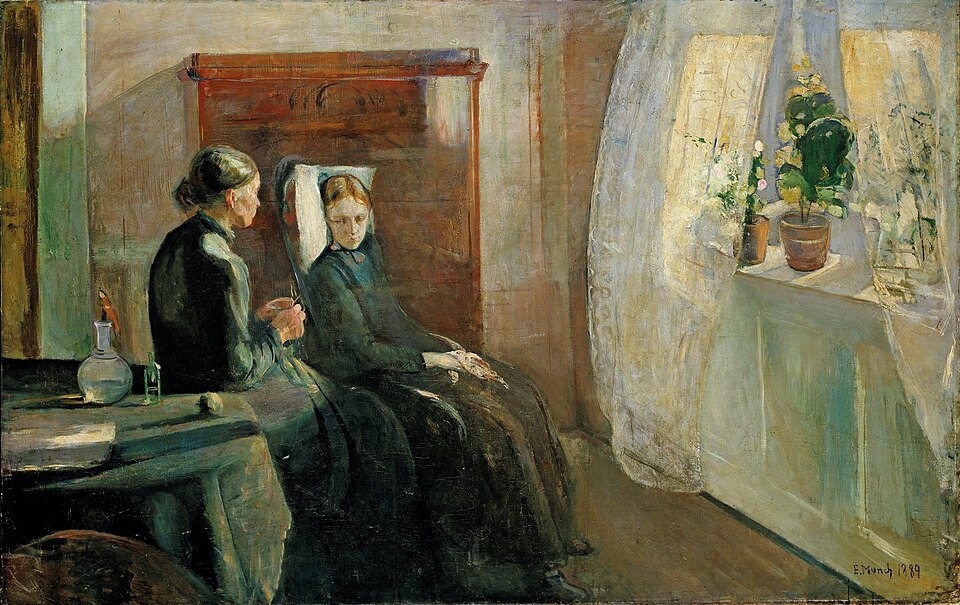
A pale, sick girl rests in an armchair beside an older woman, while spring sun and wind push the curtains into the room. Munch returned to the theme of The Sick Child, but this time he let the light in.
The story behind the painting
Illness and death marked Munch from childhood: his mother died of tuberculosis in 1868 when he was five, and his sister Sophie died of the same disease in 1877, aged fifteen. He said that sickness and death lived in his parents' home and shaped his art, and that in the very armchair shown here his family had sat winter after winter longing for the sun. Spring takes up the motif of The Sick Child of 1885 to 1886. It is usually dated 1889, as in Gerd Woll's 2008 catalogue raisonné, and was first exhibited that year, but Munch's own notes give 1887, which Arne Eggum finds a better fit with his development. Ulrich Bischoff links it to Munch's recovery from a serious illness early in 1889.
What to look for
A young girl sits in an armchair, her head on a white pillow, turned away from the daylight. A large brown cupboard frames her. Beside her an older woman, perhaps her mother, knits; her healthy colour contrasts with the girl's very pale face. The girl holds a handkerchief with red traces of blood. On a round table at lower left are a carafe and a medicine bottle, opposite green potted plants on the sunny windowsill, where white curtains billow in the spring wind. The left half is dark greys and browns, the right half bright whites, yellows and greens.
Meaning and intent
Critics disagree. Uwe M. Schneede saw Munch wanting to prove a sense for happier endings, and the window is key: dark and nearly out of view in The Sick Child, here it promises life. Josef Paul Hodin saw the billowing curtains as sails of hope and dreams, and Bischoff as the life-giving power of fresh air. Arne Eggum instead sees a monumental, naturalistic death motif, pointing to the signal red blood. Bischoff also reads the halves as Naturalism set against Impressionism, while Hodin found the whole picture still caught in a lyrical Naturalism.
Legacy
The naturalistic and Impressionist manner of this large painting is often seen as a response to the scandal caused by the rougher Sick Child, and it is considered a showpiece in the academic style. Looking back, Munch wrote that with Spring, the sick girl and mother at the open window with the sun streaming in, he took leave of Impressionism and Realism. It is held by the National Museum in Oslo.
Lo sapevi?
- Takes up the motif of The Sick Child of 1885-1886.
- Usually dated 1889; Munch's notes say 1887.
- The handkerchief shows traces of blood.
- Held by the National Museum in Oslo.
L'artista
Edvard Munch (1863-1944)
genre art · National Museum of Art, Architecture and Design · National Gallery of Norway
Altre opere di Edvard Munch
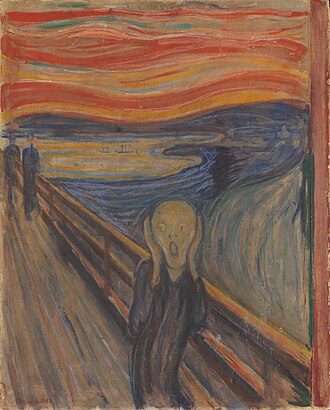 The Scream - Edvard Munch (1893)
 Dance of Life - Edvard Munch
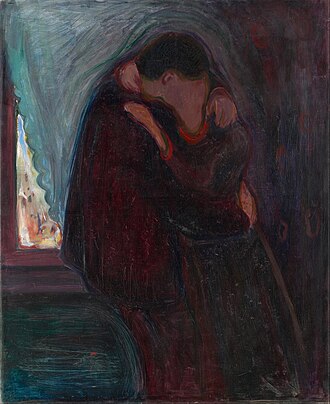 The Kiss - Edvard Munch (1897)
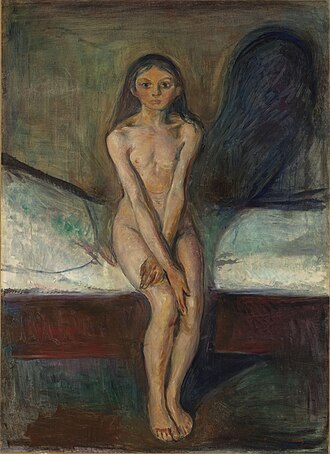 Puberty - Edvard Munch (1895)
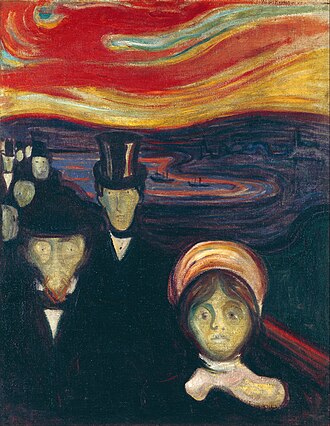 Anxiety - Edvard Munch (1894)
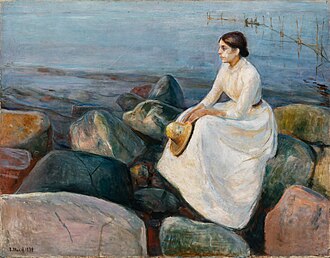 Inger on the Beach - Edvard Munch (1889)
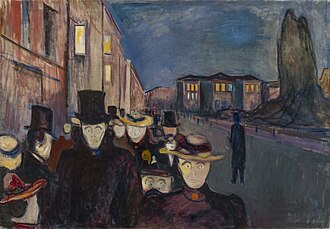 Evening on Karl Johan - Edvard Munch (1892)
 Night in Saint-Cloud - Edvard Munch (1890)