Rockox Triptych
Peter Paul Rubens · 1613
%20(cropped).jpg)
Christ shows his wounds to doubting followers, while Antwerp's mayor and his wife kneel on the side panels. Rubens left out one wound, and scholars still debate which Gospel story he meant to paint.
The story behind the painting
Around 1613 Nicolaas Rockox and his wife Adriana Perez commissioned this triptych for their funerary monument in the Recollects church in Antwerp. Rockox was a mayor of Antwerp and a close friend and important patron of Rubens. Adriana Perez was the granddaughter of Spanish conversos who had come to Antwerp in the early sixteenth century. The date in the upper left corner of the left panel was changed from 1613 to 1615, presumably because Rubens began in 1613 and finished in 1615, when the work was hung in the Lady Chapel behind the choir. The epitaph was commissioned while both patrons were still alive.
What to look for
The side panels show Rockox and his wife holding attributes of their faith, a bible and a rosary, and the coats of arms of both families appear on the outer panels. In the centre, Christ shows the crucifixion wounds in his hands and feet to apostles who watch intently. Look closely at his side: the wound there is missing. For Christ's body Rubens was probably inspired by the ancient statue known as the Hermes Belvedere, which he had studied in Rome and whose beauty and proportions he had praised.
Meaning and intent
The central scene was traditionally read as the incredulity of Thomas, who would not believe in the risen Jesus until he touched his wounds, and the composition does resemble Caravaggio's treatment of that story. Recent scholarship argues instead that Rubens painted Christ's first appearance to the apostles in Luke 24, where Christ shows only his hands and feet and the disciples never touch him. Leaving out the side wound would follow Luke strictly, and may reflect the scepticism of the Antwerp elite about religious certainty, and the need for a leap of faith rather than physical proof.
Legacy
The triptych was finished before the deaths of the couple it honours, which was not unusual for funerary monuments. In 1794 French invaders confiscated it and took it to the Louvre in Paris. In 1815 it was returned to Antwerp and transferred to the newly established museum there. It belongs today to the Royal Museum of Fine Arts Antwerp, and Wikidata also lists it in the Flemish Art Collection. More than four centuries on, its quiet argument about doubt and faith still divides those who study it.
Lo sapevi?
- Commissioned around 1613 by Antwerp mayor Nicolaas Rockox and Adriana Perez.
- The date was changed from 1613 to 1615.
- Taken to the Louvre in 1794, returned to Antwerp in 1815.
- Christ's side wound is deliberately absent.
L'artista
Peter Paul Rubens (1577-1640)
religious art · man · Jesus Christ · gaze towards the viewer · Royal Museum of Fine Arts Antwerp · Vlaamse Kunstcollectie
Altre opere di Peter Paul Rubens
.jpg) The Elevation of the Cross - Peter Paul Rubens (1609)
The Elevation of the Cross - Peter Paul Rubens (1609)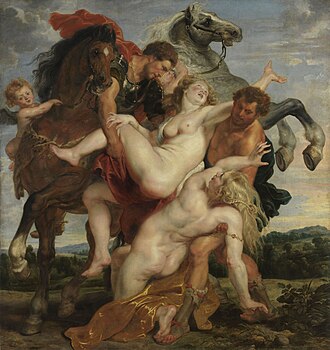 The Rape of the Daughters of Leucippus - Peter Paul Rubens (1618)
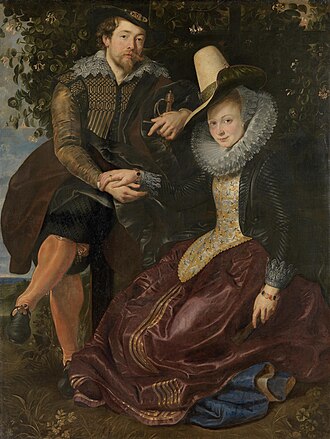 Rubens and Isabella Brant in the honeysuckle bower - Peter Paul Rubens (1600s)
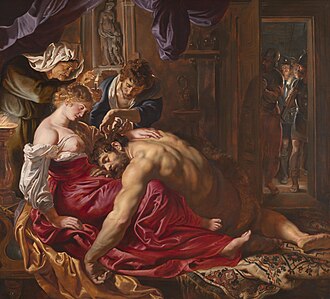 Samson and Delilah - Peter Paul Rubens (1600s)
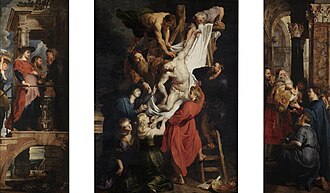 The Descent from the Cross - Peter Paul Rubens (1611)
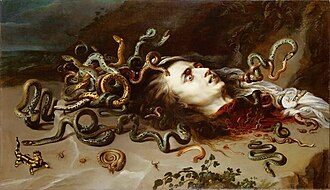 Head of Medusa - Peter Paul Rubens (1618)
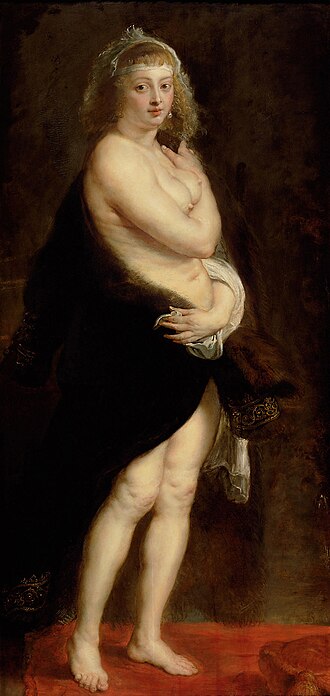 Helena Fourment in a Fur Robe - Peter Paul Rubens (1638)
.jpg) The Garden of Love - Peter Paul Rubens (1632)
The Garden of Love - Peter Paul Rubens (1632)
Dipinti di artisti collegati
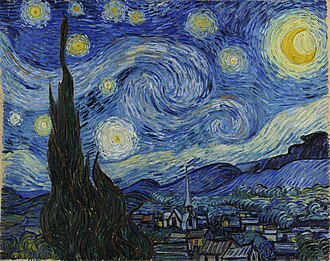 The Starry Night - Vincent van Gogh (1889)
.jpg) Café Terrace at Night - Vincent van Gogh (1888)
Café Terrace at Night - Vincent van Gogh (1888)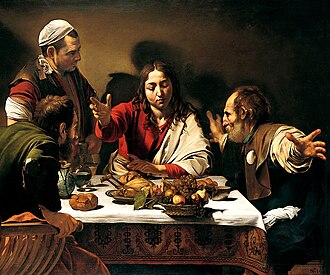 Supper at Emmaus - Caravaggio (1601)
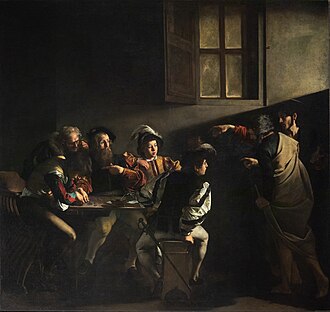 La vocazione di San Matteo - Caravaggio (1609)
 Las Meninas - Diego Velázquez (1656)
 The Surrender of Brea - Diego Velázquez (1635)
%20-%20Google%20Art%20Project.jpg) Charles I in Three Positions - Anthony van Dyck (1635)
Charles I in Three Positions - Anthony van Dyck (1635)%20with%20M.%20de%20St%20Antoine%20-%20Google%20Art%20Project.jpg) Charles I (1600-1649) with M. de St Antoine - Anthony van Dyck (1636)
Charles I (1600-1649) with M. de St Antoine - Anthony van Dyck (1636) The Night Watch - Rembrandt van Rijn (1642)
 Self-Portrait - Rembrandt van Rijn (1659)
 Girl with a Pearl Earring - Johannes Vermeer (1665)
 The Milkmaid - Johannes Vermeer (c. 1658)