Portrait of Tommaso di Folco Portinari
Hans Memling · 1470
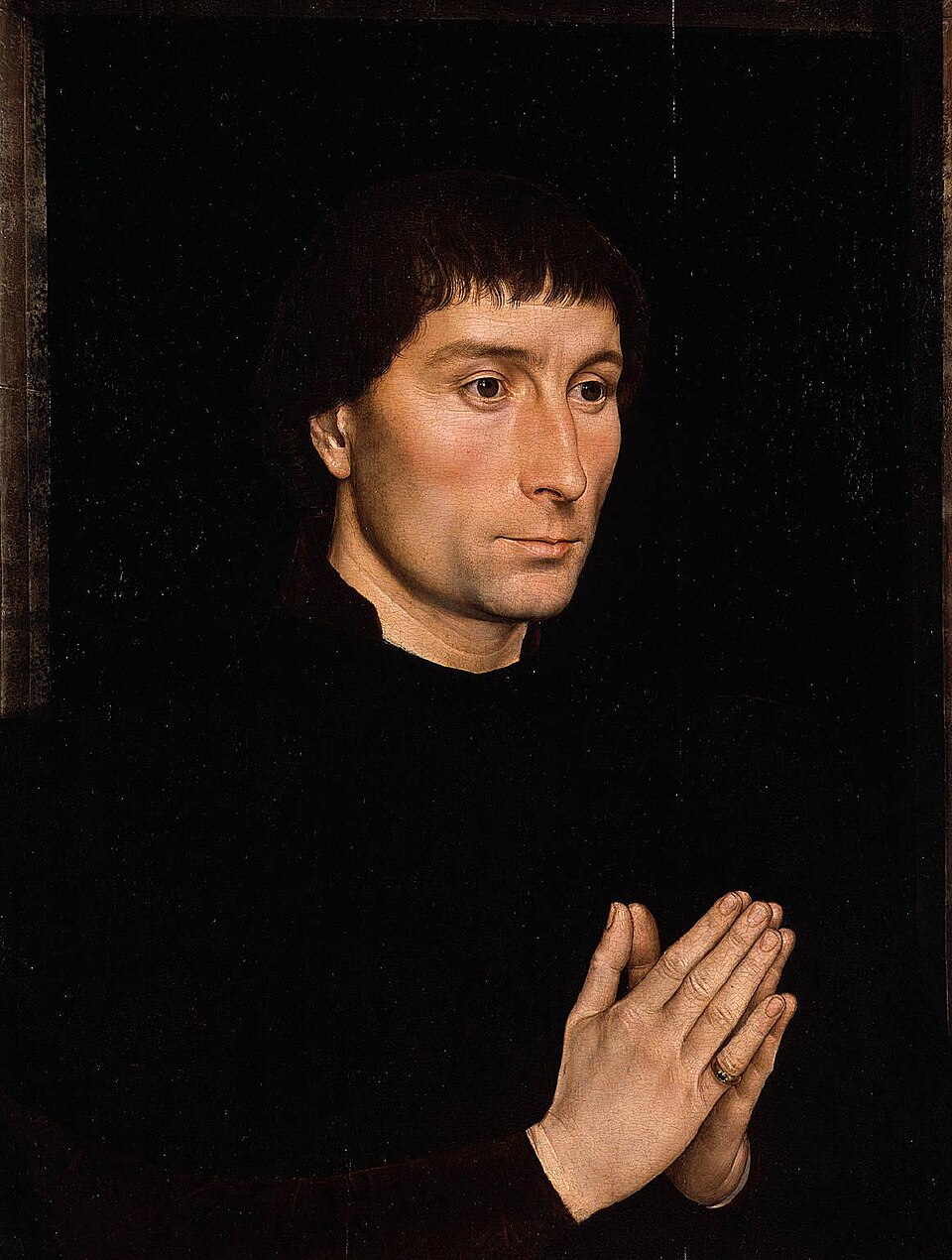
A Florentine banker in Bruges clasps his hands in prayer against a dark ground. Memling painted him as one wing of a small family altarpiece, made around the time of his wedding.
The story behind the painting
Tommaso Portinari was a Florentine sent to Bruges around 1440 to work in the local branch of the Medici bank, and he rose to manage it around 1465. He was a patron of Hugo van der Goes, who painted the Portinari Altarpiece, and also of Hans Memling. This small triptych was probably commissioned in 1470 to celebrate his wedding to Maria, for the couple's private devotions in their grand home in Bruges, the Bladelinhof. Wikipedia gives the panel as 44.1 by 33.7 cm, oil on oak, while Wikidata records 42 by 31 cm.
What to look for
Portinari is shown half-length, in three-quarter view, turned to his right and set against a dark background. He wears a black cape, with the collar and sleeves of a dark robe showing beneath it, the typical dress of the upper middle class of his time. His hands are joined as if in prayer, his elbows resting on a parapet at or just below the lower edge of the frame. Underdrawing shows that Memling changed the position of the hands while painting, making them less vertical than he first planned.
Meaning and intent
The portrait was never meant to stand alone. With Memling's portrait of Maria Portinari it formed the two wings of a triptych, now taken apart. The central panel is believed to have shown the Madonna and Child and is now lost; it may be Memling's Virgin and Child in the National Gallery, London. The husband and wife would have turned in prayer toward the Virgin between them. The hopeful young banker in the picture later made risky, unsecured loans to Charles the Bold that led the branch into insolvency, and the couple returned to Florence in 1497.
Legacy
In 1544 Tommaso's son Francesco left the work to the Hospital of Santa Maria Nuova, where it was described as a small tabernacle with three hinged panels showing the Virgin and the testator's father and mother. It stayed there until Napoleonic times and later belonged to the Demidoff collection. It is not clear when the centre was separated from the wings. The two portraits, once attributed to Dieric Bouts, were shown at the Primitifs flamands exhibition in Bruges in 1902, and Benjamin Altman left them to the Metropolitan Museum of Art when he died in 1913.
Lo sapevi?
- Oil on oak panel, made around 1470.
- Left wing of a dismantled triptych with Maria Portinari's portrait.
- The central Madonna and Child panel is lost.
- Bequeathed to the Metropolitan Museum of Art by Benjamin Altman in 1913.
L'artista
Hans Memling (1435-1494)
portrait · man · Metropolitan Museum of Art · Early Netherlandish painting
Altre opere di Hans Memling
 Annunciation - Hans Memling (1480s)
 Scenes from the Passion of Christ - Hans Memling (1470)
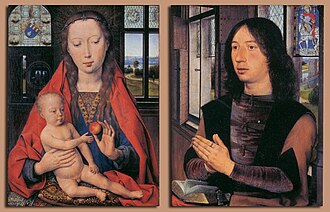 Diptych of Maarten van Nieuwenhove - Hans Memling (1487)
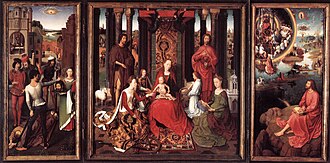 St John Altarpiece - Hans Memling (1479)
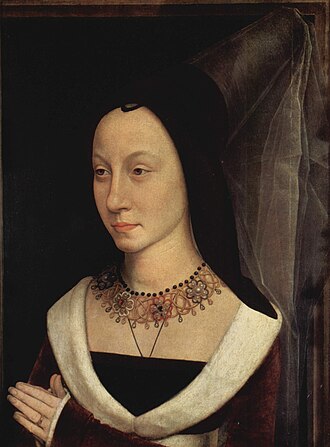 Portrait of Maria Portinari - Hans Memling (1470)
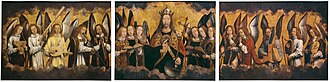 Christ with singing and music-making Angels - Hans Memling (1480s)
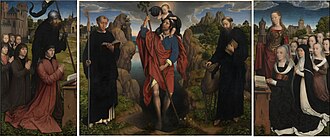 Moreel Triptych - Hans Memling (1484)
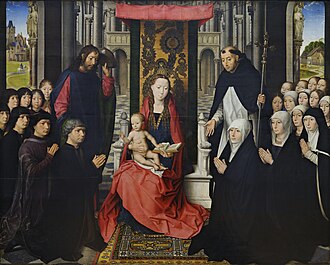 Madonna of Jacob Floreins - Hans Memling (1485)
Dipinti di artisti collegati
 The Descent from the Cross - Rogier van der Weyden (1440s)
 Portrait of a Lady - Rogier van der Weyden (1460)
 Arnolfini Portrait - Jan van Eyck (1434)
 Ghent Altarpiece - Jan van Eyck (1432)
 The Garden of Earthly Delights - Hieronymus Bosch
 Ship of Fools - Hieronymus Bosch (1500s)
 The Hunters in the Snow - Pieter Bruegel the Elder (1565)
 Netherlandish Proverbs - Pieter Bruegel the Elder (1551)