Portrait of the Infante Carlos María Isidro of Spain
Francisco Goya · 1800
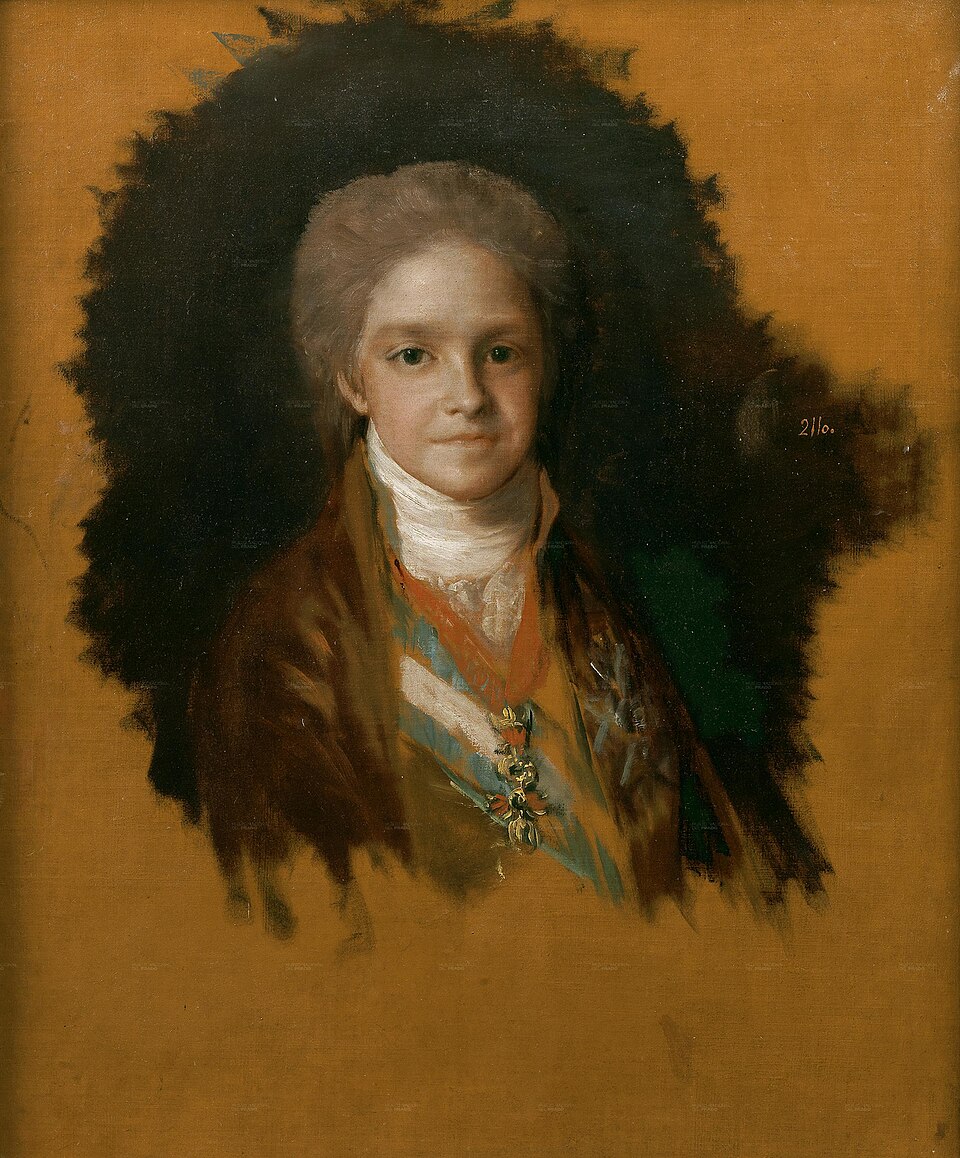
A young prince with dark eyes and a full lower lip, painted fast on a reddish ground in the summer of 1800. Goya made this study for his great royal family portrait, and here the boy looks more alive than he would in the final canvas.
The story behind the painting
In the summer of 1800, at the Royal Palace of Aranjuez, Goya painted ten studies from life in preparation for The Family of Charles IV. Queen Maria Luisa of Parma wished him to portray each member of the royal family separately, so that no one would have to pose for long hours together. This oil sketch shows the Infante Carlos María Isidro, son of Charles IV and Maria Luisa. Deeply religious and traditionalist, he would become, on the death of his brother Ferdinand VII, the first Carlist pretender to the Spanish throne as Charles V, which gave rise to the Carlist Wars.
What to look for
The prince is shown at bust length, in a high collared shirt, a lace jabot and a brown coat, about 74 by 60 cm. He wears the red sash of the Golden Fleece and the ribbons of the Order of Charles III and of Saint Januarius. Like all the sketches of the series, it is built on a red ground; the features and the main masses are first laid in a single tone, and shades of colour are added once planes and proportions are set. Look at the dark eyes, the small nose, the thin upper lip and the fuller lower one, all caught in loose, vibrant strokes.
Meaning and intent
The French Wikipedia account describes a sketch that seeks to convince without idealising, a task left to the finished canvas. Goya conveys the vitality and the feeling in the young prince's face. In the final group portrait several things changed: the image is more diffuse and the face frozen, unlike the cheerful and sincere character of the study. The prince's complicated psychology is softened there too, and he seems to take refuge behind the figure of his brother Ferdinand, the future king. Seen side by side, the study shows what the official picture chose to hide.
Legacy
The sketch came from the royal collections and was recorded in the Royal Palace of Madrid in 1814. It entered the Prado before 1834, since it appears in the Royal Museum's inventory that year, and it was first listed in the Prado's official catalogue in 1872. It remains in the Museo del Prado in Madrid, where it offers a rare private glimpse of a prince whose later claim to the throne would divide Spain.
Lo sapevi?
- One of ten studies from life painted at Aranjuez in summer 1800.
- Prepared for The Family of Charles IV.
- The sitter later became the first Carlist pretender, as Charles V.
- In the Prado since before 1834.
L'artista
Francisco Goya (1746-1828)
portrait · Museo del Prado · 1795-1820 in Western fashion · Golden Fleece · Order of Saint Januarius
Altre opere di Francisco Goya
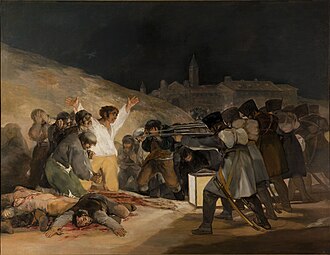 The Third of May 1808 - Francisco Goya (1814)
.jpg) La maja nuda - Francisco Goya (1800)
La maja nuda - Francisco Goya (1800).jpg) Saturn Devouring His Son - Francisco Goya (1819)
Saturn Devouring His Son - Francisco Goya (1819)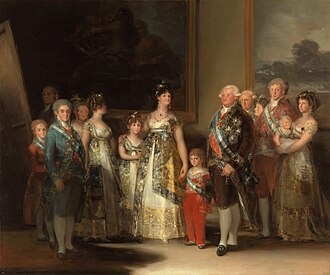 La famiglia di Carlo IV - Francisco Goya (1800)
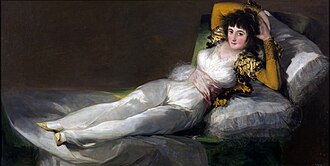 The Clothed Maja - Francisco Goya (1800)
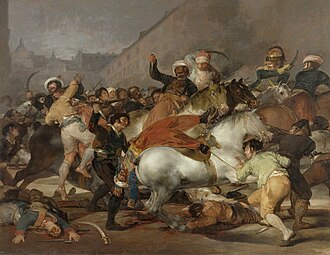 Il 2 maggio 1808 a Madrid - Francisco Goya (1814)
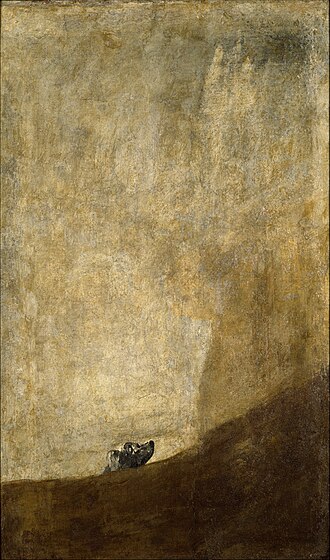 Cane semiaffondato - Francisco Goya (1819)
 Il sabba delle streghe - Francisco Goya (1820s)
Dipinti di artisti collegati
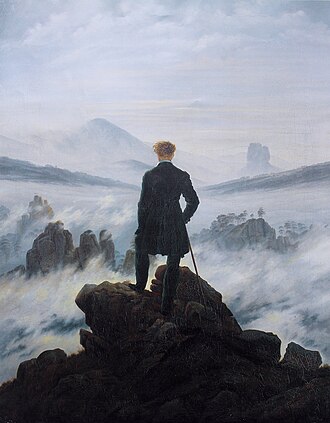 Wanderer above the Sea of Fog - Caspar David Friedrich (c. 1818)
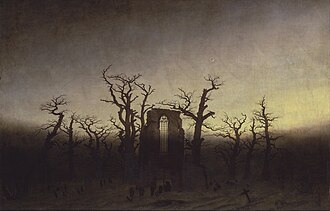 The Abbey in the Oakwood - Caspar David Friedrich (1800s)
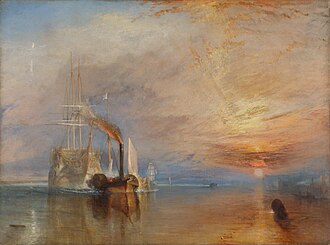 The Fighting Temeraire - J. M. W. Turner (1839)
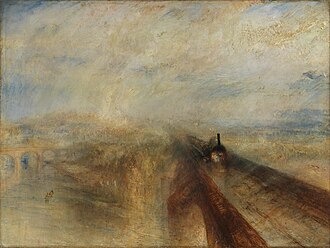 Rain, Steam and Speed - The Great Western Railway - J. M. W. Turner (1844)
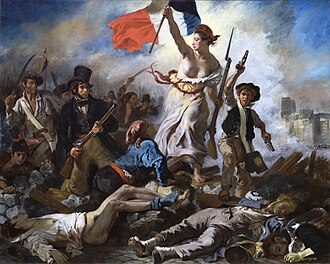 Liberty Leading the People - Eugène Delacroix (1830)
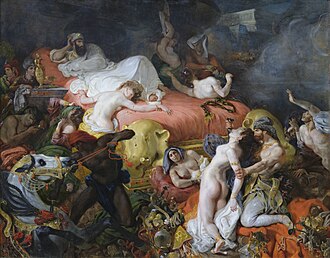 Death of Sardanapalus - Eugène Delacroix (1827)