Portrait of the Duke of Wellington
Francisco Goya · 1810s
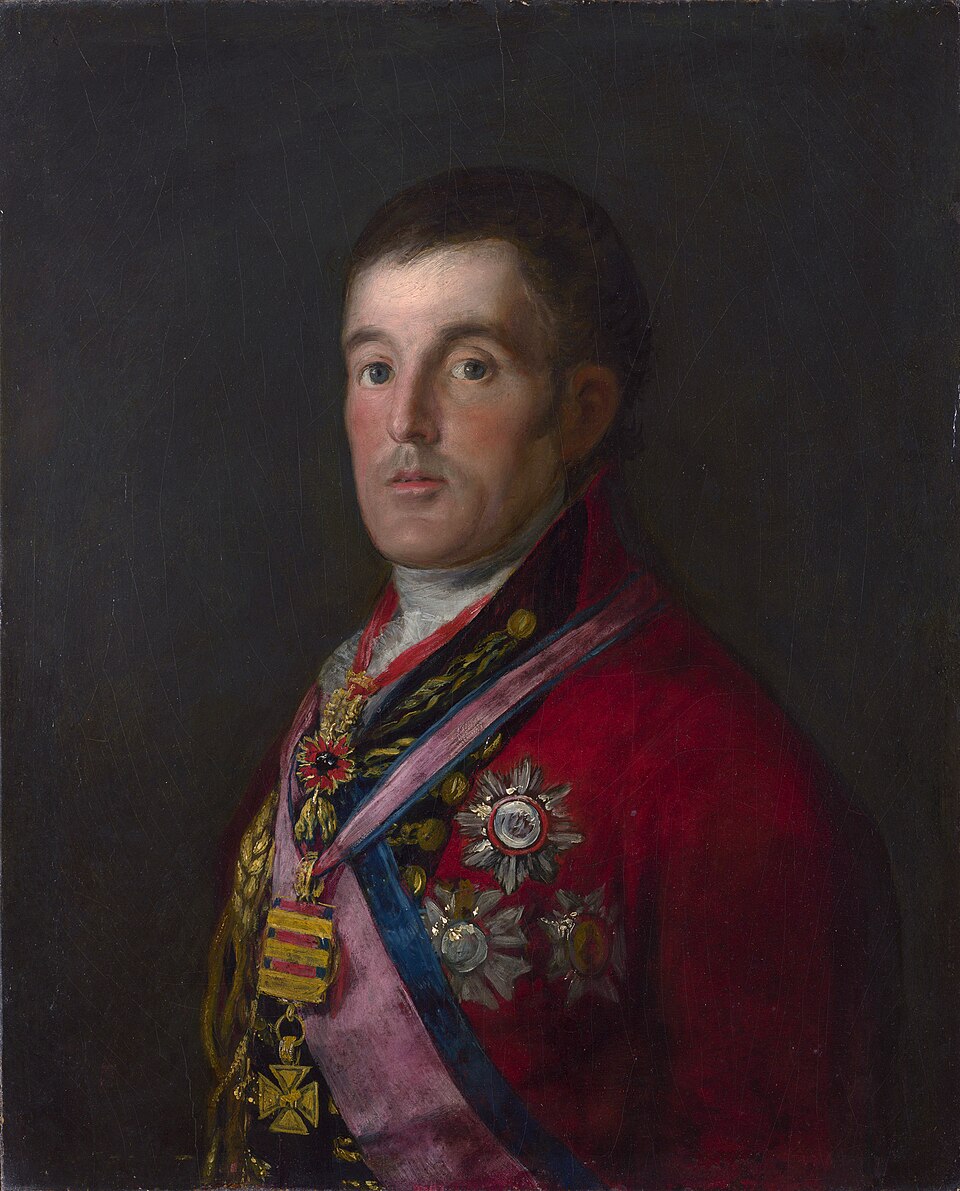
A tired general in scarlet, his chest crowded with stars and medals, painted by Goya in Madrid in 1812. Nineteen days after it went on show in London in 1961, it was stolen, and the story of its return became a film.
The story behind the painting
Arthur Wellesley, 1st Duke of Wellington, won the Battle of Salamanca on 22 July 1812 and entered Madrid in triumph on 12 August. Goya began this portrait in August 1812, probably from life at sittings in Madrid, in oil on a mahogany panel. He painted Wellington three times in all, and in 1812 also made a chalk drawing, now in the British Museum, and a large equestrian portrait now at Apsley House. In 1814 Goya returned to the panel and changed it, dressing the duke in full dress uniform with black, gold braided lapels and adding honours he had received in the meantime.
What to look for
This is a half-length portrait, about 64 by 52 cm, the body in three-quarter profile and the head turned slightly towards us. He stands upright, head high, perhaps to make up for a modest stature. The face is carefully painted, but much of the rest was done fast, the orders outlined in a few strokes. Around the eyes and mouth the brown priming shows through to strengthen light and dark. Three stars sit on his left breast: the Bath, the Portuguese Tower and Sword, and the Spanish San Fernando. The Golden Fleece hangs on a red ribbon, and the Military Gold Cross shows three clasps, though he was entitled to nine.
Meaning and intent
For all the honours, Goya shows a man worn out by long campaigning rather than a triumphant hero. The three clasps may mark only the battles fought before the portrait was begun in summer 1812, which ties the image to a precise moment in the Peninsular War. The quick, energetic brushwork beside the careful face keeps attention on the person inside the uniform. When Goya reworked the panel in 1814 to add new honours, the portrait kept pace with the general's rising fame, recording the Golden Fleece and the Military Gold Cross he had received in the meantime.
Legacy
The duke acquired the painting, and it later passed to Louisa Catherine Caton, wife of the 7th Duke of Leeds, then by descent to the 11th Duke of Leeds. At Sotheby's in 1961 it was secured for the National Gallery in London with help from the Wolfson Foundation and a special Treasury grant, and first shown on 2 August 1961. On 21 August it was stolen by John Bunton, son of the bus driver Kempton Bunton. Four years later Kempton returned it through a left luggage office at Birmingham New Street station. At trial he was cleared of stealing the painting but convicted for the frame. The theft appears in the 1962 Bond film Dr. No and in the 2022 film The Duke.
Lo sapevi?
- Begun in Madrid in August 1812, altered by Goya in 1814.
- Oil on mahogany panel, about 64 by 52 cm.
- Stolen from the National Gallery on 21 August 1961, returned four years later.
- Shown in the lair of Dr. No in the 1962 Bond film.
L'artista
Francisco Goya (1746-1828)
portrait · National Gallery · 1795-1820 in Western fashion
Altre opere di Francisco Goya
 The Third of May 1808 - Francisco Goya (1814)
 La maja nuda - Francisco Goya (1800)
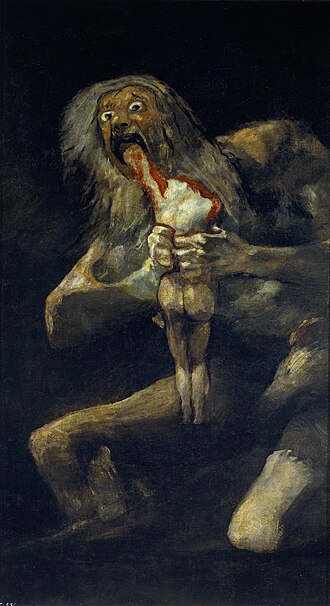 Saturn Devouring His Son - Francisco Goya (1819)
 La famiglia di Carlo IV - Francisco Goya (1800)
 The Clothed Maja - Francisco Goya (1800)
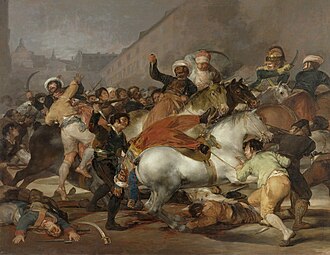 Il 2 maggio 1808 a Madrid - Francisco Goya (1814)
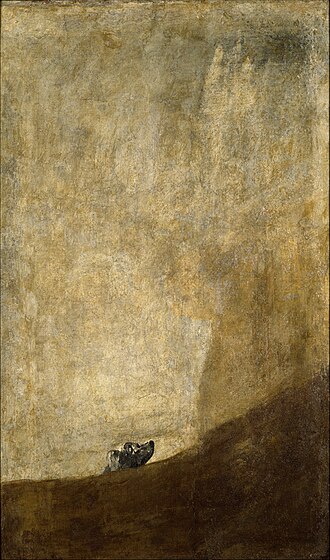 Cane semiaffondato - Francisco Goya (1819)
 Il sabba delle streghe - Francisco Goya (1820s)
Dipinti di artisti collegati
 Wanderer above the Sea of Fog - Caspar David Friedrich (c. 1818)
 The Abbey in the Oakwood - Caspar David Friedrich (1800s)
 Liberty Leading the People - Eugène Delacroix (1830)
 Death of Sardanapalus - Eugène Delacroix (1827)
 The Fighting Temeraire - J. M. W. Turner (1839)
 Rain, Steam and Speed - The Great Western Railway - J. M. W. Turner (1844)
 The Blue Boy - Thomas Gainsborough (1770)
 Mr and Mrs Andrews - Thomas Gainsborough (1748)