Portrait of Omai
Joshua Reynolds · 1776
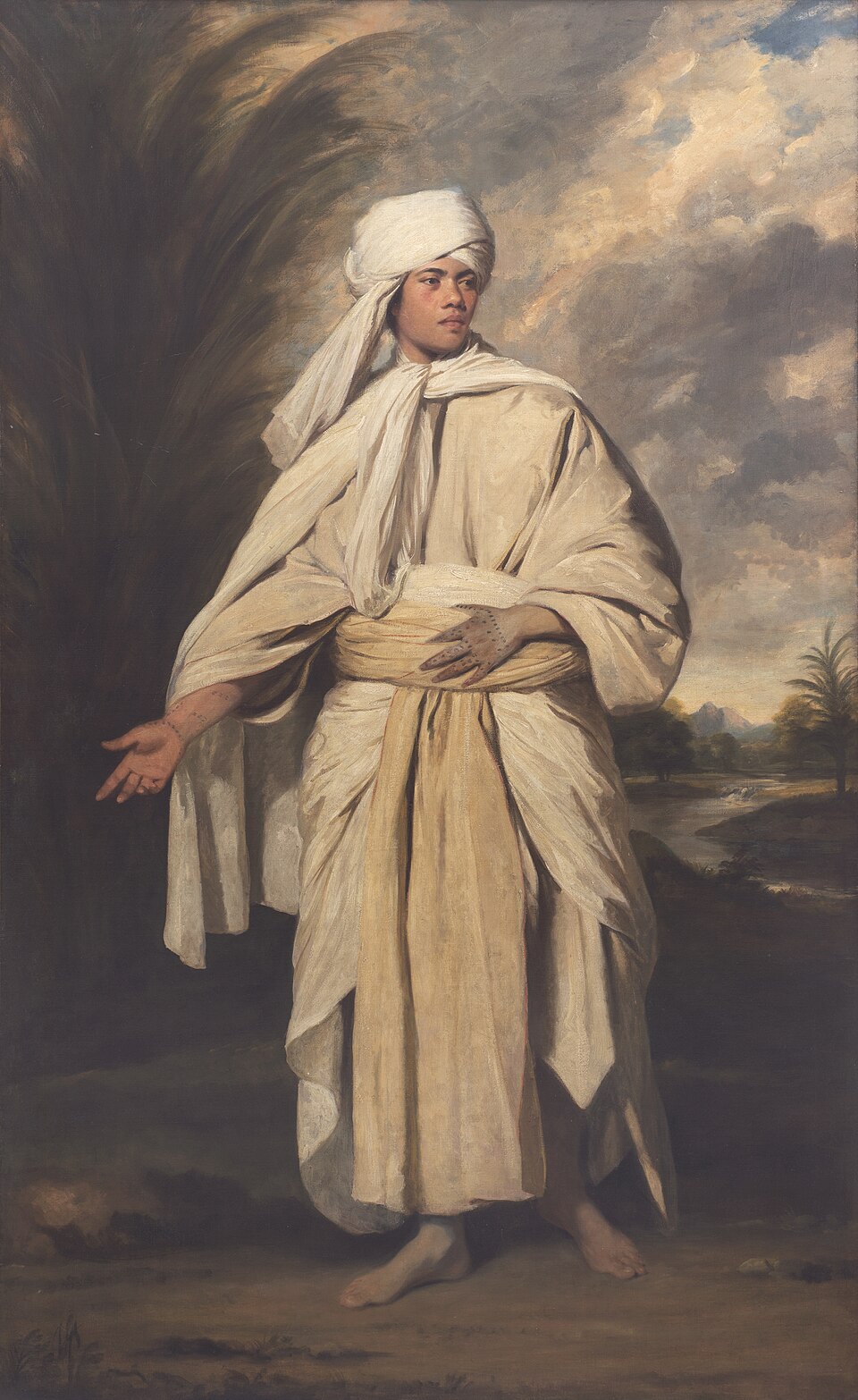
A young man from the Pacific stands barefoot in an English dream of a landscape, robed in white, one hand raised like a statesman. Reynolds painted Mai for no client at all, and the picture has been fought over ever since.
The story behind the painting
Mai, known in English as Omai, left Raiatea in the Society Islands aboard HMS Adventure under Commander Tobias Furneaux, the ship that sailed with Captain James Cook on his second Pacific voyage. He reached Great Britain in July 1774. London society admired him: he stayed with Sir Joseph Banks, President of the Royal Society, and met King George III, Samuel Johnson and Frances Burney. Reynolds painted him around 1775, without any commission. Mai sailed home with Cook's third voyage in July 1776, reached Huahine in 1777, stayed on after Cook left, and died there in late 1779. Wikidata dates the portrait 1776, the year it was exhibited.
What to look for
The canvas is large, about 236 by 145.5 cm according to Wikidata, while Wikipedia gives 230 by 140 cm. Mai stands alone and barefoot in a rural, Arcadian landscape with unusual palm-like trees, and the space seems to recede as he moves across it. He wears flowing white robes resembling ceremonial Tahitian dress, linked to nobility and the priestly classes. The sash at his waist is a slightly creamier white with light red edging, perhaps meant as tapa, the Polynesian bark cloth. Look at his raised hand: the gesture shows the ritual tattoos on his hands, connected with coming of age rites in the worship of the god Oro.
Meaning and intent
Reynolds presented Mai as an exotic, idealized figure, echoing Rousseau's idea of the noble savage. His pose, the adlocutio gesture of an orator, comes from the ancient Apollo Belvedere, which Reynolds had first borrowed in 1752 for his portrait of Commodore Augustus Keppel after a visit to Rome. The classical pose gives Mai the bearing of a patrician. It has been called the first portrait of a person of colour painted with dignity, grandeur and agency. At the Royal Academy's eighth exhibition in 1776, among twelve portraits Reynolds showed, it was greatly acclaimed and praised as a good likeness.
Legacy
The painting stayed in Reynolds's studio until his death in 1792, then passed to the Earl of Carlisle and hung in the Reynolds Room at Castle Howard for about two hundred years, unseen in public exhibitions until 1954. A pencil study survives in the National Library of Australia and an oval oil sketch at Yale, and Johann Jacobe made a mezzotint of it in 1780. After 2001 the portrait passed through private hands, export bars and long loans, including years at the National Gallery of Ireland. In 2023 the National Portrait Gallery in London and the Getty Museum in Los Angeles announced they would jointly acquire and share it.
Lo sapevi?
- Painted by Reynolds around 1775 without a commission.
- Shown at the Royal Academy in 1776 among twelve Reynolds portraits.
- Hung at Castle Howard for about two hundred years.
- Now jointly owned by the National Portrait Gallery and the Getty.
L'artista
Joshua Reynolds (1723-1792)
portrait · J. Paul Getty Museum · National Portrait Gallery
Altre opere di Joshua Reynolds
 The Ladies Waldegrave - Joshua Reynolds (1780)
 Captain George K. H. Coussmaker - Joshua Reynolds (1782)
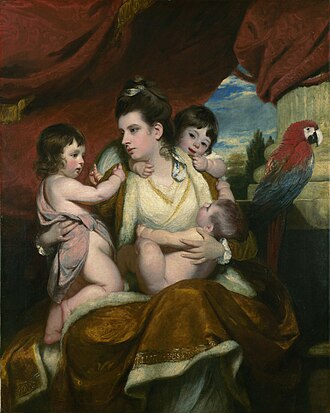 Lady Cockburn and Her Three Eldest Sons - Joshua Reynolds (1773)
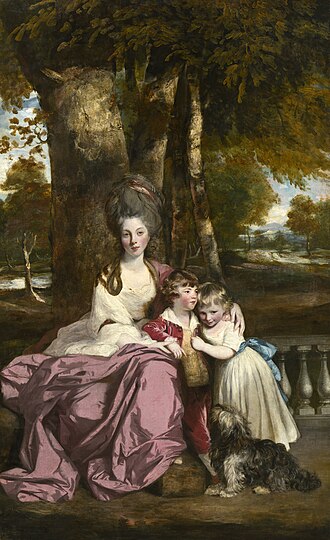 Lady Elizabeth Delmé and Her Children - Joshua Reynolds (1770s)
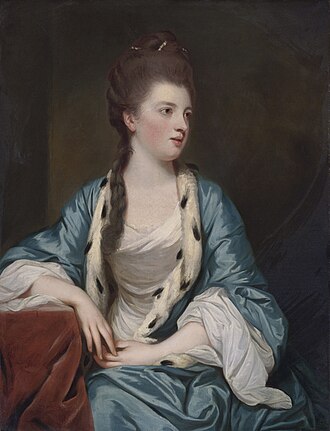 Elizabeth Kerr, Marchioness of Lothian - Joshua Reynolds (1769)
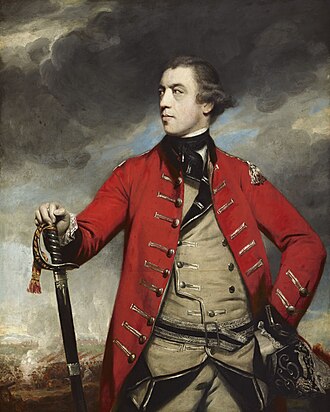 General John Burgoyne - Joshua Reynolds (1766)
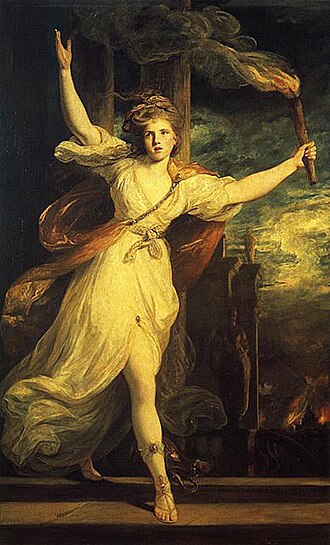 Thaïs - Joshua Reynolds (1781)
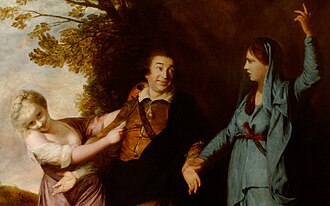 David Garrick Between Tragedy and Comedy - Joshua Reynolds (1761)
Dipinti di artisti collegati
 The Fighting Temeraire - J. M. W. Turner (1839)
 Rain, Steam and Speed - The Great Western Railway - J. M. W. Turner (1844)
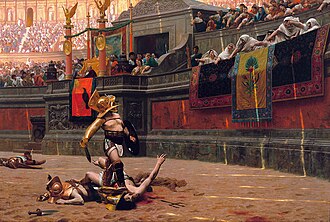 Pollice Verso - Jean-Léon Gérôme (1872)
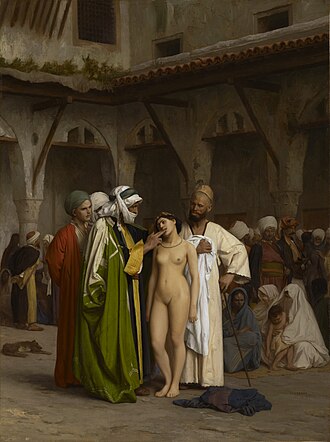 The Slave Market - Jean-Léon Gérôme (1866)
 Luncheon on the Grass - Édouard Manet (1863)
 Olympia - Édouard Manet (1863)
 L'Origine du monde - Gustave Courbet (1866)
 A Burial at Ornans - Gustave Courbet (2020)
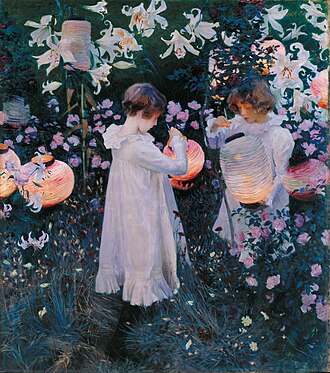 Carnation, Lily, Lily, Rose - John Singer Sargent (1885-1886)
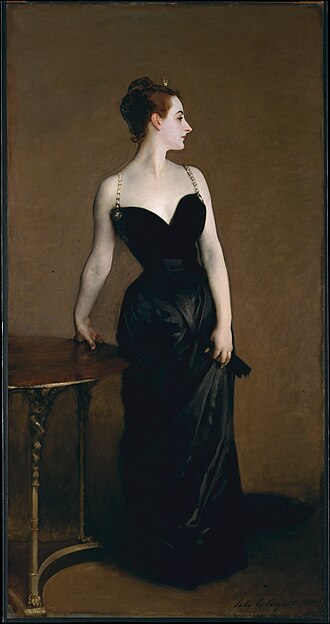 Madame X - John Singer Sargent (1884)
 Liberty Leading the People - Eugène Delacroix (1830)
 Death of Sardanapalus - Eugène Delacroix (1827)