Portrait of Laura Dianti
Titian · 1520s
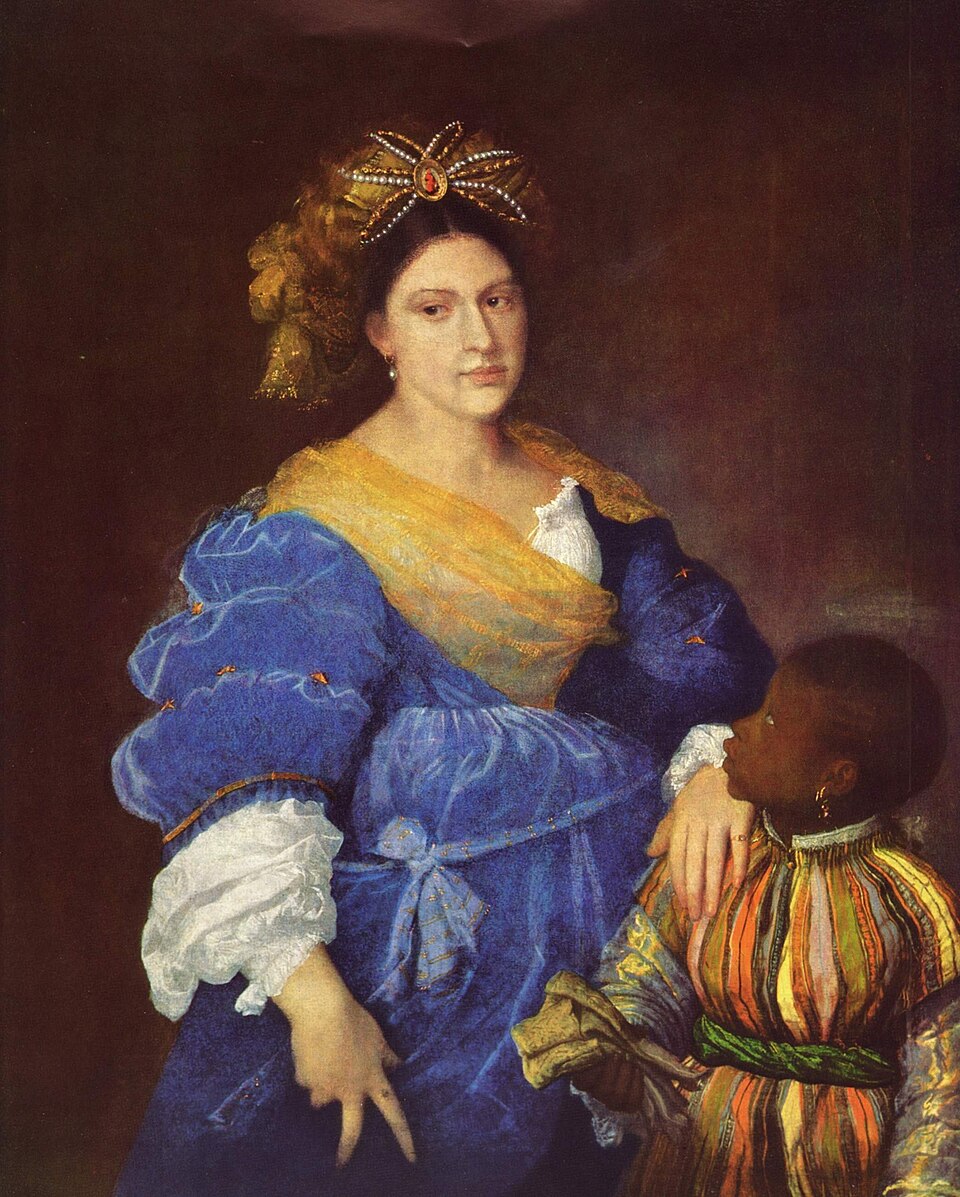
A woman in sweeping blue rests her hand on the shoulder of a small African page, who looks up at her. Titian's portrait of Laura Dianti was later brought before the courts to argue whether she had ever truly been a duchess.
The story behind the painting
Laura Dianti was the mistress, and later probably the wife, of Alfonso I d'Este, Duke of Ferrara. Titian painted her around 1520 to 1525 and signed the canvas TICI/ANVS F. After the duke's second wife, Lucrezia Borgia, died in 1519, it is assumed that he and Laura married, though no written record of the marriage was kept at the time. Art historians debate whether the portrait was painted before or after the wedding. Earlier the sitter had been taken for Lucrezia Borgia herself, until the art historian Carl Justi identified her as Laura.
What to look for
She has brown hair under an ornate headdress of cloth and jewels, with teardrop pearl earrings, and looks straight at us. A small brooch at the centre of the headdress shows a figure in red. Her satin-like blue dress is touched with fine gold, white layered chemise sleeves fall to her wrists, and a gold sash crosses her chest. The boy wears a bright jacket of yellow, orange and green with a green sash, a curled gold earring, and holds a pair of gloves. The warm dark background shows no specific place, only a soft light around the two figures.
Meaning and intent
Interpretations differ. Mary Rogers sees the page as a sign of Laura's high status, since women of rank were often portrayed with African pages. Rona Goffen reads him as a kind of chaperone guarding against a lustful gaze, while his own adoring look invites ours. Paul Kaplan links the red figure on her badge to Saint Jerome and to her other name, Eustochia; Peter Humfrey disagrees, noting the figure lacks a cardinal's hat. The picture is often paired with Titian's Portrait of Alfonso I d'Este, though the two canvases differ in size, this one being larger.
Legacy
In the 1640s Francesco I d'Este, a descendant of Laura and Alfonso through their son, also named Alfonso, used the portrait in court to defend the marriage. The family argued that her clothes were too sensual for a ducal wife and that her portrait never hung with the other wives' portraits in Ferrara; Francesco replied that it was painted before the marriage. The painting went to Emperor Rudolf II in 1599, then to Queen Christina of Sweden, and much later to the Cook and Kisters collections. Long thought a copy, it was shown to be Titian's own when restoration uncovered his signature.
Lo sapevi?
- Painted by Titian around 1520-1525, signed TICI/ANVS F.
- Shows Laura Dianti, partner and probably wife of Alfonso I d'Este.
- Used in court in the 1640s in a dispute over her marriage.
- Now in the Kisters collection at Kreuzlingen.
L'artista
Titian (1488-1576)
portrait · High Renaissance · boy · Venetian school · Cook collection
Altre opere di Titian
.jpg) Venus of Urbino - Titian (1538)
Venus of Urbino - Titian (1538)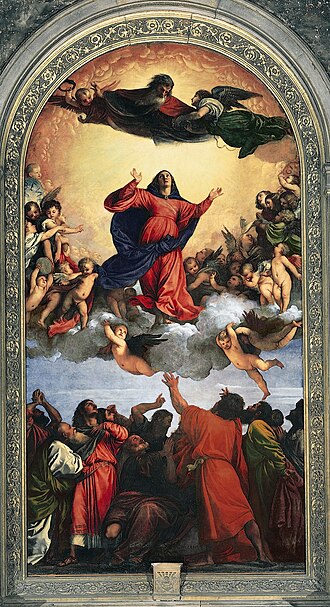 Assumption of the Virgin - Titian (1510s)
FXD.jpg) Sacred and Profane Love - Titian (1510s)
Sacred and Profane Love - Titian (1510s)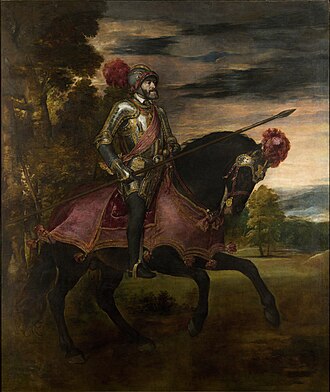 Equestrian Portrait of Charles V - Titian (1548)
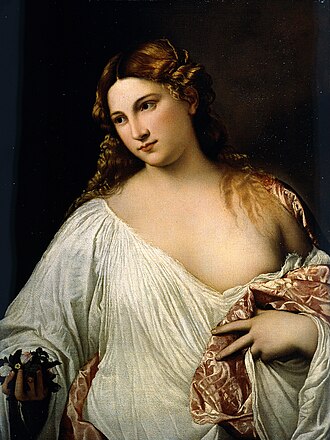 Flora - Titian (1517)
 Allegory of Prudence - Titian (1550)
 Bacchus and Ariadne - Titian (1520s)
%20nave%20left%20-%20Altar%20of%20Madona%20di%20Ca'Pesaro.jpg) Pesaro Madonna - Titian
Pesaro Madonna - Titian