Penitent Magdalene
Titian · 1560s
%2C%20between%201485%20and%201490-1576%20-%20Repentant%20Mary%20Magdalene%20-%20%D0%93%D0%AD-117%20-%20Hermitage%20Museum.jpg)
Her eyes are wet with tears and lifted to heaven. Beside her lie a skull and an open book, and behind her a lone tree bends in the wind of a darkening sky.
The story behind the painting
This Penitent Magdalene is an oil on canvas by Titian from the 1560s, held in the Hermitage Museum in Saint Petersburg, where it is titled Repentant Mary Magdalene. Titian painted the subject more than once, and this is the later version, about 119 by 97 cm according to Wikidata. Remarkably, Titian kept this painting for himself. After his death, his son sold it, along with other works, to Cristoforo Barbarigo. It remained in the Barbarigo Gallery in Venice until the Hermitage acquired it, and it entered the museum in 1850, travelling far from the city where it was made.
What to look for
Mary Magdalene, who according to tradition spent many years in the desert atoning for her sins, looks up toward heaven with a tearful expression. The background is very dark, especially on the left. On the right, a darkening sky shows a tree that seems to face into the wind, while the sky itself is bathed in the rays of the setting sun. A dark rock contrasts with the brightly lit figure of Mary. Unlike his 1531 version of the subject, Titian has covered her nudity, and he has added a vase, an open book and a skull. Her long hair falls around her.
Meaning and intent
The skull is a memento mori, a reminder that every life ends, and it turns the picture into a meditation on repentance and mortality. The open book suggests prayer and study, the vase her traditional attribute. Mary's upward gaze, filled with tears, shows sorrow turning into hope. The setting sun and the wind-bent tree echo her inner state: a day ending, a soul under pressure, yet still lit from above. By clothing her and adding these objects, Titian shifts the emphasis from the beauty of the earlier image toward a more inward, sober kind of devotion.
Legacy
The source notes that the colouring here is more mature than in the earlier version, with colours chosen to harmonise with her character. Comparing the two versions shows how an artist could return to one subject across three decades and find new depths in it. That Titian kept this canvas in his own studio until his death hints that it mattered to him personally, though the source does not say why. Its journey from his house to the Barbarigo family and then to Russia has carried this quiet scene of grief and hope to visitors far beyond Venice.
Lo sapevi?
- Oil on canvas, 1560s, Hermitage Museum, Saint Petersburg
- Titian kept it until his death; later sold by his son to Cristoforo Barbarigo
- Entered the Hermitage in 1850
- Wikidata size: 119 x 97 cm
L'artista
Titian (1488-1576)
religious art · woman · waist-length hair · Venetian school · Hermitage Museum · Mary Magdalene · book · human skull · mortification of the flesh
Altre opere di Titian
.jpg) Venus of Urbino - Titian (1538)
Venus of Urbino - Titian (1538)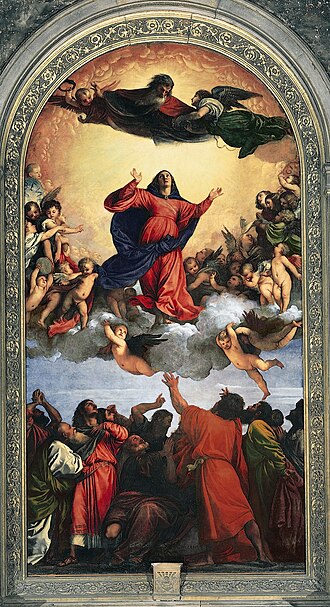 Assumption of the Virgin - Titian (1510s)
FXD.jpg) Sacred and Profane Love - Titian (1510s)
Sacred and Profane Love - Titian (1510s)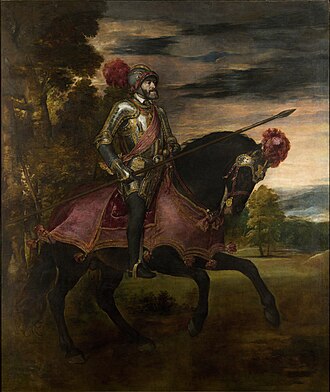 Equestrian Portrait of Charles V - Titian (1548)
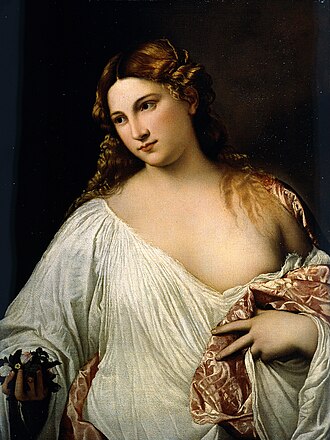 Flora - Titian (1517)
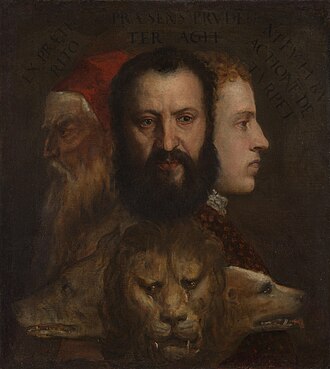 Allegory of Prudence - Titian (1550)
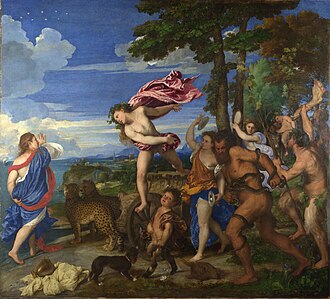 Bacchus and Ariadne - Titian (1520s)
%20nave%20left%20-%20Altar%20of%20Madona%20di%20Ca'Pesaro.jpg) Pesaro Madonna - Titian
Pesaro Madonna - Titian