Pan and Syrinx
François Boucher · 1759
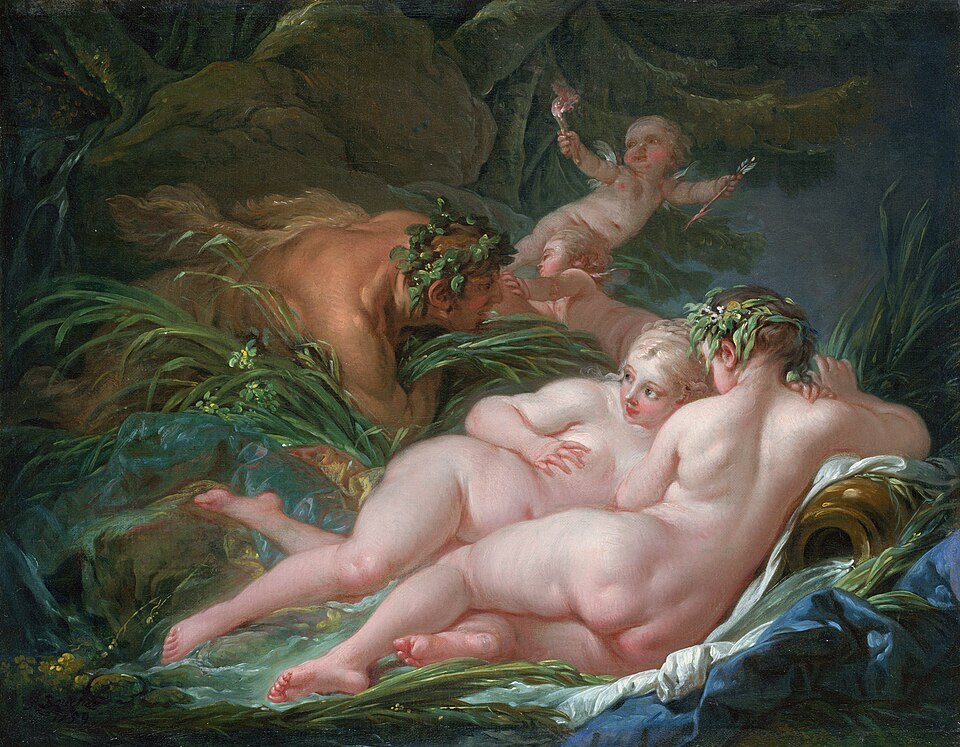
Two nymphs, pale and glowing, curl together by the water while the dark goat god Pan lunges at them with a fistful of reeds. Boucher painted this small Rococo scene in 1759, and he changed Ovid's story along the way.
The story behind the painting
The subject is from Ovid's Metamorphoses. The nymph Syrinx flees the goat god Pan and reaches the river Ladon. There her father, the river god, and her sisters the water nymphs turn her into reeds, so what Pan seizes is not Syrinx but a bunch of reeds. He then cut them, joined them with wax and made the pipe that bears his name, the favourite instrument of ancient shepherds. Boucher painted the theme several times; another version is in the Prado. This one, signed and dated, first belonged to Armand-Pierre-François de Chastre de Billy, first chamberlain to Louis XV.
What to look for
Look at the contrast. Pan's brown skin and tense muscles push against the luminous white and soft curves of the two women, whose fullness recalls Rubens. The nymphs form an elliptical wall, almost one body seen from front and back. Two cupids rise above: Eros with arrow and torch, and below him Anteros trying to push Pan back. The nude seen from behind in the foreground is a figure Boucher had used often, and surviving chalk studies from life show careful preparation. Fluid strokes make parts shine like jewels, such as the cloth at lower right in bright blue and white.
Meaning and intent
Boucher does not follow Ovid closely. Instead of the river god he paints a second nude nymph leaning on a tipped jar of flowing water, a classical sign of freshwater spirits. Syrinx does not flee in terror; reclining, she turns over her shoulder, and her face shows both temptation and fear. Because the two women seem joined, Syrinx appears as interested in the nymph she turns to for help as in Pan, and Pan, like the viewer, seems to intrude on their bond. Eros stands for the passion that inflames him, Anteros for her refusal.
Legacy
The painting shows Boucher reusing his own motifs with skill while still building something fresh, a sensual Rococo reading of an old myth. Its small size, 32.4 by 41.9 cm, suits close looking at the shimmer of the brushwork and the green of the reeds against the dark setting. It has been in the National Gallery in London since 1880, given by Mrs Robert Holland, according to the Spanish Wikipedia article, which words the donation ambiguously.
Lo sapevi?
- Painted in 1759, signed and dated.
- Based on Ovid's Metamorphoses.
- Another Boucher version is in the Prado.
- In the National Gallery, London, since 1880.
L'artista
François Boucher (1703-1770)
National Gallery · mythological painting
Altre opere di François Boucher
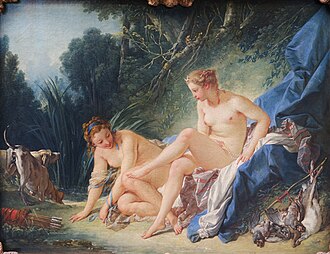 Diana leaving her Bath - François Boucher (1742)
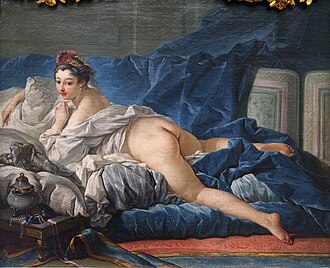 Brown Odalisque - François Boucher (1740s)
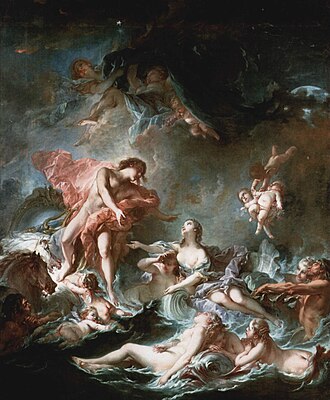 The setting of the sun - François Boucher (1752)
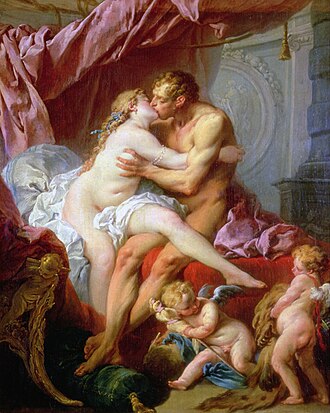 Hercules and Omphale - François Boucher (1730s)
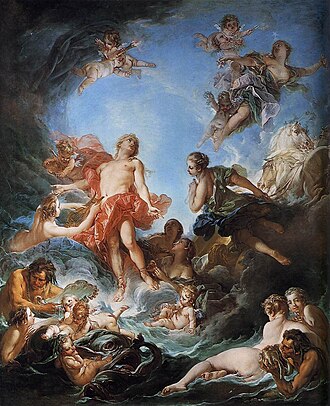 The Rising of the Sun - François Boucher (1753)
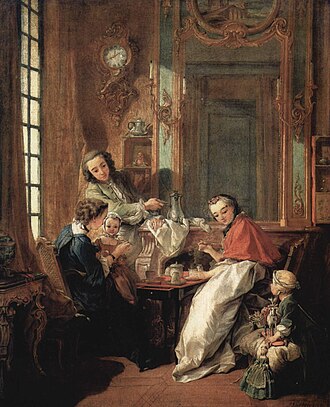 Morning Coffee - François Boucher (1739)
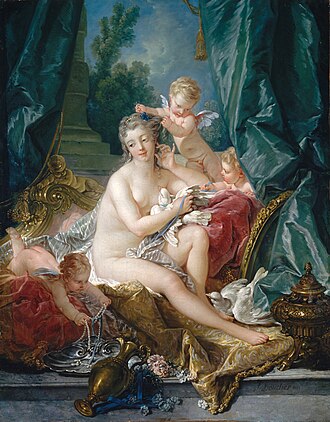 The Toilette of Venus - François Boucher (1751)
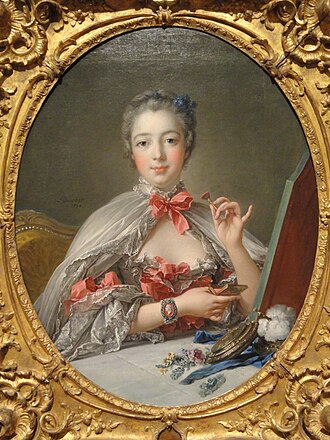 Jeanne-Antoinette Poisson, Marquise de Pompadour - François Boucher (1750)
Dipinti di artisti collegati
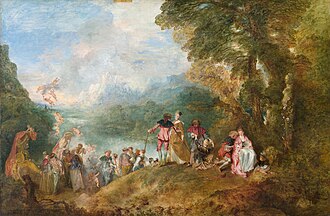 The Embarkation for Cythera - Jean-Antoine Watteau (1717)
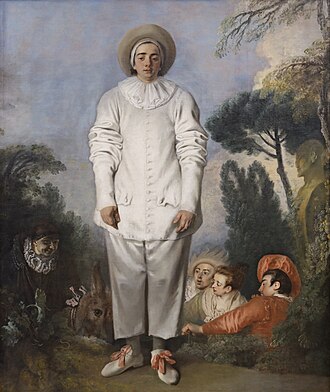 Pierrot - Jean-Antoine Watteau (1718)
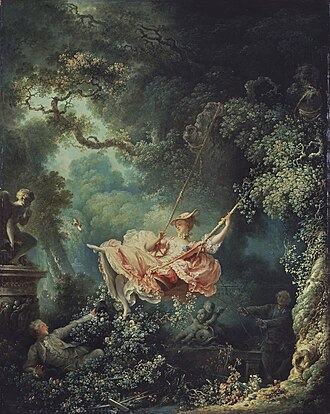 The Swing - Jean-Honoré Fragonard (1760s)
 A Young Girl Reading - Jean-Honoré Fragonard (1770)
 The Third of May 1808 - Francisco Goya (1814)
 La maja nuda - Francisco Goya (1800)