Nativity of St. John the Baptist
Artemisia Gentileschi · 1635
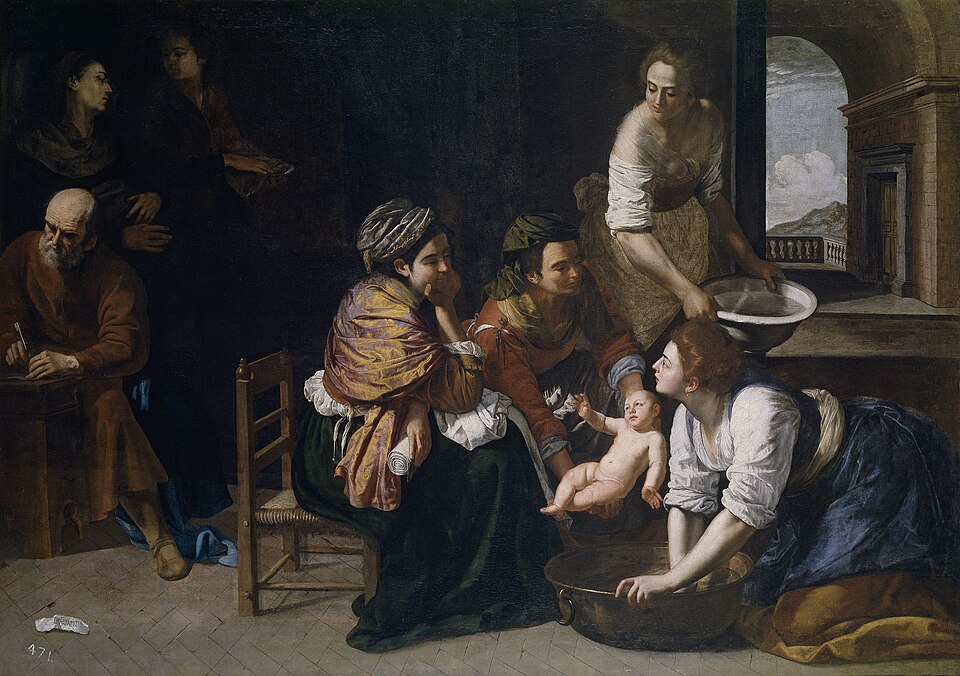
A miracle is happening, but Artemisia looks at the women: neighbours and maidservants busy with a newborn. Painted in Naples for a Spanish king's hermitage, it is famous for its fabrics and floor tiles.
The story behind the painting
The painting was one of six scenes from the life of Saint John for the Hermitage of San Juan Bautista on the grounds of the Buen Retiro in Madrid, ordered by the Viceroy of Naples, the Conde de Monterrey. Four of the others were by Massimo Stanzione and one, now lost, by Paolo Finoglia. Scholars have not agreed on a date; Artemisia most likely painted it between 1633 and 1635, while Wikidata gives 1635. In Naples she painted many commissions for Spanish rulers and churches, and her subjects became more religious.
What to look for
The canvas is large, 184 by 258 cm. It tells Luke's story: the old priest Zacharias, struck dumb after the angel's announcement, writes on a tablet that the baby's name is John, against the neighbours and midwives who want to call him Zacharias, and then speaks again. But the composition puts the women first, the neighbours and maidservants around the newborn, rather than the miracle. Look closely at the detailed rendering of the fabrics and the floor tiles, the qualities that make this one of the best-known works of her Naples period.
Meaning and intent
Before Naples, Artemisia was known for secular works that are arguably pre-feminist. Even in a religious commission, she keeps a secular eye: the focus on ordinary female work around a birth turns a sacred scene into a domestic one. The source calls the composition distinctly secular. Her style here is her own, but heavily influenced by Caravaggio, by Simon Vouet, and by Massimo Stanzione, the Neapolitan painter who produced most of the rest of the same cycle.
Legacy
The cycle was made for a royal hermitage in Madrid, and Artemisia's canvas stayed in Spain. It is now on display at the Museo del Prado, where it is one of the most renowned works from her years in Naples. It shows a painter famous for strong heroines adapting to a new kind of patron without losing her attention to women and to the tactile world of cloth, tile and light.
Lo sapevi?
- One of six scenes of Saint John's life for a hermitage at the Buen Retiro, Madrid.
- Most likely painted 1633 to 1635; Wikidata gives 1635.
- Four companion scenes were by Massimo Stanzione.
- Now in the Museo del Prado.
L'artista
Artemisia Gentileschi (1593-1653)
religious art · Museo del Prado · John the Baptist · Elizabeth · Zechariah
Altre opere di Artemisia Gentileschi
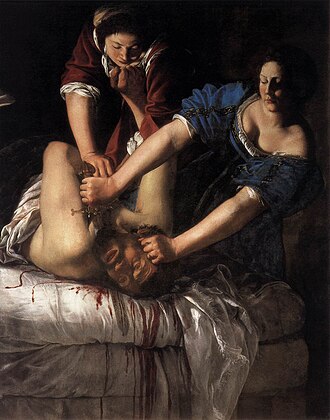 Judith Slaying Holofernes - Artemisia Gentileschi (1613)
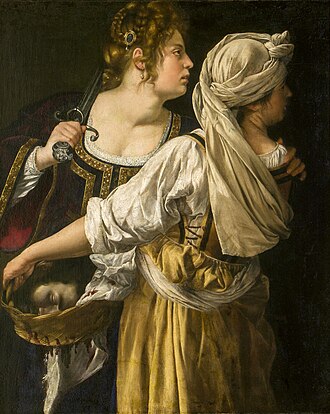 Judith and Her Maidservant - Artemisia Gentileschi (1618)
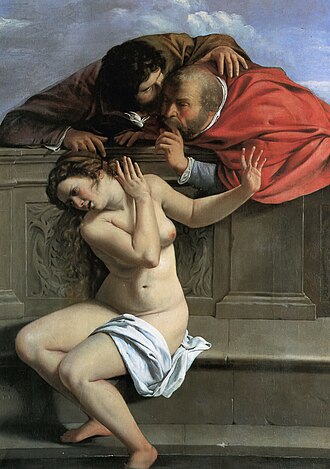 Susanna and the Elders - Artemisia Gentileschi (1610)
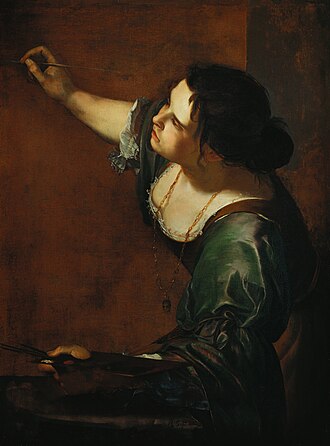 Self-Portrait as the Allegory of Painting - Artemisia Gentileschi (1638)
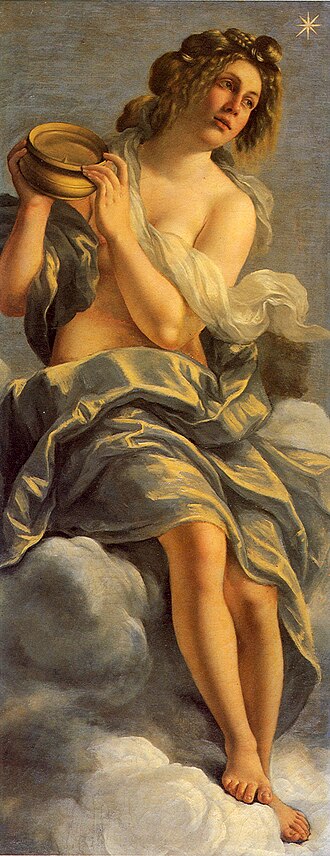 Allegory of Inclination - Artemisia Gentileschi (1615)
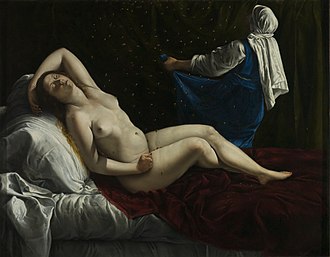 Danaë - Artemisia Gentileschi (1612)
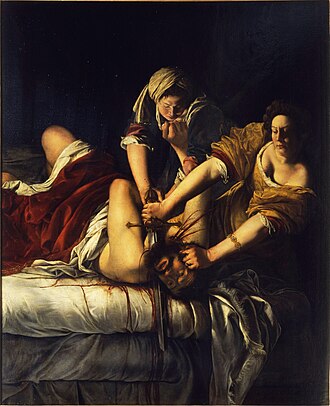 Judith Beheading Holofernes - Artemisia Gentileschi (1620)
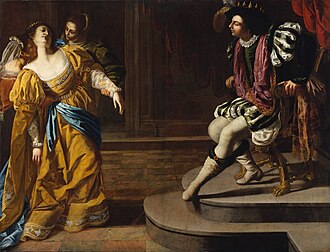 Esther before Ahasuerus - Artemisia Gentileschi (1620s)
Dipinti di artisti collegati
 Supper at Emmaus - Caravaggio (1601)
 La vocazione di San Matteo - Caravaggio (1609)
 Las Meninas - Diego Velázquez (1656)
 The Surrender of Brea - Diego Velázquez (1635)
 Saint Francis in Meditation - Francisco de Zurbarán (1639)
 The Immaculate Conception - Francisco de Zurbarán (1661)
 Charles I in Three Positions - Anthony van Dyck (1635)
 Charles I (1600-1649) with M. de St Antoine - Anthony van Dyck (1636)
 The Elevation of the Cross - Peter Paul Rubens (1609)
 The Rape of the Daughters of Leucippus - Peter Paul Rubens (1618)
 The Night Watch - Rembrandt van Rijn (1642)
 Self-Portrait - Rembrandt van Rijn (1659)