Allegory of Inclination
Artemisia Gentileschi · 1615
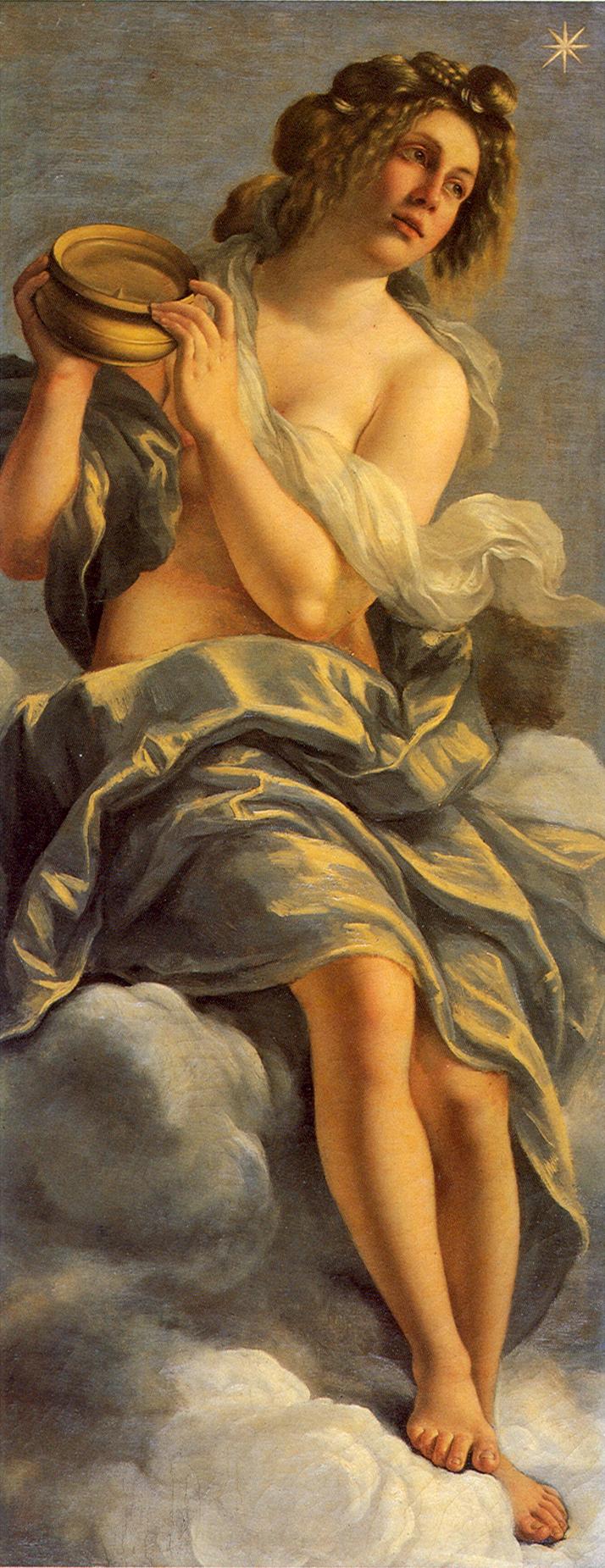
A young woman sits on a cloud with a mariner's compass, a star shining above her head. Artemisia Gentileschi painted her nude for a Florentine ceiling, and almost seventy years later another painter was hired to cover her up.
The story behind the painting
Michelangelo Buonarroti the Younger commissioned a series of ceiling paintings for the Galleria of the Casa Buonarroti in Florence to glorify the life of his great uncle, the Renaissance master Michelangelo. Artemisia Gentileschi worked on the series alongside Giovanni Biliverti, Giovanni Coccapani and Matteo Rosselli, between 1615 and 1617, while she was recovering from the birth of her second child. Her part was Inclination, one of eight personifications given to Michelangelo. Wikidata dates the canvas to 1615, while Wikipedia gives the span 1615 to 1617.
What to look for
Look up at a tall, narrow canvas, about 152 by 61 cm, set into the ceiling. The young woman sits in the heavens on a cloud, holding a compass, with a star just above her head. Her light hair is elaborately styled. Scholars note that her features resemble those in Gentileschi's self-portraits, and that the facial design, wispy hair and dimpled hands are typical of other pictures she made during her years in Florence. The swirling drapery that covers parts of her body was not painted by Artemisia but added later by another hand.
Meaning and intent
Inclination here means inborn creative ability. The compass, an instrument for finding direction at sea, and the guiding star signify Michelangelo's natural disposition to greatness, as if talent were a course set from birth. Painting a female figure who carries that gift, and giving her features close to her own, makes the picture feel personal for an artist who was herself working in a world led by men. The sources do not record Gentileschi's own words about it, so this reading rests on the subject and the resemblance that scholars describe.
Legacy
The figure was painted nude. That nudity embarrassed Leonardo Buonarroti, the commissioner's great-nephew, who in 1684 paid Baldassare Franceschini, known as il Volterrano, to paint veils and drapery over parts of it. Restoration began in November 2022. The added drapery could not be removed without damaging the work, so restorers used ultraviolet light, diagnostic imaging and X-rays to tell Gentileschi's brushstrokes from the later ones and build a digital replica of the original. From September 2023 the restored painting was shown beside a simulation of the uncensored version.
Lo sapevi?
- Painted 1615-1617 for the ceiling of the Casa Buonarroti, Florence.
- Commissioned by Michelangelo Buonarroti the Younger.
- Drapery added by il Volterrano in 1684.
- A digital reconstruction of the original was shown from 2023.
L'artista
Artemisia Gentileschi (1593-1653)
Altre opere di Artemisia Gentileschi
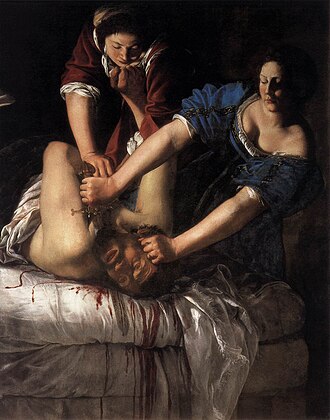 Judith Slaying Holofernes - Artemisia Gentileschi (1613)
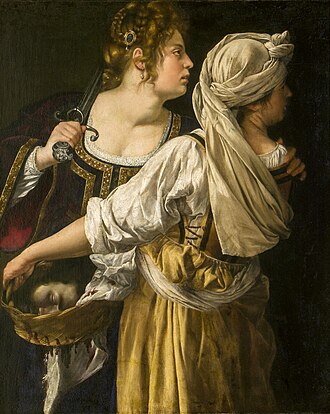 Judith and Her Maidservant - Artemisia Gentileschi (1618)
%2C%20Artemisia%20GentileschiFXD.jpg) Susanna and the Elders - Artemisia Gentileschi (1610)
Susanna and the Elders - Artemisia Gentileschi (1610)%20-%20Artemisia%20Gentileschi.jpg) Self-Portrait as the Allegory of Painting - Artemisia Gentileschi (1638)
Self-Portrait as the Allegory of Painting - Artemisia Gentileschi (1638)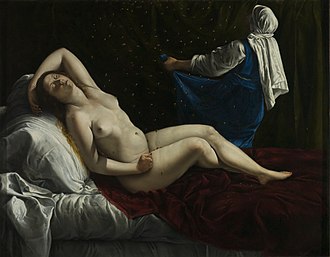 Danaë - Artemisia Gentileschi (1612)
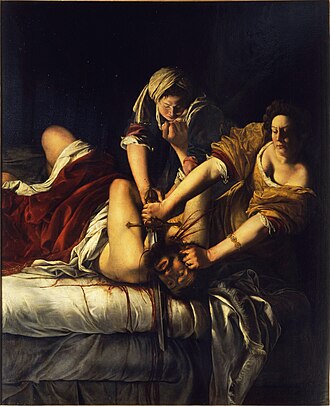 Judith Beheading Holofernes - Artemisia Gentileschi (1620)
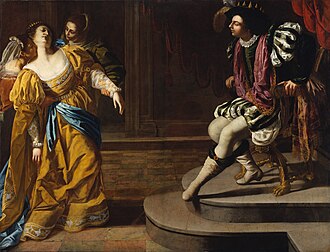 Esther before Ahasuerus - Artemisia Gentileschi (1620s)
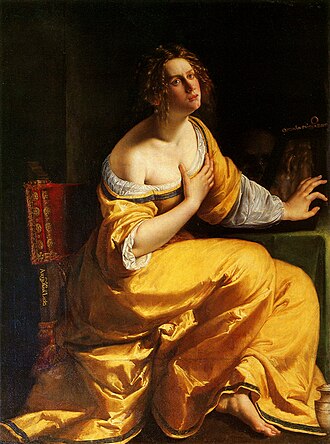 Conversion of the Magdalene - Artemisia Gentileschi (1616)