María Teresa de Borbón y Vallabriga, later Condesa de Chinchón
Francisco Goya · 1783
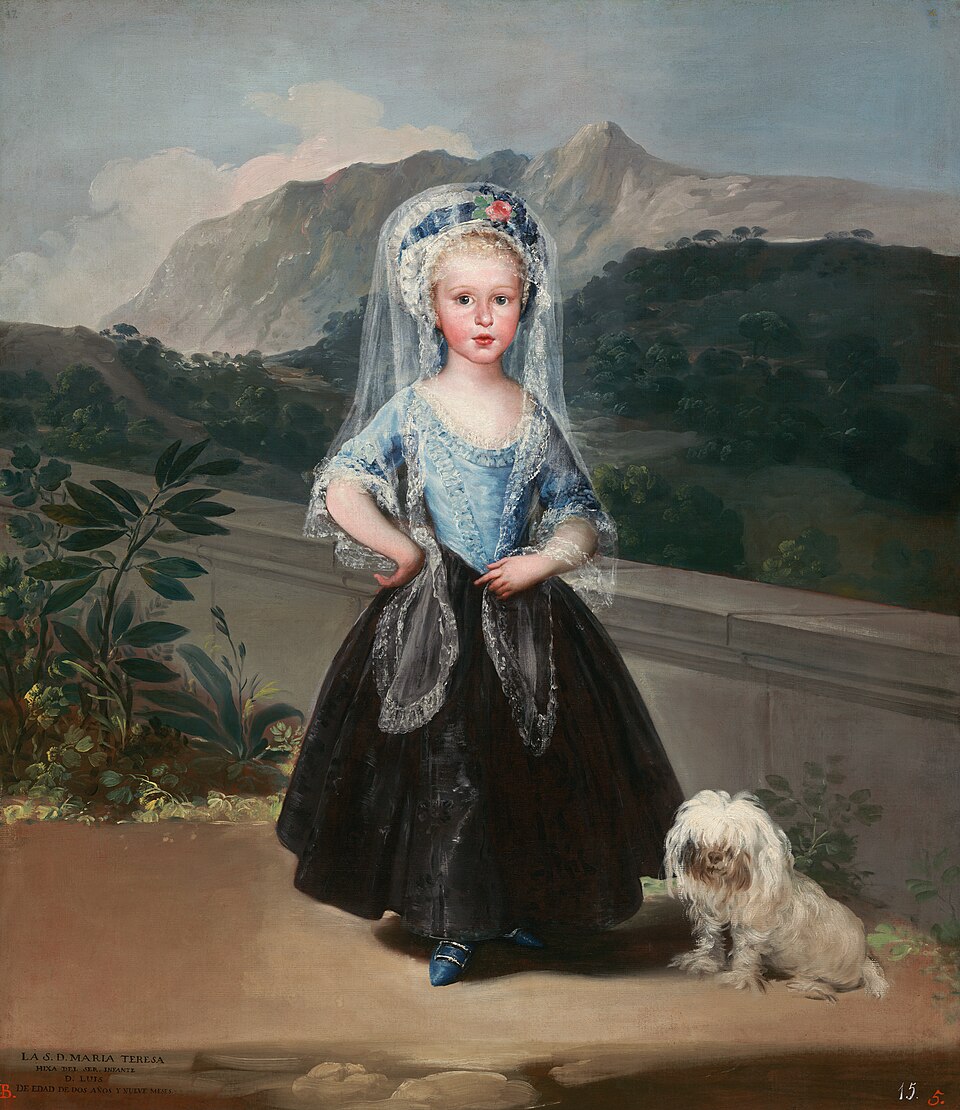
A little girl of two years and nine months stands on a palace terrace in a grown woman's court dress, a white dog at her feet. Goya painted her with warmth in 1783, long before she became the Countess of Chinchon.
The story behind the painting
Maria Teresa (1779-1828) was the daughter of the Infante Luis Antonio de Borbon, younger brother of Charles III, who had been pushed out of court partly for his morganatic marriage to the Aragonese aristocrat Maria Teresa de Vallabriga. The couple were warm protectors and patrons of Goya. In August and September 1783 he stayed at their estate at Arenas de San Pedro, and they showered him with praise and kindness. In 1783 and 1784 he made at least sixteen pictures for them. Preparing a large portrait of the whole family, he painted the children individually, and this portrait is a pendant to that of her older brother Luis Maria.
What to look for
An inscription in the lower left corner gives her age: two years and nine months. She stands on a garden terrace, with the blue-grey mountains of the Sierra de Gredos behind her, dark dense forests, rocks catching silver light and pink clouds above the peaks. She wears rich court clothing made for an adult: a large cap with a blue ribbon and a rose, a fine white lace mantilla, a black skirt and blue shoes with gold buckles. Her cheeks are pink, her lips red, her eyes bright blue. A small white Maltese sits obediently at her feet, showing how tiny she is. Goya used long, light brushstrokes.
Meaning and intent
Maria Teresa copies an adult pose with charm, a hand on her hip and half a step forward. Goya still treats her partly as a small adult, as aristocratic portraits of children did, but in a more natural, enlightened style, and the source says he painted children with respect and affection. Placing her outdoors before mountains, he recalled Velazquez's Prince Baltasar Carlos as a Hunter, a royal picture he knew well because he had copied it in chalk. The slightly low viewpoint and full-length figure give the little girl a quiet majesty.
Legacy
Goya painted her again a year later in the family portrait, and in 1800, when she was married to Manuel Godoy and expecting her first child. That marriage, arranged by Queen Maria Luisa in 1797, restored her family's right to the Bourbon name and arms. The portrait hung at the palace of Boadilla del Monte and passed to her daughter, then to her grandson Adolfo Ruspoli, and stayed with the Ruspoli family. Their heirs sold it to Wildenstein and Co. in New York before March 1957. Ailsa Mellon Bruce bought it in 1959 and left it to the National Gallery of Art in Washington, which received it in 1970.
Lo sapevi?
- Painted in 1783, when the sitter was two years and nine months old.
- A pendant to the portrait of her brother Luis Maria.
- The Sierra de Gredos fills the background.
- In the National Gallery of Art, Washington, since 1970.
L'artista
Francisco Goya (1746-1828)
portrait · Galería Nacional de Arte
Altre opere di Francisco Goya
 The Third of May 1808 - Francisco Goya (1814)
 La maja nuda - Francisco Goya (1800)
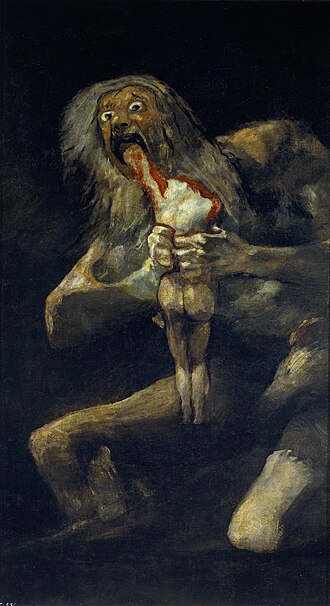 Saturn Devouring His Son - Francisco Goya (1819)
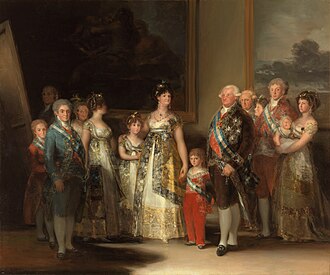 La famiglia di Carlo IV - Francisco Goya (1800)
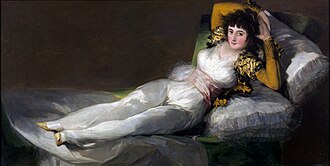 The Clothed Maja - Francisco Goya (1800)
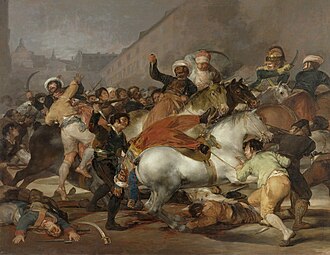 Il 2 maggio 1808 a Madrid - Francisco Goya (1814)
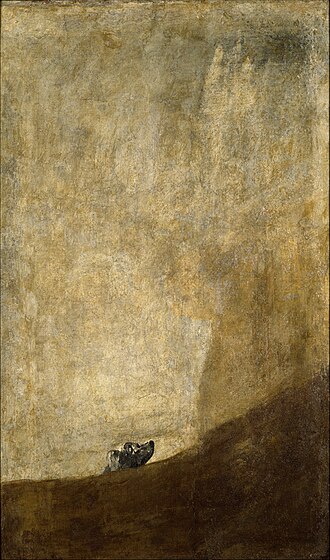 Cane semiaffondato - Francisco Goya (1819)
 Il sabba delle streghe - Francisco Goya (1820s)
Dipinti di artisti collegati
 Wanderer above the Sea of Fog - Caspar David Friedrich (c. 1818)
 The Abbey in the Oakwood - Caspar David Friedrich (1800s)
 Liberty Leading the People - Eugène Delacroix (1830)
 Death of Sardanapalus - Eugène Delacroix (1827)
 The Fighting Temeraire - J. M. W. Turner (1839)
 Rain, Steam and Speed - The Great Western Railway - J. M. W. Turner (1844)
 The Blue Boy - Thomas Gainsborough (1770)
 Mr and Mrs Andrews - Thomas Gainsborough (1748)