Madrid fair
Francisco Goya · 1778
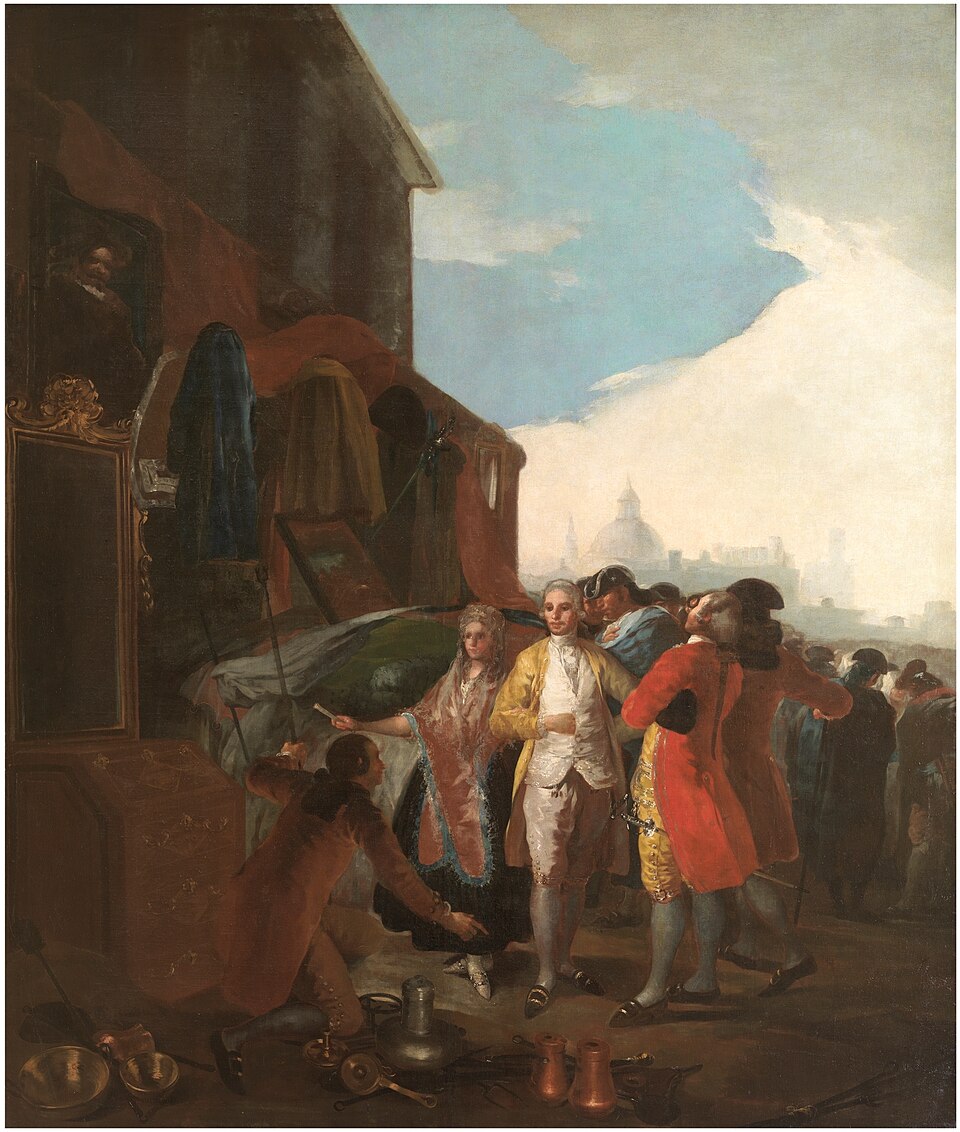
A crowd lingers over old pots, furniture and paintings at a Madrid flea market, while the dome of San Francisco el Grande rises behind them. Goya painted this busy scene as a design for a royal tapestry, and then it vanished for ninety years.
The story behind the painting
La feria de Madrid was painted between 1778 and 1779 as part of Goya's third series of tapestry cartoons, full-size models for the Royal Tapestry Factory. The whole series was meant for the bedroom of the Prince of Asturias, the future Charles IV, and his wife Maria Luisa of Parma, at the El Pardo palace. The canvas was delivered to the factory on 5 January 1779. Wikidata gives the single year 1778, while the French Wikipedia article spans 1778 to 1779.
What to look for
Several people study the pottery, furniture and other goods of a seller, and more stalls, including paintings, appear behind them. A man inspects objects through eyeglasses, and a dandy points at an item with his fan as he haggles over the price. Among the goods is a portrait in a style close to Diego Velazquez. In the foreground a tray of chocolate forms a small still life. The two majos are lit with quick brushstrokes, and Goya lingers on metallic reflections in a silvery grey tone. The canvas measures about 258 by 218 cm.
Meaning and intent
Goya shows the habits of Madrid society: the seller's wares had gone out of fashion, discarded by people who now decorated their homes in the French style. Like the aristocracy of the late eighteenth century, the royal palaces were fond of such Castilian scenes from everyday life. One hypothesis places the market at the Plaza de la Cebada, using the church of San Francisco el Grande as a landmark, the same church Goya painted in Dance on the Banks of the Manzanares.
Legacy
The cartoon was considered lost until 1869, when Gregorio Cruzada Villaamil found it in the basement of the Royal Palace of Madrid. It passed to the Museo del Prado in 1870 by orders of 19 January and 9 February, and first appeared in the Prado's catalogue in 1876. It hangs there in room 92. It belongs to a series that also includes The Pottery Vendor, The Soldier and the Lady and Boys Playing at Soldiers.
Lo sapevi?
- A tapestry cartoon from Goya's third series, painted 1778-1779.
- Made for the Prince of Asturias's bedroom at El Pardo.
- Lost until 1869, found in the Royal Palace basement.
- In the Museo del Prado since 1870.
L'artista
Francisco Goya (1746-1828)
Altre opere di Francisco Goya
 The Third of May 1808 - Francisco Goya (1814)
.jpg) La maja nuda - Francisco Goya (1800)
La maja nuda - Francisco Goya (1800).jpg) Saturn Devouring His Son - Francisco Goya (1819)
Saturn Devouring His Son - Francisco Goya (1819) La famiglia di Carlo IV - Francisco Goya (1800)
 The Clothed Maja - Francisco Goya (1800)
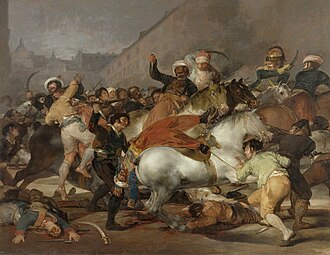 Il 2 maggio 1808 a Madrid - Francisco Goya (1814)
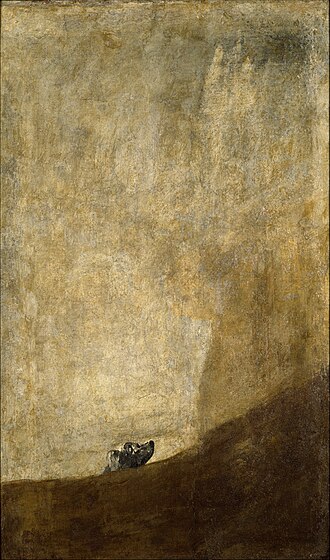 Cane semiaffondato - Francisco Goya (1819)
 Il sabba delle streghe - Francisco Goya (1820s)
Dipinti di artisti collegati
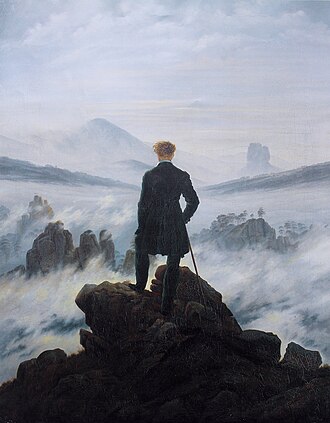 Wanderer above the Sea of Fog - Caspar David Friedrich (c. 1818)
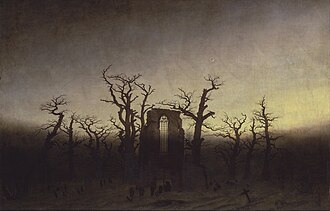 The Abbey in the Oakwood - Caspar David Friedrich (1800s)
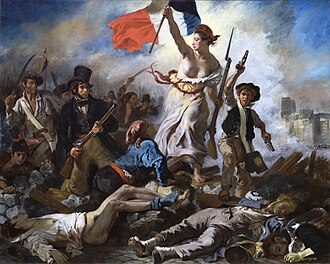 Liberty Leading the People - Eugène Delacroix (1830)
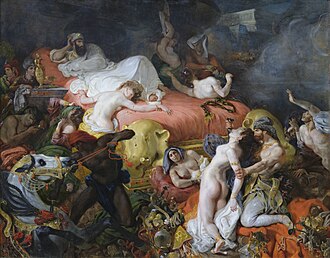 Death of Sardanapalus - Eugène Delacroix (1827)
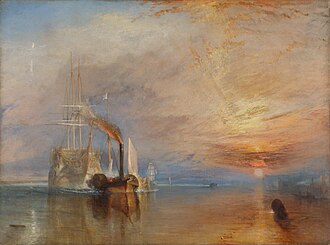 The Fighting Temeraire - J. M. W. Turner (1839)
 Rain, Steam and Speed - The Great Western Railway - J. M. W. Turner (1844)
.jpg) The Blue Boy - Thomas Gainsborough (1770)
The Blue Boy - Thomas Gainsborough (1770).jpg) Mr and Mrs Andrews - Thomas Gainsborough (1748)
Mr and Mrs Andrews - Thomas Gainsborough (1748)