Inheritance
Edvard Munch · 1890s
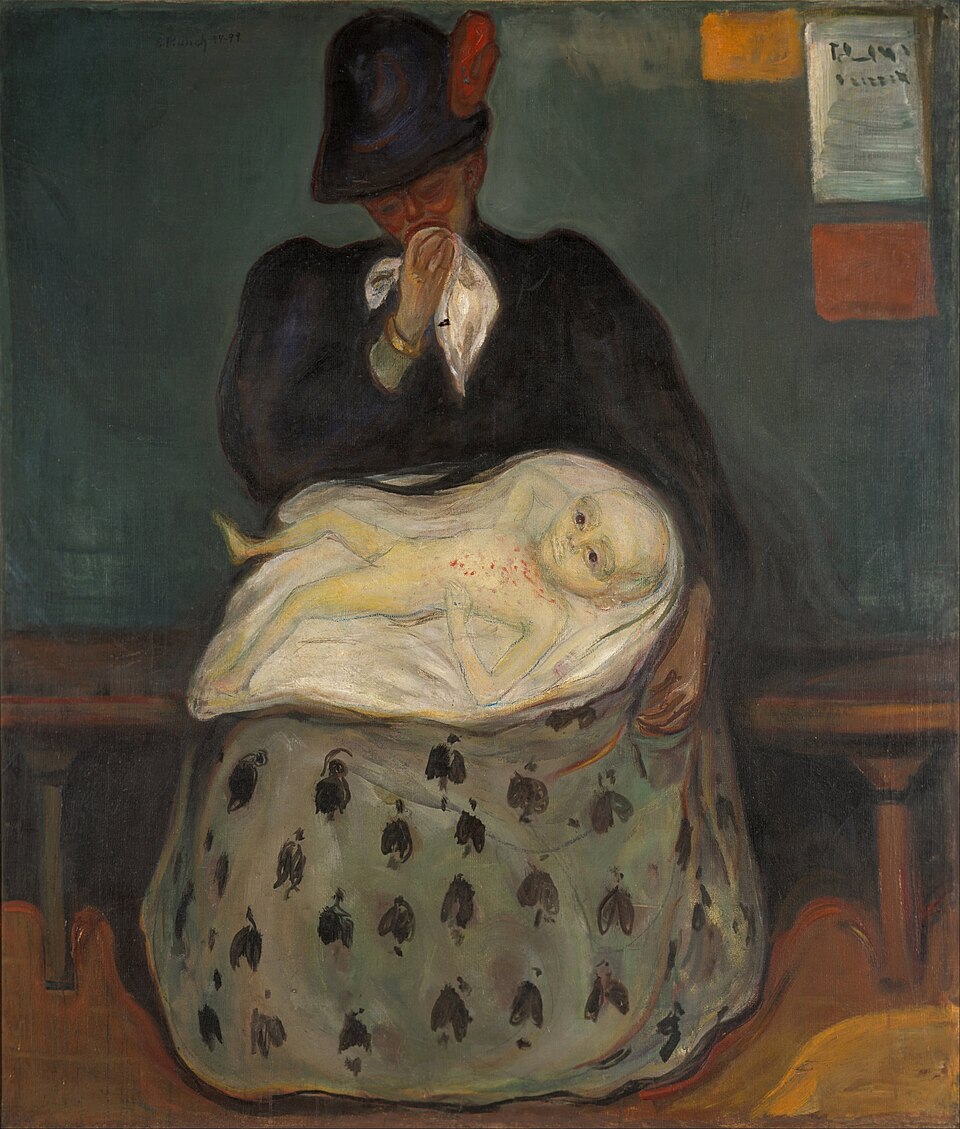
A mother weeps until her face turns scarlet over a pale, spotted baby who stares out with wide eyes. Munch painted a Madonna and Child turned upside down, and named the disease no one wanted to speak of.
The story behind the painting
Munch, whose mother, sister and paternal grandfather had been touched by tuberculosis, made this oil on canvas in the late 1890s; Wikipedia dates it 1897 to 1899. It grew out of a visit to the Hôpital Saint-Louis in Paris, one of three hospitals in the city that took in people with syphilis. In its museum his attention was drawn to a wax model of a baby with congenital syphilis, and he saw a woman crying for her child with the disease. The painting, now called Inheritance, Arv in Norwegian, was first titled The Syphilitic Child.
What to look for
The baby lies in its mother's lap, lifeless, pale and yellowish, covered in spots, its body out of proportion and its eyes wide open. The mother sits on a bench before a green background. Her hands and her patterned skirt stand out most; her jacket is plain black and a bright red feather sits in her hat. She is crying, her face red. Munch himself wrote that her tear-swollen, distorted face contrasts strongly with the linen white face of the child and the green background, and that the child stares with big, deep eyes at a world it entered involuntarily.
Meaning and intent
In Munch's words the child is infected by the sins of the fathers, and looks out sick, anxious and questioning, already asking why. He does not say whether the mother caught the disease from an unfaithful husband or through her own sex work. At the time Munch was going through a decline in his mental health, and like the baby he felt that he too had come into the world in a sick state. By placing a weeping mother and a dying infant where painters had long put the Madonna and Child, he turned one of art's most tender subjects inside out.
Legacy
The reaction in the late nineteenth century was one of surprise, because speaking in public about sexually transmitted disease was then unacceptable on moral grounds. The painting has been described as shocking even in the 21st century, and critics also noted its inversion of the traditional Madonna and Child. It measures 141 by 120 cm and is housed in the Munch Museum in Oslo. Wikidata dates it only to the 1890s, while Wikipedia gives 1897 to 1899, so it belongs to the final years of the decade in which Munch made many of his most searching works.
Lo sapevi?
- Painted in the late 1890s, Wikipedia gives 1897-1899.
- Inspired by a visit to the Hôpital Saint-Louis in Paris.
- Originally titled The Syphilitic Child.
- Now in the Munch Museum, Oslo.
L'artista
Edvard Munch (1863-1944)
Altre opere di Edvard Munch
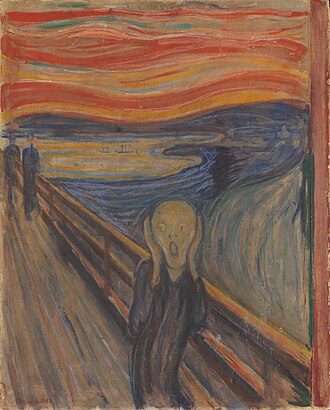 The Scream - Edvard Munch (1893)
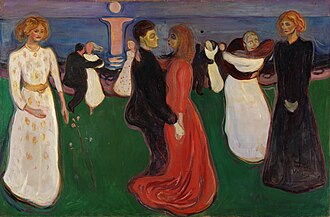 Dance of Life - Edvard Munch
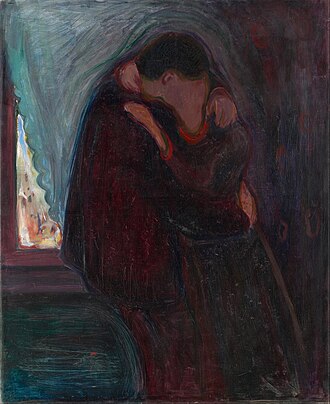 The Kiss - Edvard Munch (1897)
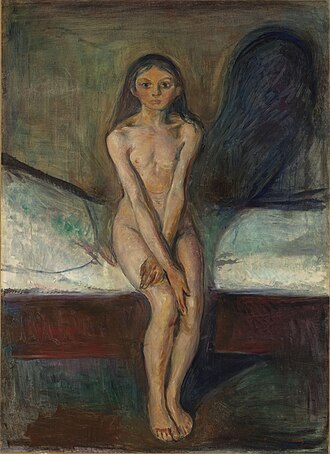 Puberty - Edvard Munch (1895)
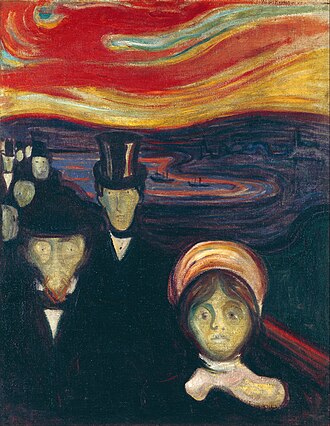 Anxiety - Edvard Munch (1894)
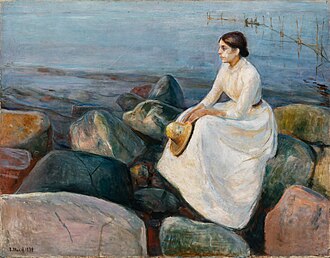 Inger on the Beach - Edvard Munch (1889)
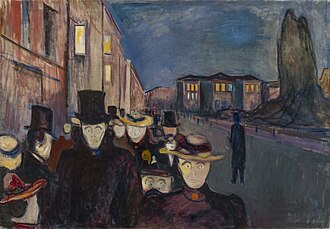 Evening on Karl Johan - Edvard Munch (1892)
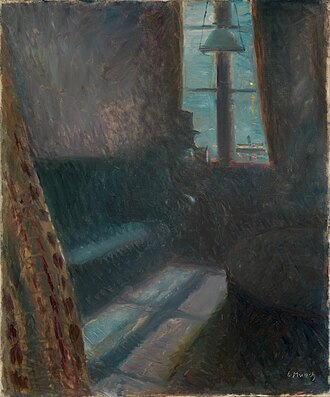 Night in Saint-Cloud - Edvard Munch (1890)