Equestrian portrait of Francisco de Moncada
Anthony van Dyck · 1630s
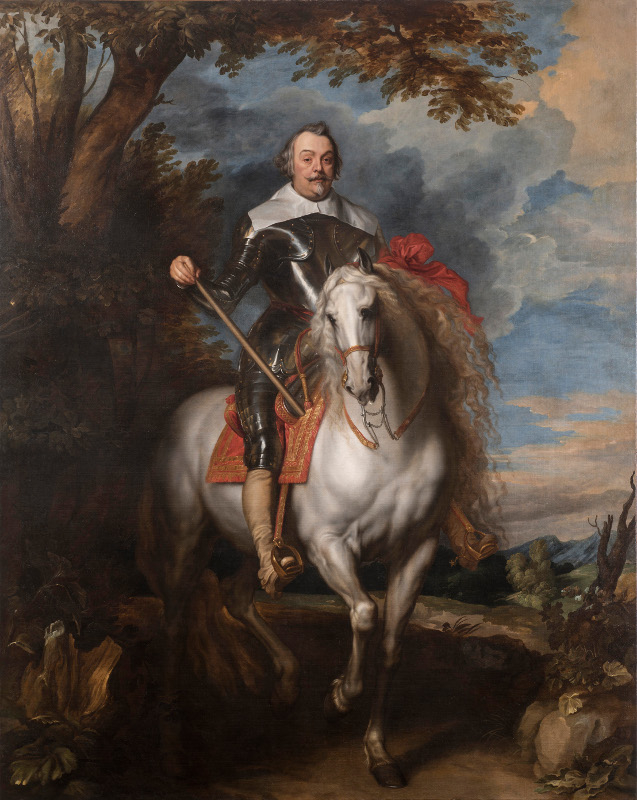
A nobleman in full armour rides calmly toward us, baton in hand, red sash stirring in the wind. Van Dyck painted not a victory but a quiet ride, and made it look like power.
The story behind the painting
The sitter is Francisco de Moncada, third Marquis of Aytona, born in Valencia in 1586 into an aristocratic family and trained in both letters and arms. He was a diplomat, writer and historian, soldier and governor: ambassador to Germany, envoy of the Infanta Isabel Clara Eugenia in Flanders, and governor general of the Netherlands. He died in the field at Goch in 1635 without returning to Spain. Van Dyck painted him in 1634; Wikidata dates the canvas only to the 1630s. The Louvre owns an identical version.
What to look for
Moncada faces us in full armour with a plain white collar spread over his shoulders. His right hand rests on the baton of command, while the hidden left hand holds the reins. Following the custom of Spanish captains, a red sash wraps his left arm and ripples as the horse trots. Light comes from the left, the dark background makes the figure stand out, and the foreshortened horse builds a convincing space. The canvas is about 305 by 240 cm.
Meaning and intent
His calm, unexpressive face suggests the serenity, prudence and control expected of a governor. The horse stands for nobility and military power, yet Van Dyck shows a peaceful ride rather than a victorious soldier. The scheme echoes Rubens's Equestrian Portrait of the Duke of Lerma, itself inspired by Titian's Charles V at Mühlberg, but Van Dyck leaves out the army Rubens painted in the background, stressing Moncada's peaceful stance. Moncada holds both moral authority and power.
Legacy
Where it was painted is unknown, but it is thought to have reached Valencia long ago. It belonged to Colonel Manuel Montesinos y Molina, and in 1941 his heirs ceded it to the Real Academia de Bellas Artes de San Carlos to be shown in the Museo de Bellas Artes de Valencia, where it hangs today. Through the Louvre's identical version, the same calm rider can be seen in two countries. The portrait also stands in a long line of equestrian images, from the ancient Marcus Aurelius to Donatello's Gattamelata, who also carries a baton with similar serenity.
Lo sapevi?
- Portrait of Francisco de Moncada, third Marquis of Aytona, governor of the Netherlands.
- Dated 1634 by Wikipedia, the 1630s by Wikidata.
- Composition recalls Rubens's portrait of the Duke of Lerma, without the army.
- In the Valencia museum since 1941.
L'artista
Anthony van Dyck (1599-1641)
portrait · man · horse · equestrianism · equestrian portrait · Museu de Belles Arts de València
Altre opere di Anthony van Dyck
 Charles I in Three Positions - Anthony van Dyck (1635)
 Charles I (1600-1649) with M. de St Antoine - Anthony van Dyck (1636)
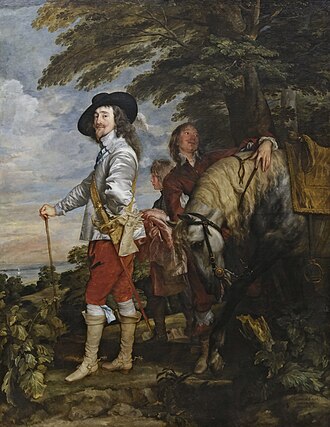 Charles I at the Hunt - Anthony van Dyck (1635)
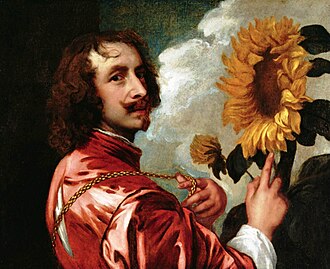 Self-portrait with a Sunflower - Anthony van Dyck (1632)
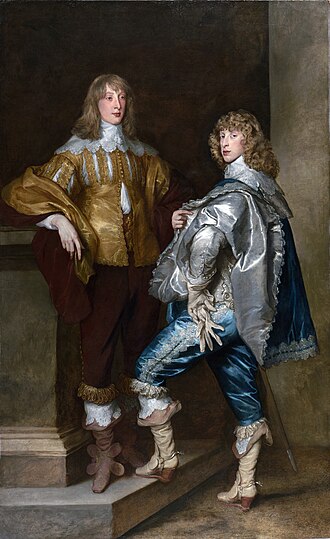 Lord John Stuart and His Brother, Lord Bernard Stuart - Anthony van Dyck (1638)
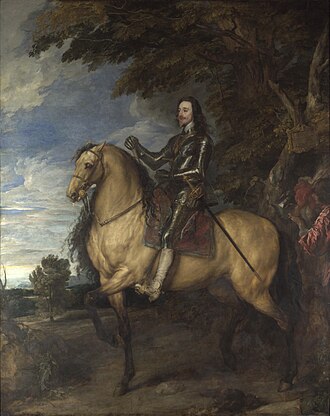 Equestrian Portrait of Charles I - Anthony van Dyck (1637)
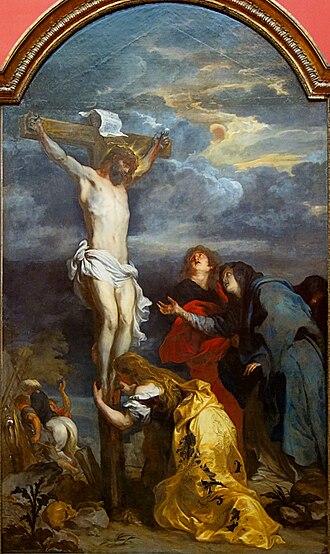 Crucifixion - Anthony van Dyck
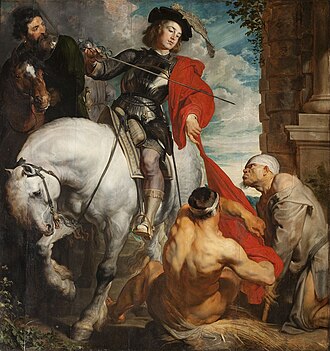 Saint Martin and the Beggar - Anthony van Dyck (1621)
Dipinti di artisti collegati
 Supper at Emmaus - Caravaggio (1601)
 La vocazione di San Matteo - Caravaggio (1609)
 Las Meninas - Diego Velázquez (1656)
 The Surrender of Brea - Diego Velázquez (1635)
 Saint Francis in Meditation - Francisco de Zurbarán (1639)
 The Immaculate Conception - Francisco de Zurbarán (1661)
 The Elevation of the Cross - Peter Paul Rubens (1609)
 The Rape of the Daughters of Leucippus - Peter Paul Rubens (1618)
 The Night Watch - Rembrandt van Rijn (1642)
 Self-Portrait - Rembrandt van Rijn (1659)
 A Militiaman Holding a Berkemeyer, Known as the ‘Merry Drinker’ - Frans Hals (1620s)
 Laughing Cavalier - Frans Hals (1624)