Charles I at the Hunt
Anthony van Dyck · 1635
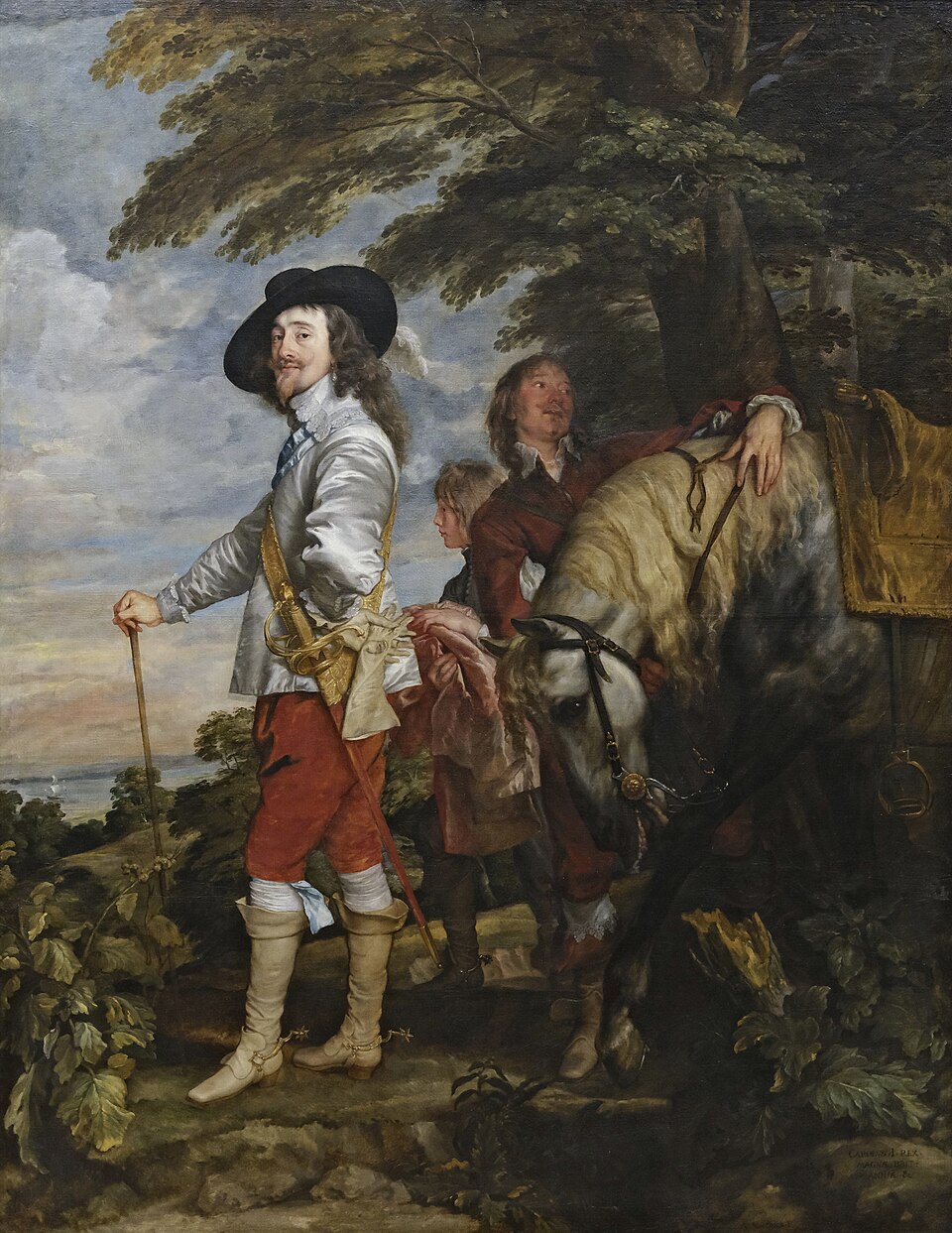
No armour, no throne, no crown: just a king who has stepped down from his horse during a hunt, hand on hip, looking back at us. Van Dyck made royal power look effortless.
The story behind the painting
Anthony van Dyck painted this portrait of Charles I of England around 1635, during his years as the king's Principal Painter in Ordinary. He had already shown Charles in armour on horseback, in Charles I with M. de St Antoine and the Equestrian Portrait of Charles I. Here he tried something different: the king in civilian clothes, standing beside his horse as if resting during a hunt. The Louvre, which now owns the painting, describes it as a subtle compromise between gentlemanly nonchalance and regal assurance. It is also known by its French title, Le Roi a la chasse.
What to look for
The canvas measures 266 by 207 cm. Charles stands on the left in lighter colours against a darker ground, while a young page and the courtier Endymion Porter, Charles's picture-buying agent, hold the horse in shadow under a tree on the right. The horse seems to bow its head to the king. Charles wears a wide-brimmed cavalier hat, a teardrop earring, a shimmering silver satin doublet, red breeches and turned-down leather boots. One hand rests on a walking stick, the other on his hip holding his gloves. Behind him lies the sea, perhaps the Solent with the Isle of Wight.
Meaning and intent
The king was famously sensitive about his height, so the viewer is placed low, looking up at him. His head is turned, his face pinched in a disdainful, somewhat bitter smile. In the lower right corner a Latin inscription on a rock reads Carolus I Rex Magnae Britanniae, Charles I, King of Great Britain. This was a political statement: only 32 years had passed since his father James united the crowns of Scotland and England, and the Kingdom of Great Britain would not legally exist for nearly 70 more years. The informality is itself a display of sovereignty that needs no props.
Legacy
Charles paid for the painting in 1638, though less than van Dyck originally asked. Yet it does not appear in the inventory of his collections made after his execution in 1649, and its path is unclear for a time. By 1738 it was in France, and in 1775 Madame du Barry sold it to King Louis XVI, a descendant of Charles. It is now in the Louvre in Paris. Wikidata records it among the Louvre's Department of Paintings, where this relaxed, quietly proud king still turns his head to meet the visitor's gaze.
Lo sapevi?
- Painted around 1635 by Anthony van Dyck.
- Measures 266 by 207 cm.
- The rock inscription names Charles King of Great Britain.
- Sold to Louis XVI in 1775; now in the Louvre.
L'artista
Anthony van Dyck (1599-1641)
portrait · man · Department of Paintings of the Louvre · Baroque · standing · horse · broad-leaved tree · equestrianism · domestic worker · Charles I of England
Altre opere di Anthony van Dyck
%20-%20Google%20Art%20Project.jpg) Charles I in Three Positions - Anthony van Dyck (1635)
Charles I in Three Positions - Anthony van Dyck (1635)%20with%20M.%20de%20St%20Antoine%20-%20Google%20Art%20Project.jpg) Charles I (1600-1649) with M. de St Antoine - Anthony van Dyck (1636)
Charles I (1600-1649) with M. de St Antoine - Anthony van Dyck (1636)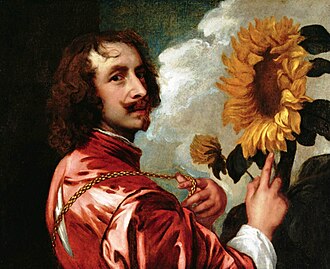 Self-portrait with a Sunflower - Anthony van Dyck (1632)
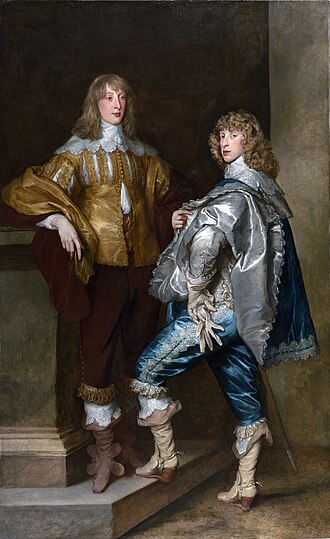 Lord John Stuart and His Brother, Lord Bernard Stuart - Anthony van Dyck (1638)
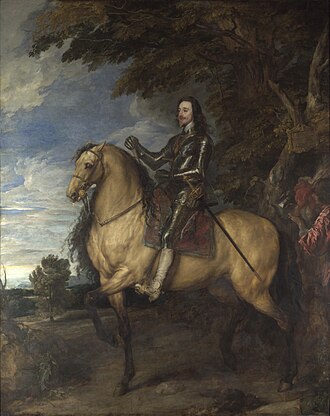 Equestrian Portrait of Charles I - Anthony van Dyck (1637)
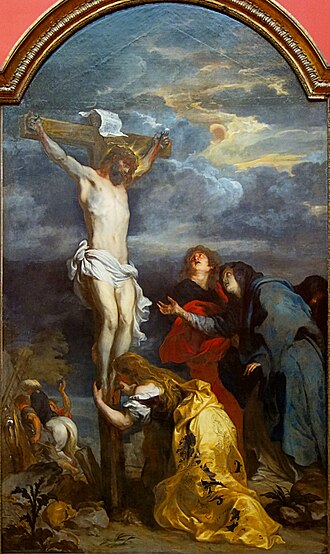 Crucifixion - Anthony van Dyck
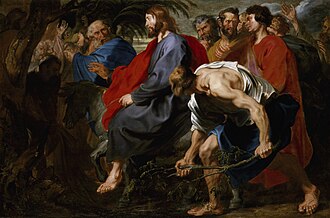 Entry of Christ into Jerusalem - Anthony van Dyck (1617)
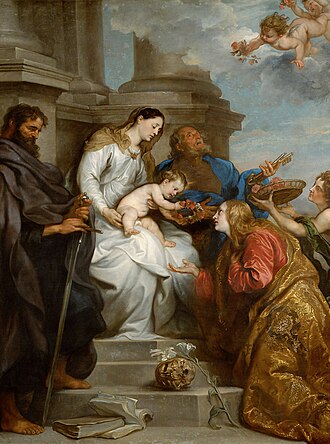 Coronation of Saint Rosalia - Anthony van Dyck (1629)
Dipinti di artisti collegati
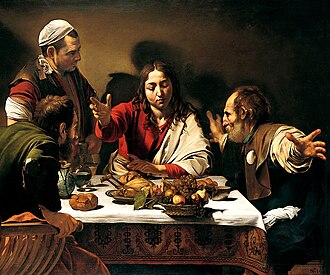 Supper at Emmaus - Caravaggio (1601)
 La vocazione di San Matteo - Caravaggio (1609)
 Las Meninas - Diego Velázquez (1656)
 The Surrender of Brea - Diego Velázquez (1635)
.jpg) The Elevation of the Cross - Peter Paul Rubens (1609)
The Elevation of the Cross - Peter Paul Rubens (1609) The Rape of the Daughters of Leucippus - Peter Paul Rubens (1618)
 The Night Watch - Rembrandt van Rijn (1642)
 Self-Portrait - Rembrandt van Rijn (1659)
 Girl with a Pearl Earring - Johannes Vermeer (1665)
 The Milkmaid - Johannes Vermeer (c. 1658)