Dresden Triptych
Jan van Eyck · 1437
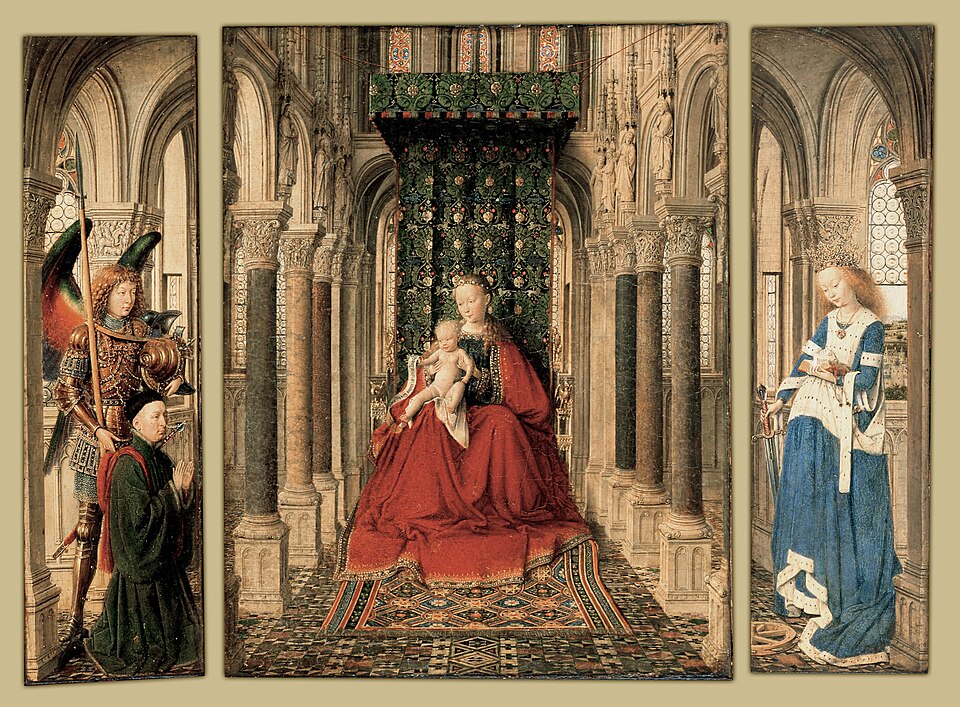
Small enough to carry on a journey, this hinged altarpiece opens like a jewel box onto a whole church interior. Jan van Eyck signed it with his motto: As I Can.
The story behind the painting
The Dresden Triptych is the only surviving triptych attributed to Jan van Eyck. It is signed and dated 1437, and it is the only work by him that is not a portrait to carry his motto, ALC IXH XAN, As I Can. The inscription, found when the frame was removed during a mid-twentieth-century restoration and confirmed in 1959, reads in Latin that Jan van Eyck made and completed it. Damaged coats of arms suggest the donor belonged to the Giustiniani of Genoa. The triptych later passed through the Gonzaga collection, Charles I of England and the banker Eberhard Jabach, reaching the Elector of Saxony. It is now in the Gemäldegalerie Alte Meister, Dresden.
What to look for
Closed, the outer wings show the Annunciation in grisaille, near-monochrome figures of Gabriel and Mary that look like sculpture. Open it, and colour floods in. In the centre, Mary sits in a church interior holding the Christ Child on her lap. On the left wing, the Archangel Michael presents a kneeling donor; on the right, Saint Catherine of Alexandria stands reading a prayer book. Painted bronze frames, inscribed mostly in Latin, surround the panels. A note on size: Wikidata gives 27.5 by 37.5 centimetres, while the source gives 33 by 27.5 centimetres including the frames. At this miniature scale every detail of arches, windows and carpet rewards close looking.
Meaning and intent
The triptych was probably made for private devotion, perhaps as a portable altar for travel or pilgrimage. Its three inner panels form a sacra conversazione, in which a patron saint presents a kneeling donor to the enthroned Mother of God. The rich Latin texts on the frames, drawn from biblical descriptions of the assumption and prayers to Michael and Catherine, suggest an educated, cultured owner. John Ward has argued that Van Eyck's symbolism highlighted the coexistence of the spiritual and material worlds. The painting's dark green canopy, heavily folded dress and geometric carpet also link it to his Lucca Madonna of about 1436.
Legacy
Because it is firmly signed and dated, the triptych is used as a touchstone for dating Van Eyck's other works, by comparing details like stained glass, mouldings and his handling of perspective. Its history of attribution is striking: a 1754 Dresden inventory gave it to Albrecht Dürer, until Aloys Hirt identified it as a Van Eyck in 1830; catalogues then named Hubert before settling on Jan. The source notes it marks an advance in his handling of depth and established elements of Marian imagery that became widespread later in the century. Elisabeth Dhanens called it the most charming, delicate and appealing work by Van Eyck to survive.
Lo sapevi?
- Signed and dated 1437, with the motto ALC IXH XAN
- The only surviving triptych attributed to Jan van Eyck
- Size: Wikidata gives 27.5 x 37.5 cm; the source gives 33 x 27.5 cm with frames
- Listed under Dürer's name in a 1754 Dresden inventory
L'artista
Jan van Eyck (1390-1441)
religious art · woman · Mary · Christ Child · boy · Early Netherlandish painting · mother · Staatliche Kunstsammlungen Dresden · Catherine of Alexandria · Michael
Altre opere di Jan van Eyck
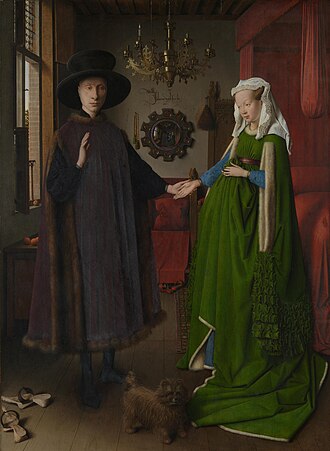 Arnolfini Portrait - Jan van Eyck (1434)
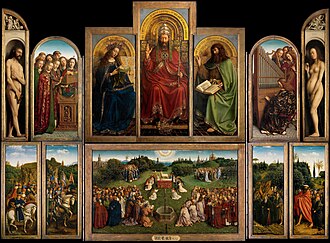 Ghent Altarpiece - Jan van Eyck (1432)
.webp) Madonna of Chancellor Rolin - Jan van Eyck
Madonna of Chancellor Rolin - Jan van Eyck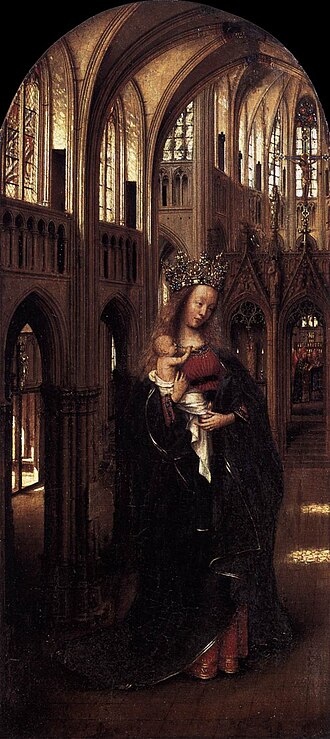 The Madonna in the Church - Jan van Eyck (1440)
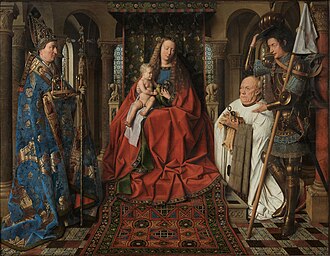 Madonna with Canon Joris van der Paele - Jan van Eyck (1436)
.png) Lucca Madonna - Jan van Eyck (1437)
Lucca Madonna - Jan van Eyck (1437)%201433.jpg) Portrait of a Man - Jan van Eyck (1433)
Portrait of a Man - Jan van Eyck (1433)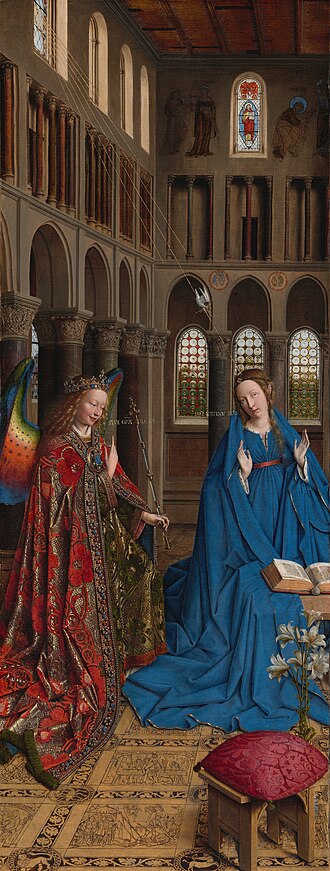 Annunciation - Jan van Eyck (1430s)
Dipinti di artisti collegati
 The Garden of Earthly Delights - Hieronymus Bosch
 Ship of Fools - Hieronymus Bosch (1500s)
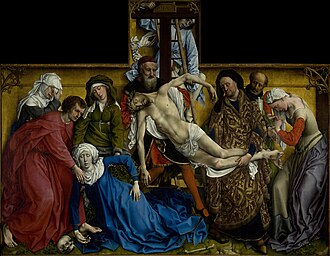 The Descent from the Cross - Rogier van der Weyden (1440s)
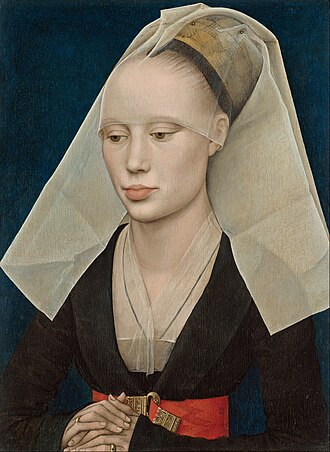 Portrait of a Lady - Rogier van der Weyden (1460)
%20-%20Google%20Art%20Project.jpg) The Hunters in the Snow - Pieter Bruegel the Elder (1565)
The Hunters in the Snow - Pieter Bruegel the Elder (1565)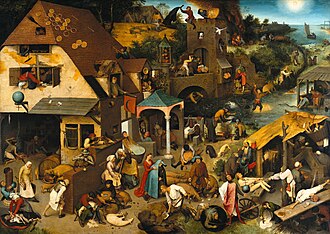 Netherlandish Proverbs - Pieter Bruegel the Elder (1551)