Dance of the Majos at the Banks of Manzanares
Francisco Goya · 1776
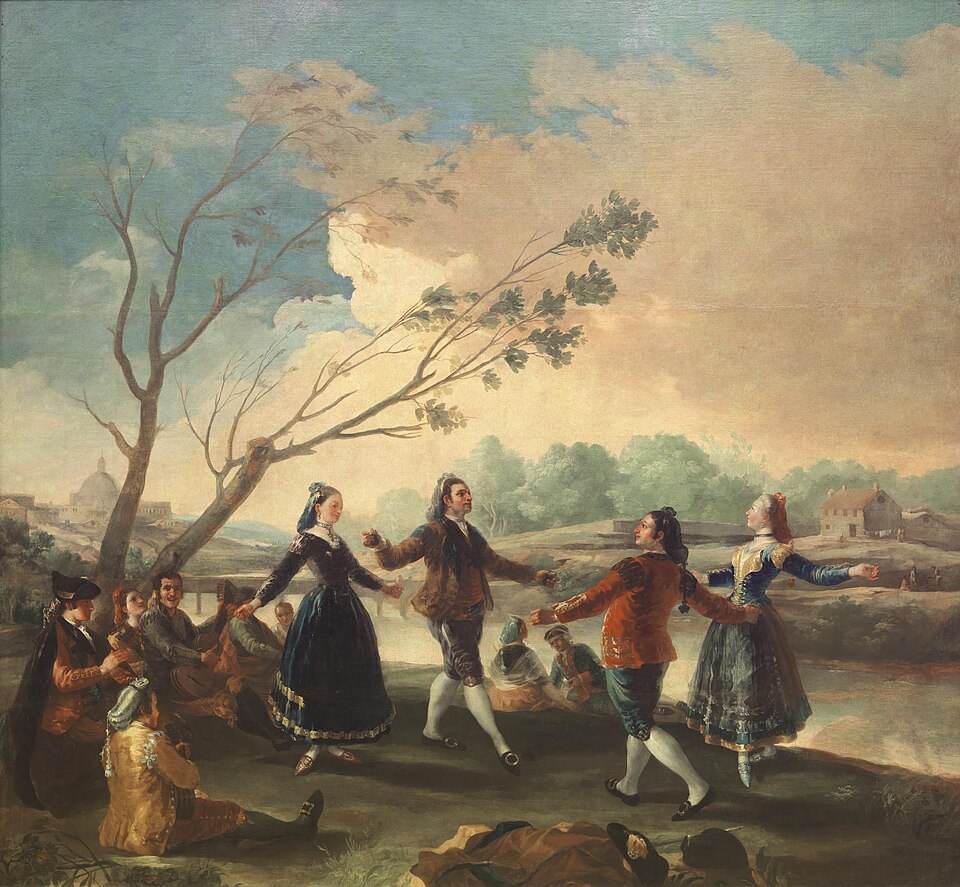
Two majos and two majas dance seguidillas by the river, musicians resting nearby, the dome of a Madrid church faint on the horizon. The young Goya painted this bright scene as a design for a royal tapestry, and it then vanished for almost a century.
The story behind the painting
The painting belongs to Goya's second series of tapestry cartoons, full-size designs for tapestries meant for the dining room of the Prince of Asturias, the future Charles IV, and his wife Maria Luisa of Parma, at the El Pardo Palace. Commissioned in October 1776, it was delivered to the Royal Tapestry Factory on 3 March 1777. Wikidata dates it 1776, while the French Wikipedia gives about 1776 to 1777. It was meant to be woven, not hung as a painting.
What to look for
Goya himself described the scene: two majos and two majas dancing seguidillas, with musicians, a soldier and another maja behind them, and in the distance, barely visible, the basilica of San Francisco el Grande in Madrid. The dancers form an open circle, as if inviting the viewer into the dance. The brushwork is loose, the colours bright, and the light opens onto a lovely distant landscape. The canvas is large, about 272 by 295 cm, and a guitar is among the details.
Meaning and intent
The men are dressed as courtiers and the women as majas, a mix of social classes that, the source notes, Goya returned to almost obsessively. Ladies of the aristocracy often dressed up as manolas for their parties, preferring rustic amusements to mythological themes. The influence of Mengs and Bayeu, who still supervised the young painter's designs, is visible, yet the dancers seem to move as if trying to escape the canvas. Years later Goya would buy the house known as the Quinta del Sordo on this same riverbank.
Legacy
The cartoon was thought lost until 1869, when Gregorio Cruzada Villaamil found it in the basement of the Royal Palace of Madrid. It entered the Prado by orders of January and February 1870 and first appeared in the museum's catalogue in 1876. It belongs to a series that includes The Picnic on the Banks of the Manzanares, The Parasol and The Kite. Today it hangs in the Prado's room 85, a reminder of the young Goya's festive Madrid.
Lo sapevi?
- A tapestry cartoon for the El Pardo Palace, commissioned in October 1776.
- Delivered to the Royal Tapestry Factory on 3 March 1777.
- Rediscovered in 1869 in the basement of the Royal Palace of Madrid.
- In the Museo del Prado since 1870.
L'artista
Francisco Goya (1746-1828)
Altre opere di Francisco Goya
 The Third of May 1808 - Francisco Goya (1814)
 La maja nuda - Francisco Goya (1800)
 Saturn Devouring His Son - Francisco Goya (1819)
 La famiglia di Carlo IV - Francisco Goya (1800)
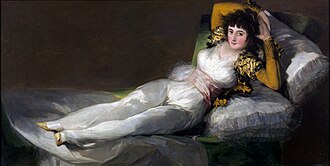 The Clothed Maja - Francisco Goya (1800)
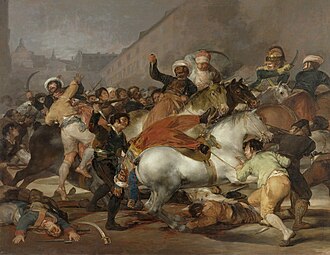 Il 2 maggio 1808 a Madrid - Francisco Goya (1814)
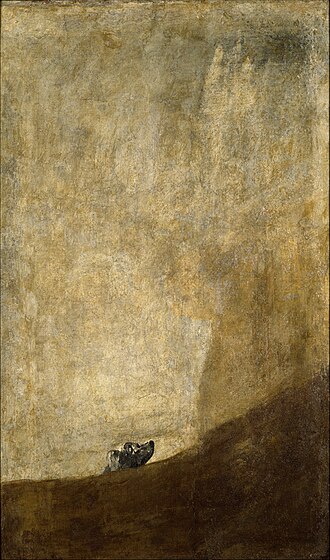 Cane semiaffondato - Francisco Goya (1819)
 Il sabba delle streghe - Francisco Goya (1820s)
Dipinti di artisti collegati
 Wanderer above the Sea of Fog - Caspar David Friedrich (c. 1818)
 The Abbey in the Oakwood - Caspar David Friedrich (1800s)
 Liberty Leading the People - Eugène Delacroix (1830)
 Death of Sardanapalus - Eugène Delacroix (1827)
 The Fighting Temeraire - J. M. W. Turner (1839)
 Rain, Steam and Speed - The Great Western Railway - J. M. W. Turner (1844)
 The Blue Boy - Thomas Gainsborough (1770)
 Mr and Mrs Andrews - Thomas Gainsborough (1748)