Columba Triptych
Rogier van der Weyden · 1450s
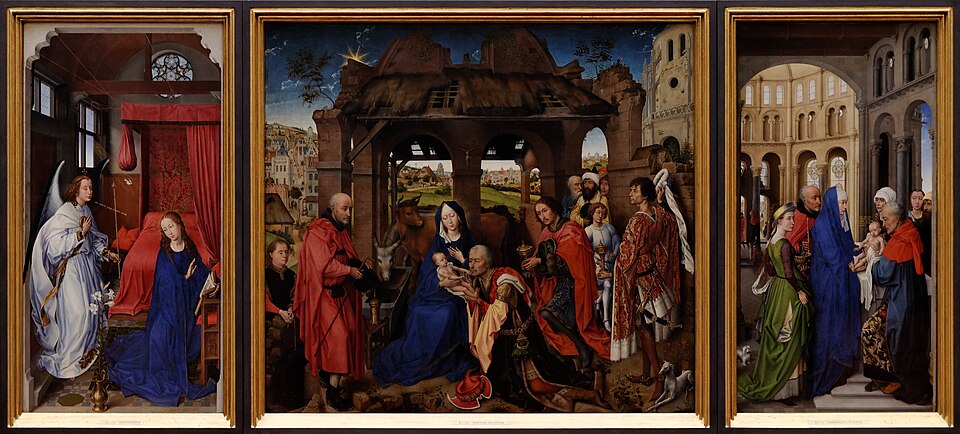
A king kneels to kiss the Christ Child's hand while a whole city bustles on the hills behind. Rogier van der Weyden made this altarpiece for a Cologne chapel late in his life, and painters copied it for a century.
The story behind the painting
The Saint Columba Altarpiece, also called the Adoration of the Kings, is an oil on oak triptych painted around 1450 to 1455, in Rogier van der Weyden's late period. It was made for the church of St. Columba in Cologne. It was recorded there in 1801 in the family chapel of the von dem Wasservass family, probably founded in the 1460s by Goddert von dem Wasservass, burgomaster of Cologne, and it is reasonable to think he commissioned it. Lorne Campbell suggests it never left the chapel until 1801.
What to look for
Read the three panels from left to right. In the Annunciation, Mary in blue kneels before a bed with red sheets; a carved fall of man on her prayer desk is turned so only we can see it, and a gold pot holds lilies. In the centre, the eldest king kneels to hold the Child's feet and raise his hand to his lips, while the donor, with prayer beads, kneels cramped behind Joseph. A small crucifix hangs on the pillar behind Mary. On the right, the Presentation takes place under monumental arches of an octagonal temple.
Meaning and intent
The panels bend time and place. The stable is in Bethlehem and the Temple in Jerusalem, yet the outer wall of the temple already appears at the edge of the central panel, so the story flows continuously across the altarpiece, perhaps as a bridge between Old and New Testaments. The crucifix in the stable foretells a death 33 to 36 years away. Mary is always in blue, so the eye follows her. Goethe in 1816 described the city view as full of streets and houses, bustle and industry.
Legacy
The triptych was frequently copied in the 15th and 16th centuries and inspired works by Hans Memling, among them the Jan Floreins Altarpiece. Van der Weyden himself drew on Stefan Lochner's altarpiece of the patron saints of Cologne, which he is known to have seen. In the 19th century it was for a time attributed to Jan van Eyck. The brothers Sulpiz and Melchior Boisserée bought it in 1808, and their collection was acquired in 1827 for the Alte Pinakothek in Munich, where it remains.
Lo sapevi?
- Oil on oak, around 1450-1455, for St. Columba in Cologne.
- Panels: Annunciation, Adoration of the Magi, Presentation in the Temple.
- Inspired works by Hans Memling; once attributed to Jan van Eyck.
- In the Alte Pinakothek, Munich, since the Boisserée collection was bought in 1827.
L'artista
Rogier van der Weyden (1390s-1464)
religious art · Early Netherlandish painting · Bavarian State Painting Collections · Annunciation · adoration of the Magi · crucifix
Altre opere di Rogier van der Weyden
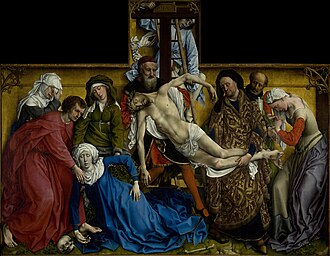 The Descent from the Cross - Rogier van der Weyden (1440s)
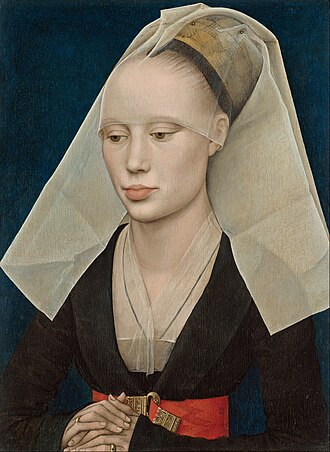 Portrait of a Lady - Rogier van der Weyden (1460)
.jpg) The Last Judgment - Rogier van der Weyden (1443)
The Last Judgment - Rogier van der Weyden (1443)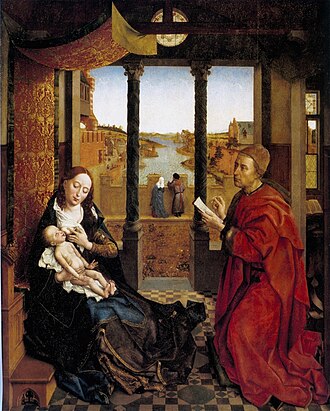 Saint Luke Drawing the Virgin - Rogier van der Weyden (1490)
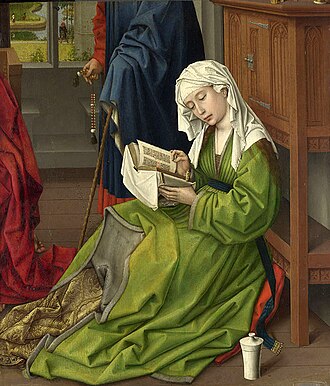 The Magdalen Reading - Rogier van der Weyden (1435)
 Braque Triptych - Rogier van der Weyden (1452)
%20-%20Prado%20P02722.jpg) Durán Madonna - Rogier van der Weyden (1430s)
Durán Madonna - Rogier van der Weyden (1430s)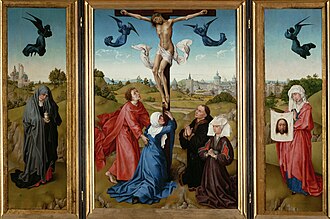 Crucifixion Triptych - Rogier van der Weyden (1440s)
Dipinti di artisti collegati
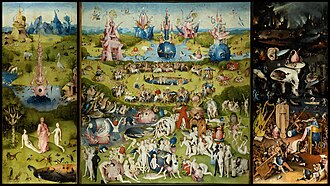 The Garden of Earthly Delights - Hieronymus Bosch
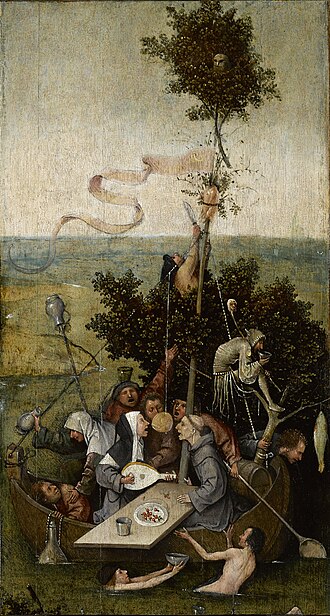 Ship of Fools - Hieronymus Bosch (1500s)
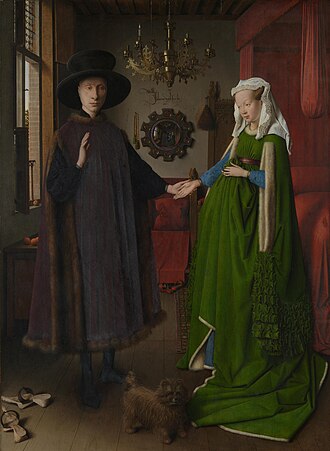 Arnolfini Portrait - Jan van Eyck (1434)
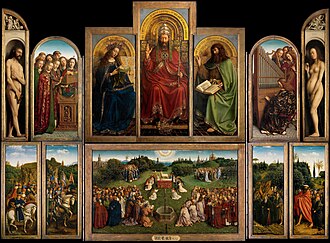 Ghent Altarpiece - Jan van Eyck (1432)
%20-%20Google%20Art%20Project.jpg) The Hunters in the Snow - Pieter Bruegel the Elder (1565)
The Hunters in the Snow - Pieter Bruegel the Elder (1565)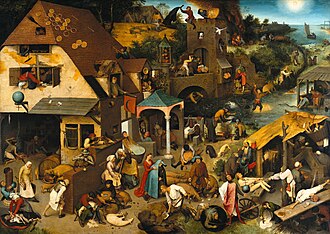 Netherlandish Proverbs - Pieter Bruegel the Elder (1551)