Sandro Botticelli
1445-1510
Sandro Botticelli spent almost his whole life in one Florence neighbourhood, yet his Birth of Venus and Primavera became icons of the Italian Renaissance. Half forgotten for centuries, he was rediscovered by the Pre-Raphaelites and has been loved for his flowing, graceful line ever since.
Origins
Alessandro di Mariano di Vanni Filipepi was born in Florence, in a house on the street still called Borgo Ognissanti. His exact birth date is unknown; his father's tax returns give his age as two in 1447 and thirteen in 1458, so he was born between 1444 and 1446. He was the youngest of four surviving children of the tanner Mariano Filipepi and his wife Smeralda. In 1460 his father became a gold-beater, and Vasari reports that Sandro first trained as a goldsmith. His nickname comes from his brother Giovanni, called Botticello, little barrel, apparently for his round build; by 1470 Sandro had fully adopted the name. From around 1461 he was apprenticed to Fra Filippo Lippi, a leading Florentine painter favoured by the Medici.
Life and turning points
By 1469 he had his own workshop, and in 1472 he took his first apprentice, Filippino Lippi, his late master's son. His reputation soared through the 1470s, helped by the Adoration of the Magi for Santa Maria Novella, which includes portraits of the Medici and, in most views, of Botticelli himself. In 1481 Pope Sixtus IV called him to Rome to fresco the walls of the new Sistine Chapel, where he painted three of the large scenes and many imagined portraits of early popes. Back in Florence by 1482, he entered his most successful decade. According to Vasari, he later followed the friar Savonarola and fell into poverty, but modern historians reject Vasari's claim that he produced nothing afterwards. He died in May 1510 and was buried in his neighbourhood church of Ognissanti.
Style and technique
From Lippi he learned to create intimate compositions with beautiful, melancholic figures drawn with clear contours and only slight contrasts of light and shadow. His work is now seen to carry the linear grace of late Italian Gothic and early Renaissance painting, even though it dates from the later Renaissance. Besides the mythologies he is best known for, he painted many religious subjects, including dozens of Madonnas, often in the round tondo shape, and some portraits. In the Sistine scenes he divided each picture into a central group with two flanking groups. By the 1490s his style became more personal, and his last works move away from Leonardo and the High Renaissance towards a style many call more Gothic or archaic, with elegance giving way to a forceful austerity.
Stories and anecdotes
Vasari says he was known for practical jokes. In his fresco of Saint Augustine in Ognissanti, most of the writing in the open book is scribble, but one line asks where Brother Martino is and answers that he went out, probably overheard from the friars who ran the church. His family's neighbours were the Vespucci, including Amerigo Vespucci, after whom the Americas were named. He had a lifelong love of Dante and drew a great illustrated manuscript of the Divine Comedy, whose surviving 93 sheets form most of his known drawings. The story that he burned his own secular paintings in the 1497 bonfire of the vanities is not told by Vasari. In 1504 he served on the committee that decided where Michelangelo's David would stand.
Legacy
Primavera and The Birth of Venus, both in the Uffizi, are among the most famous paintings in the world. Large scenes from classical mythology like these were virtually unprecedented in Western art since antiquity, and historians still debate their meaning, patrons and models. After his death his reputation suffered until the late 19th century, when the Pre-Raphaelites rediscovered him and prompted a reappraisal. Sources conflict on his final years: Vasari says he died ill and decrepit at seventy-eight, while tax records suggest he was in his mid sixties. The Mystic Nativity of 1501 is his only dated painting. His dancing figures and wind-blown hair still make the Renaissance feel light, tender and alive.
Lo sapevi?
- He lived and worked in the same house on the Via Nuova from at least 1470 until his death.
- The Adoration of the Magi for Santa Maria Novella is the first of eight Adorations he painted.
- Gossip links his ideal female heads to Simonetta Vespucci, but this seems unlikely.
- In 1502 Isabella d'Este's agent reported that Botticelli was free to start a painting at once.
Early Renaissance · High Renaissance · renaissance humanism
Artisti collegati
Piero della Francesca · Leonardo da Vinci · Fra Angelico · Andrea Mantegna
Dipinti di Sandro Botticelli
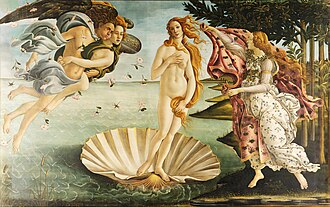 The Birth of Venus - Sandro Botticelli (c. 1485)
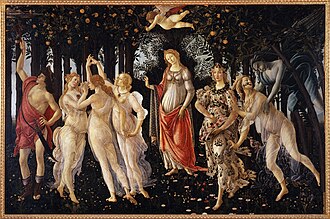 Primavera - Sandro Botticelli (1480s)
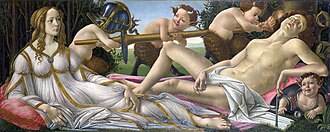 Venus and Mars - Sandro Botticelli (1485)
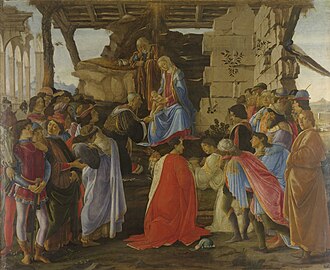 Adoration of the Magi - Sandro Botticelli (1470s)
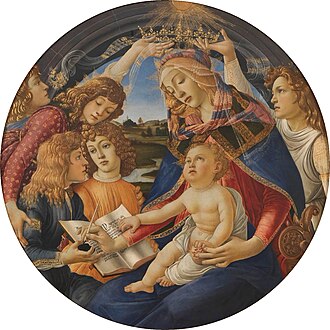 Madonna of the Magnificat - Sandro Botticelli (1481)
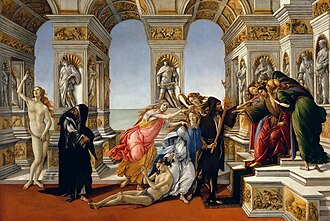 Calumny of Apelles - Sandro Botticelli (1490s)
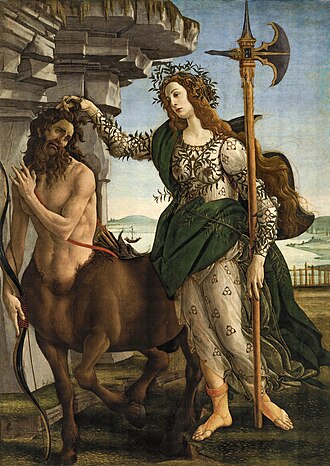 Pallas and the Centaur - Sandro Botticelli (1482)
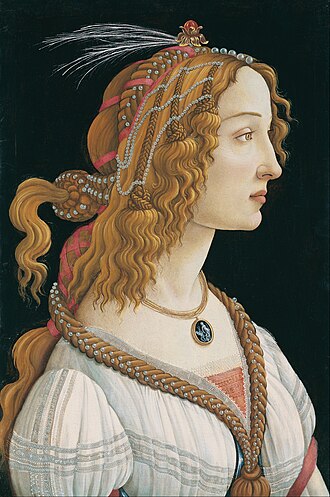 Idealized Portrait of a Lady - Sandro Botticelli (1480)
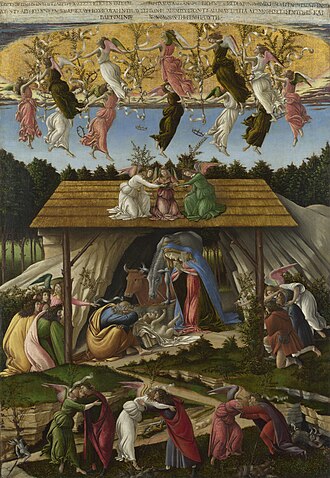 The Mystical Nativity - Sandro Botticelli (1500)
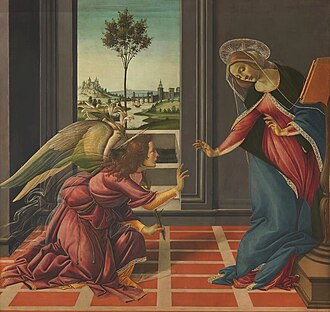 Cestello Annunciation - Sandro Botticelli
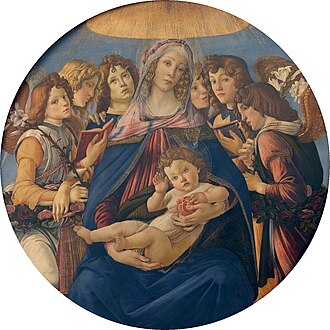 Madonna of the Pomegranate - Sandro Botticelli (1487)
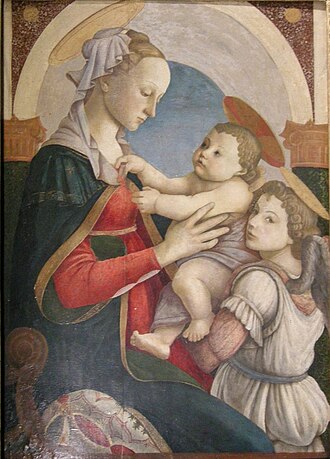 Madonna and Child with an Angel - Sandro Botticelli (1465)
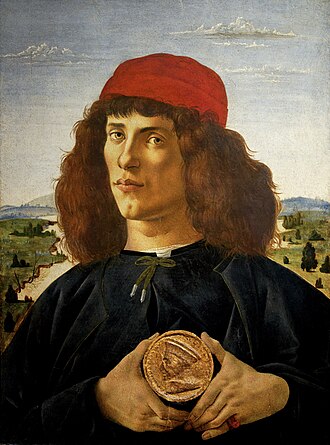 Portrait of a Man with a Medal of Cosimo the Elder - Sandro Botticelli (1474)
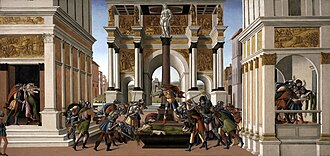 The Story of Lucretia - Sandro Botticelli (1500)
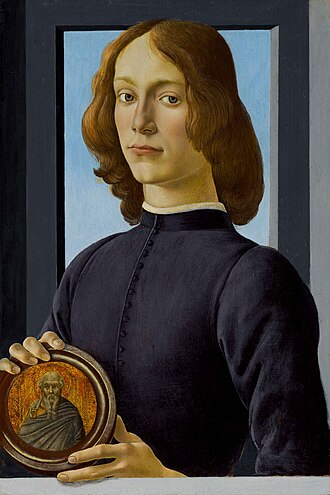 Young Man Holding a Roundel - Sandro Botticelli (1480s)
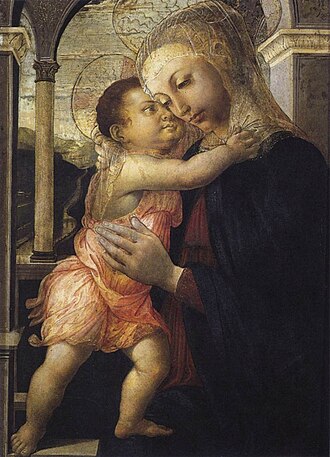 Madonna della Loggia - Sandro Botticelli (1467)
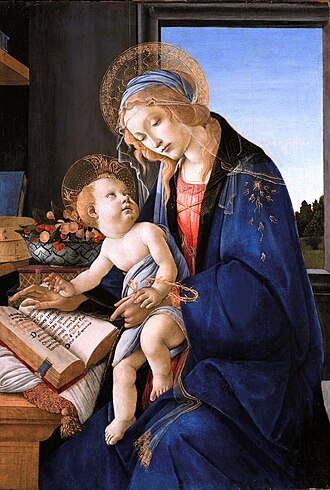 Madonna of the Book - Sandro Botticelli (1480s)
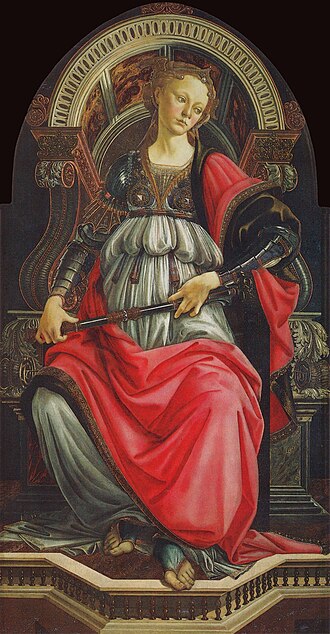 Fortitude - Sandro Botticelli (1475)
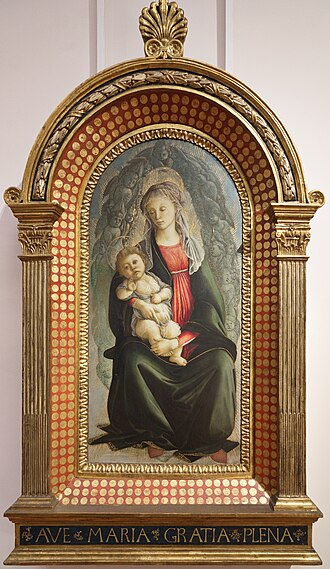 Madonna in Glory with Seraphim - Sandro Botticelli (1469)
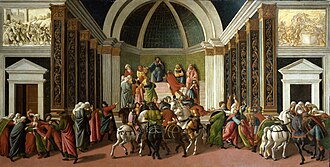 The Story of Virginia - Sandro Botticelli (1505)
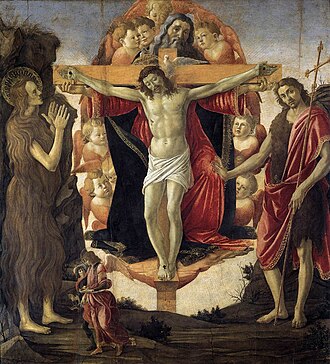 Holy Trinity - Sandro Botticelli (1490s)
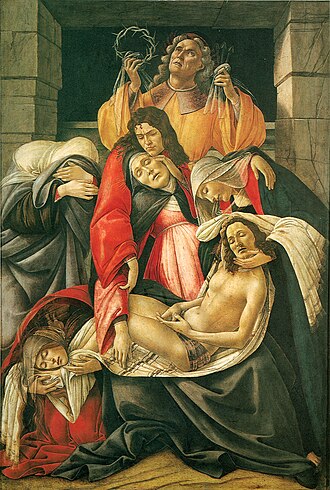 Lamentation over the Dead Christ with Saints - Sandro Botticelli (1495)
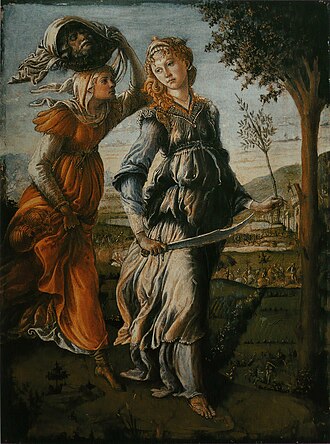 The Return of Judith to Bethulia - Sandro Botticelli (1470)
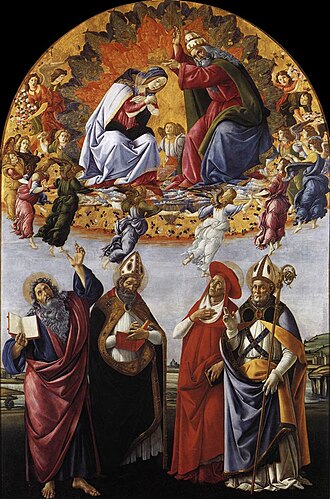 Coronation of the Virgin - Sandro Botticelli (1488)
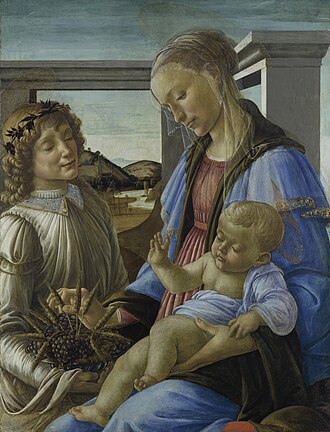 Virgin and Child with an Angel - Sandro Botticelli (1470)
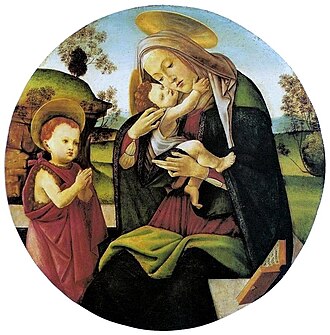 Virgin and Child with the Infant John the Baptist - Sandro Botticelli (1490s)
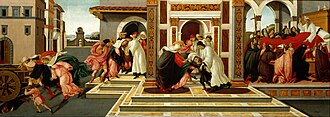 Last Miracle and the Death of Saint Zenobius - Sandro Botticelli (1500)
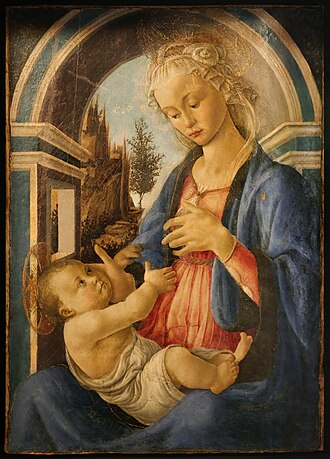 Madonna and Child - Sandro Botticelli (1467)
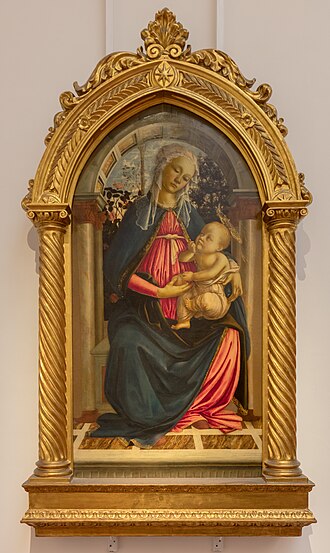 Madonna of the Rose Garden - Sandro Botticelli (1469)
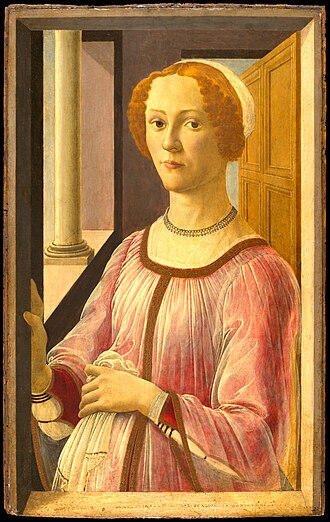 Portrait of a Lady known as Esmeralda Brandini - Sandro Botticelli (1470s)
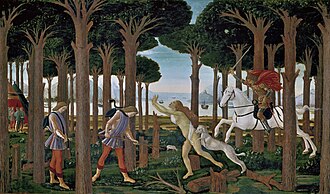 The Story of Nastagio Degli Onesti, part one - Sandro Botticelli (1483)
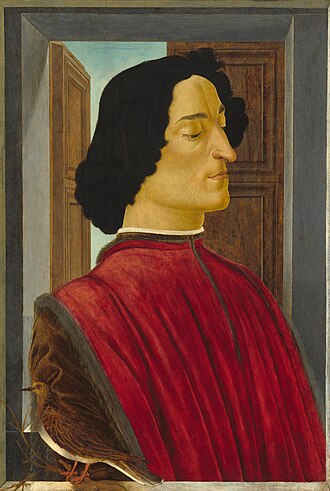 Portrait of Giuliano de' Medici - Sandro Botticelli (1470s)
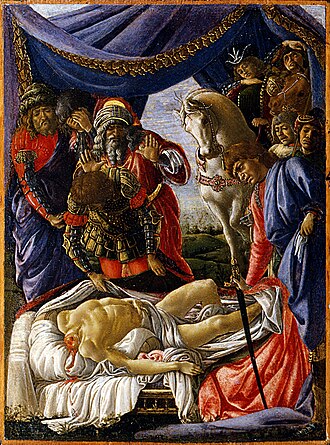 The Discovery of the Body of Holofernes - Sandro Botticelli (1470)
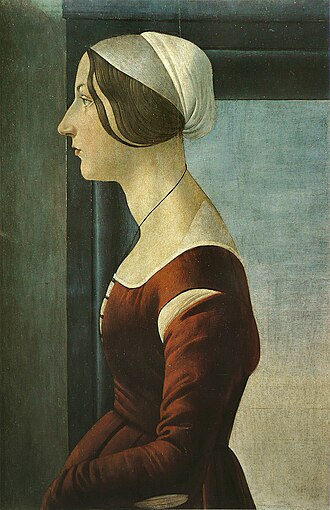 Portrait of a Young Woman - Sandro Botticelli (1485)
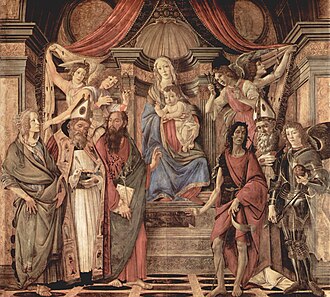 San Barnaba Altarpiece - Sandro Botticelli (1487)
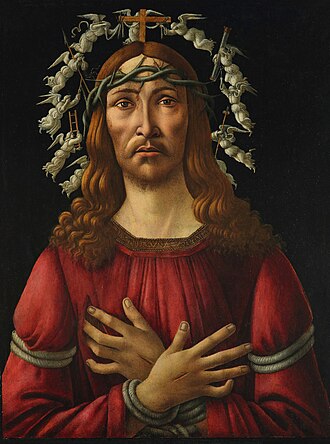 The Man of Sorrows - Sandro Botticelli (1500)
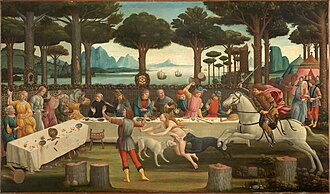 The Story of Nastagio Degli Onesti, part three - Sandro Botticelli (1483)
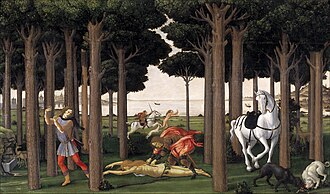 The Story of Nastagio Degli Onesti, part two - Sandro Botticelli (1483)
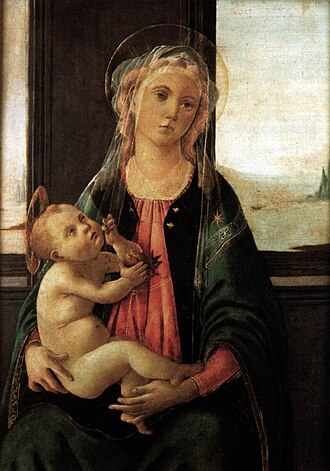 Virgin of the Sea - Sandro Botticelli (1477)
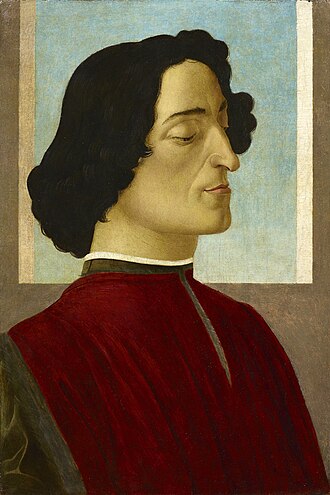 Portrait of Giuliano de' Medici - Sandro Botticelli
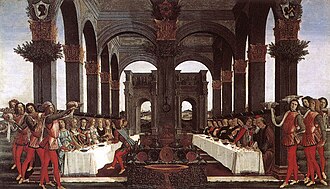 The Story of Nastagio Degli Onesti, part four - Sandro Botticelli (1483)
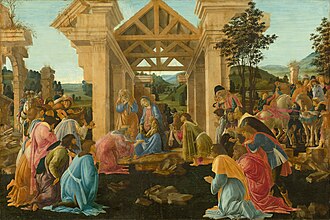 Adoration of the Magi - Sandro Botticelli (1482)
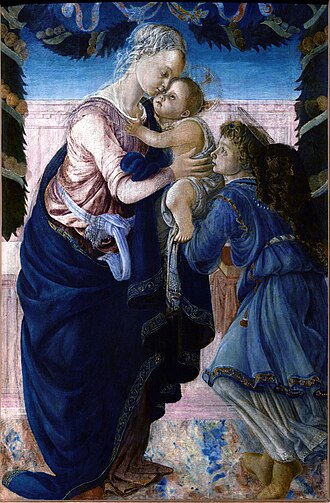 Madonna and Child with an Angel - Sandro Botticelli (1465)
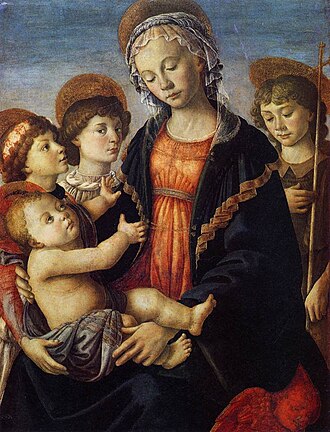 Madonna and Child with Saint John the Baptist and Two Angels - Sandro Botticelli (1470)
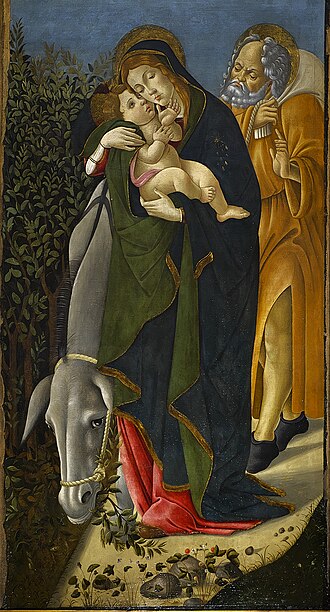 The Flight into Egypt - Sandro Botticelli (1510)