The Story of Lucretia
Sandro Botticelli · 1500
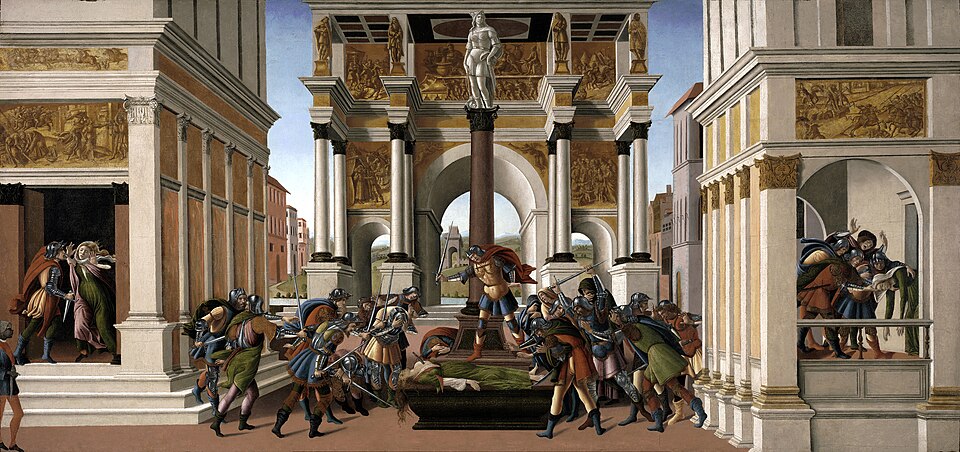
In a small, theatrical town square, a crowd gathers around a fallen woman and a man raises his sword: Botticelli painted the founding story of the Roman Republic as a lesson against tyranny.
The story behind the painting
Botticelli painted this tempera and oil panel, probably for a cassone or spalliera, sometime between 1496 and 1504; Wikidata gives the date as 1500. It tells the Roman legend of Lucretia, a noblewoman assaulted by Sextus Tarquinius, son of the last king of Rome. After her death, Lucius Junius Brutus swore to drive the Tarquins from Rome and never let anyone reign again. That oath marked the beginning of the Roman Republic. Botticelli joined several moments of this legend into one wide panel, about 84 by 180 centimetres. The theme, revolt against tyranny, was a popular one in the restless Italian republics of his day.
What to look for
Read the panel in three parts. On the left porch, Sextus threatens Lucretia, pulling at her cloak and menacing her with his sword. On the right porch, we see her death. In the centre, Lucretia lies on public display as a heroine, the dagger still at her breast, while Brutus stands over her urging the people to rise, and young men lift their swords. Above, on a column, stands a statue of David with Goliath's head. The friezes add more stories: Judith and Holofernes on the left, and the Roman defender Horatius Cocles on the right. The buildings are not classical Roman; the setting is a small town fading into countryside, framed by an unusual triumphal arch.
Meaning and intent
For Florence, David and Goliath were a symbol of revolt against tyranny, so the statue ties Rome's ancient story to Botticelli's own republic. Lucretia had asked for vengeance, but the gathering in the centre is about something larger: ending monarchy itself. The scholar Hilliard T. Goldfarb sees the scene as a kind of stage, with actors gesturing dramatically, and stresses its political message. The Wikipedia article questions whether such a message suits a wedding chest or chair back, suggesting the panel may have been meant for some public display. Either way, Lucretia's suffering is presented not as spectacle but as the turning point of a people's history.
Legacy
The panel now hangs in the Isabella Stewart Gardner Museum in Boston, and it belonged to Isabella Stewart Gardner during her lifetime. Its architectural framing has been compared with that of Filippino Lippi, Botticelli's pupil and the son of his own teacher. The Wikipedia article also notes that Botticelli, about ten years later, would die in poverty and obscurity, though already recognised as a great master. Sources differ slightly on the title, which appears as The Story of Lucretia and as The Tragedy of Lucretia, and on its date, given as 1500 or as between 1496 and 1504.
Lo sapevi?
- Tempera and oil on panel, dated 1496-1504 by Wikipedia and 1500 by Wikidata.
- About 84 x 180 cm, in the Isabella Stewart Gardner Museum, Boston.
- A statue of David with Goliath's head stands above the central scene.
- Its architecture has been compared with that of Filippino Lippi.
L'artista
Sandro Botticelli (1445-1510)
woman · Early Renaissance · history painting · Isabella Stewart Gardner Museum
Altre opere di Sandro Botticelli
 The Birth of Venus - Sandro Botticelli (c. 1485)
 Primavera - Sandro Botticelli (1480s)
 Venus and Mars - Sandro Botticelli (1485)
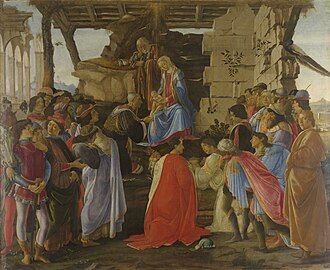 Adoration of the Magi - Sandro Botticelli (1470s)
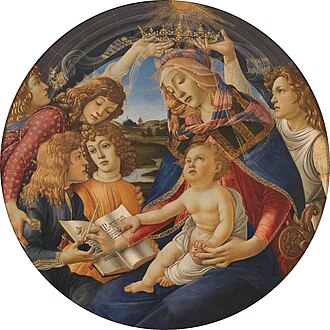 Madonna of the Magnificat - Sandro Botticelli (1481)
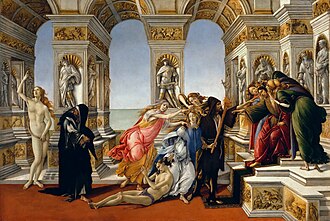 Calumny of Apelles - Sandro Botticelli (1490s)
.jpg) Pallas and the Centaur - Sandro Botticelli (1482)
Pallas and the Centaur - Sandro Botticelli (1482)%20-%20Google%20Art%20Project.jpg) Idealized Portrait of a Lady - Sandro Botticelli (1480)
Idealized Portrait of a Lady - Sandro Botticelli (1480)
Dipinti di artisti collegati
 Mona Lisa - Leonardo da Vinci (1503-1519)
 Lady with an Ermine - Leonardo da Vinci (1490)
.jpg) Venus of Urbino - Titian (1538)
Venus of Urbino - Titian (1538)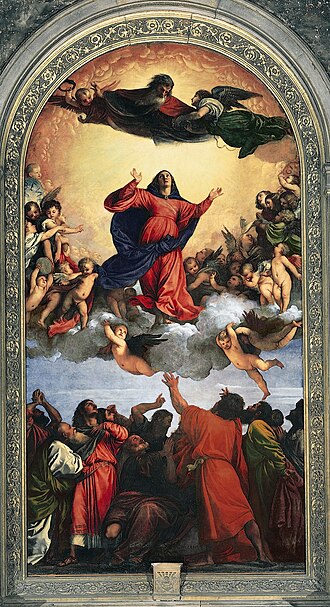 Assumption of the Virgin - Titian (1510s)
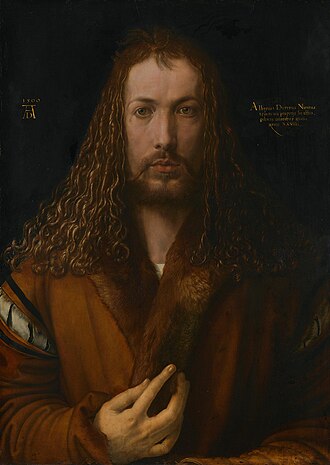 Self-Portrait with Fur-Trimmed Robe - Albrecht Dürer (1500)
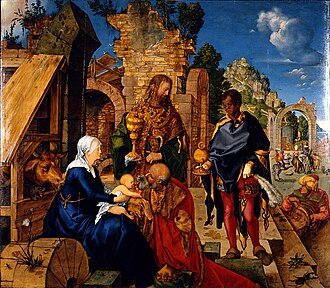 Adoration of the Magi - Albrecht Dürer (1504)