Madonna and Child
Sandro Botticelli · 1467
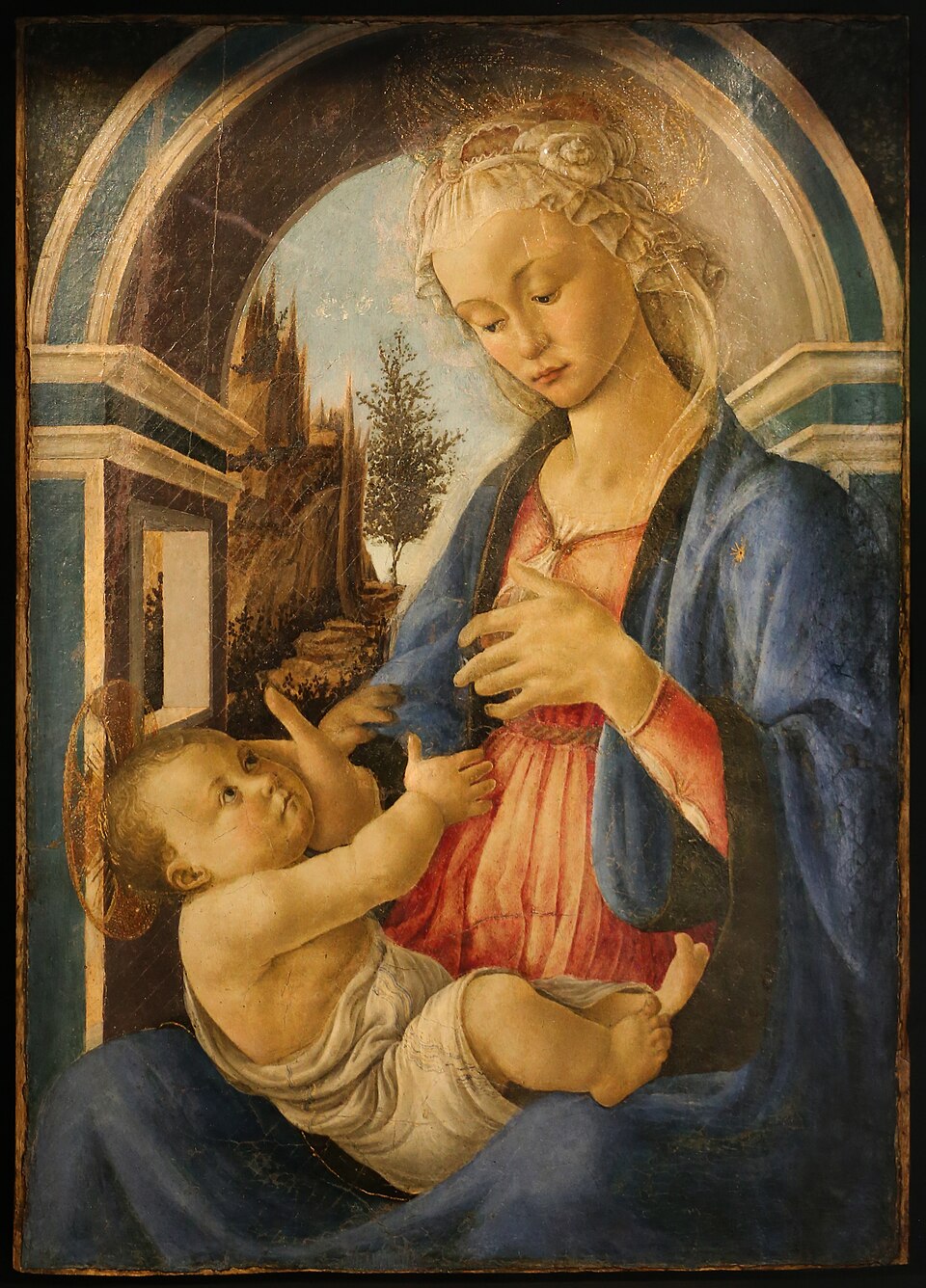
Under a loggia opening onto steep hills, the Virgin strokes her baby's cheek as he reaches for her. Was it Botticelli, Filippino Lippi, or both? Scholars have long disagreed.
The story behind the painting
Known as the Campana Madonna, this religious painting dates from 1467 to 1470. Its authorship has been debated. Campana and Cornu first gave it to Filippino Lippi, as did the school of Reiset, while Bernard Berenson and the school of Pittaluga recognised the hand of Sandro Botticelli. The Louvre, on its website, credits both artists. Napoleon III acquired the painting for the Louvre's collections in 1862, from the Campana collection, and it was restored in 1974. The source says it is kept at the Petit Palais in Avignon, while Wikidata lists the Louvre's Department of Paintings.
What to look for
The Virgin, dressed in her traditional red and blue, sits under a loggia, turned three-quarters to the left, with the Child on her knee. Behind her, an arched opening on columns gives onto a rugged landscape. With her right hand she caresses the Child's cheek, and with her left she is about to offer him her breast, as he stretches towards her. Her hair is finely arranged under a thin veil decorated with a flower. Both figures wear delicate, transparent elliptical haloes. The panel measures 72 by 51 cm.
Meaning and intent
The painting follows the theme of the nursing Virgin, which brings together the mystery of the Incarnation and Mary's role as mediator. The composition shows the influence of Donatello and Fra Filippo Lippi, from whom comes the dominance of the outline and the vibrant drapery. Yet the forms are softer and more supple, in more complex poses than Lippi's. The vivid contrasts and bronze tones come from Antonio Pollaiuolo. The arched architecture frames mother and child. The mood is melancholy and contemplative, with serious, pensive figures absorbed in their own beauty.
Legacy
This small panel shows young Botticelli, or his circle, absorbing the lessons of Florentine masters and softening them into something gentler. The open question of who painted it is part of its story, and the Louvre's choice to name both Botticelli and Filippino Lippi keeps that question alive. Bought by Napoleon III from the famous Campana collection in 1862 and restored in 1974, it remains a quiet example of the Madonna and Child theme so common in Christian painting.
Lo sapevi?
- Dated 1467 to 1470.
- Attributed to Botticelli, perhaps with Filippino Lippi.
- Acquired by Napoleon III from the Campana collection in 1862.
- 72 x 51 cm, restored in 1974.
L'artista
Sandro Botticelli (1445-1510)
religious art · woman · Mary · Christ Child · Department of Paintings of the Louvre · boy · mother · hairstyle
Altre opere di Sandro Botticelli
 The Birth of Venus - Sandro Botticelli (c. 1485)
 Primavera - Sandro Botticelli (1480s)
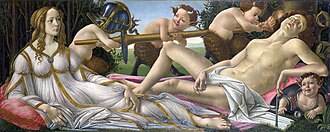 Venus and Mars - Sandro Botticelli (1485)
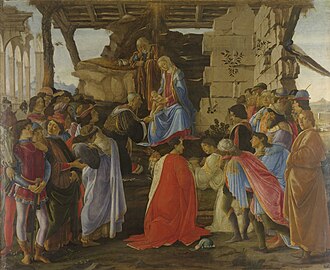 Adoration of the Magi - Sandro Botticelli (1470s)
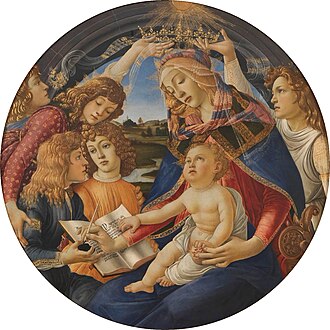 Madonna of the Magnificat - Sandro Botticelli (1481)
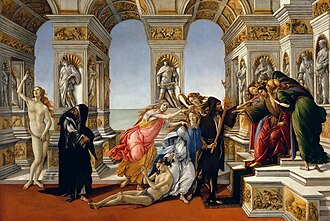 Calumny of Apelles - Sandro Botticelli (1490s)
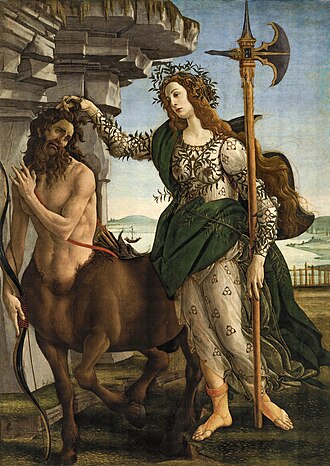 Pallas and the Centaur - Sandro Botticelli (1482)
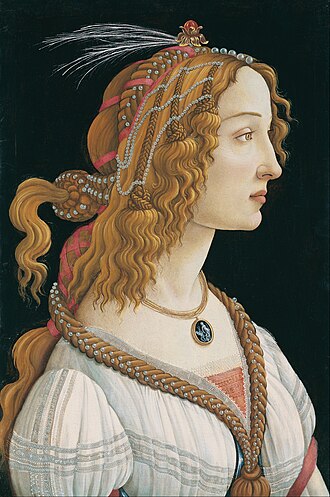 Idealized Portrait of a Lady - Sandro Botticelli (1480)
Dipinti di artisti collegati
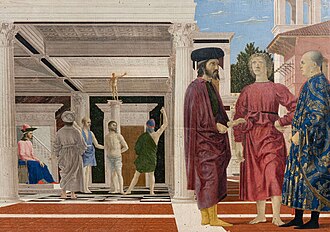 Flagellation of Christ - Piero della Francesca (1450s)
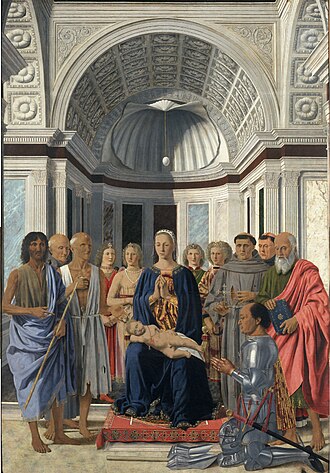 Madonna and Child with Saints, Angels and Federico da Montefeltro - Piero della Francesca (1472)
 Mona Lisa - Leonardo da Vinci (1503-1519)
 Lady with an Ermine - Leonardo da Vinci (1490)
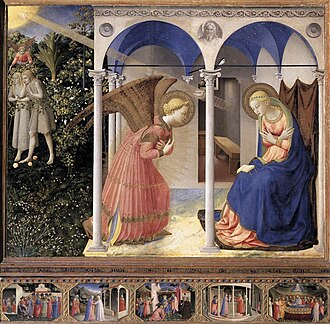 Annunciation - Fra Angelico (1425)
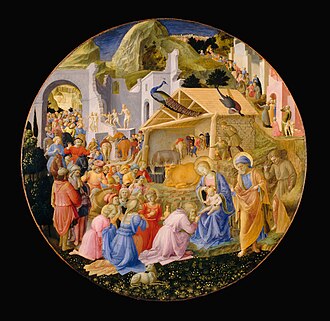 Adoration of the Magi - Fra Angelico (1430)
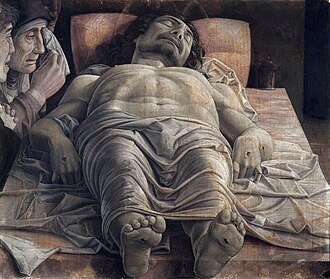 Lamentation of Christ - Andrea Mantegna (1483)
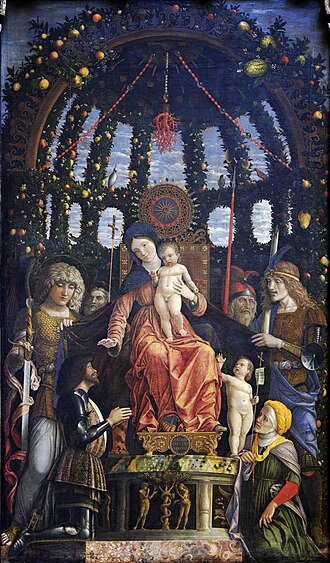 Madonna della Vittoria - Andrea Mantegna