Victory O Lord!
John Everett Millais · 1871
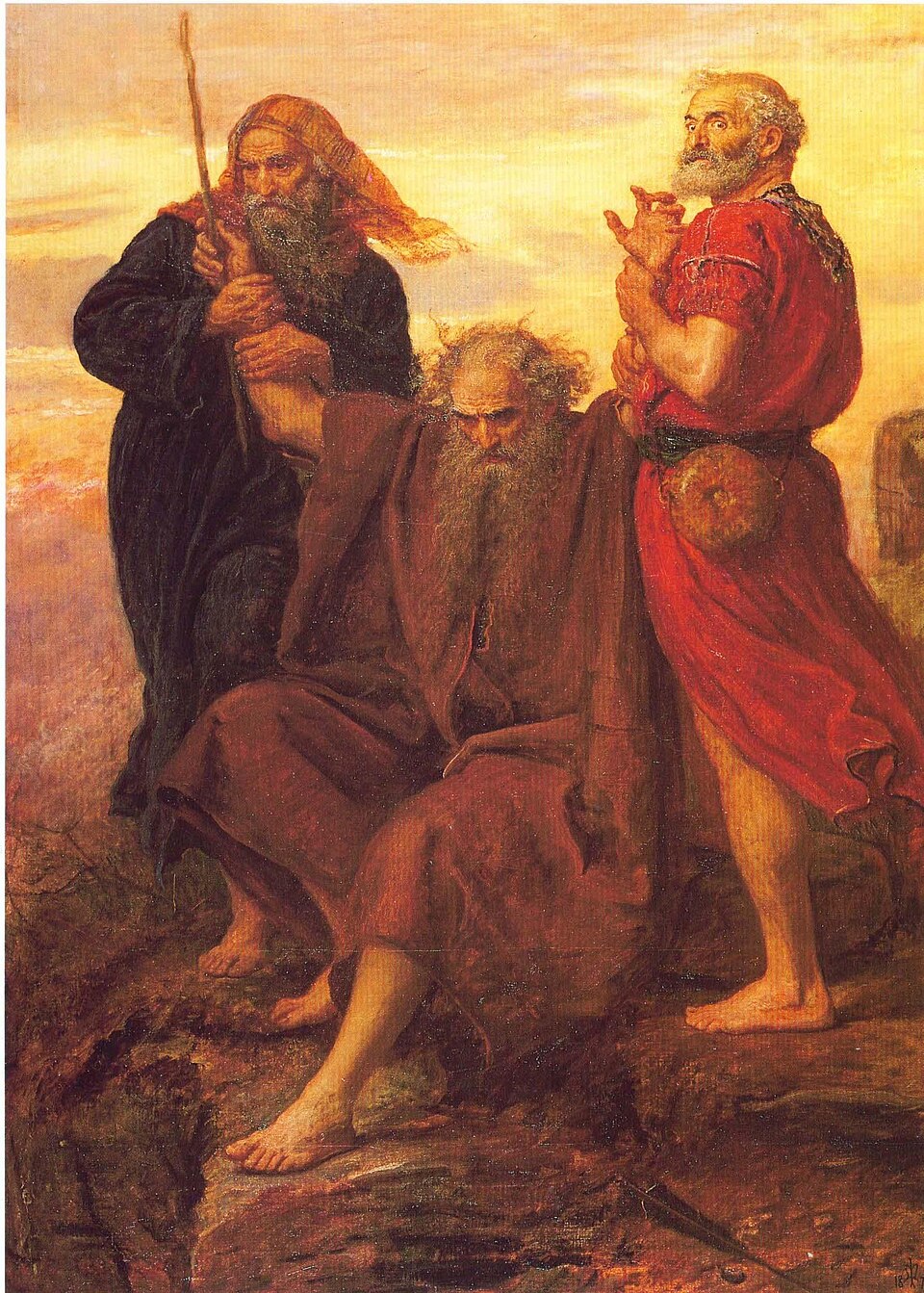
On a hilltop at sunset, two old men hold up the tired arms of Moses so that a battle below can be won. Millais spent years scraping and repainting this scene.
The story behind the painting
Victory O Lord! dates from 1871 and illustrates Exodus chapter 17. As Joshua fought the Amalekites at Rephidim, Moses stood on a hill with the rod of God. Whenever he held up his hand, Israel prevailed; whenever he let it fall, Amalek prevailed. When his hands grew heavy, Aaron and Hur sat him on a stone and held up his arms, one on each side, until the going down of the sun. Millais worked on the painting over many years, scraping and repainting the surface.
What to look for
Millais chose that going down of the sun, the final moments of the battle. Moses sits in the middle holding the rod in his right hand, while Aaron and Hur keep his arms raised. Aaron, dressed in red, is on the right. The fighting itself is almost out of sight: only an arrow at the bottom right tells you that a battle rages below. The critic F. G. Stephens praised the vivid painting of the aged flesh of the three figures.
Meaning and intent
Stephens saw the picture as a conflict between the unyielding, steadfast will of Moses and the physical and emotional exhaustion of his companions. The style contrasts sharply with the religious works of Millais's former companion William Holman Hunt, such as The Shadow of Death, which Hunt was painting at the same time. Yet it has been suggested that both pictures may point ahead to the crucifixion, in scenes where raised, outstretched arms mean both physical suffering and triumph.
Legacy
Together with his landscape Chill October, this painting is described as a major turning point in Millais's career. It is now in the Manchester Art Gallery. Measuring about 195 by 141 cm, it is a large canvas, and the long struggle of its making, with layer after layer scraped back and painted again, seems to echo the endurance it shows: three old men holding firm on a hill until sunset.
Le saviez-vous ?
- Painted in 1871 by John Everett Millais.
- Illustrates the Battle of Rephidim in Exodus 17.
- Aaron, in red, stands on the right.
- Now in the Manchester Art Gallery.
À propos de l'artiste
John Everett Millais (1829-1896)
art religieux · préraphaélisme · Manchester City Art Galleries
Autres œuvres de John Everett Millais
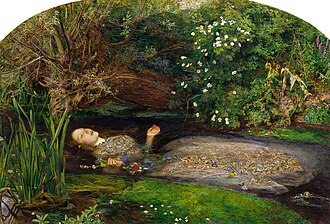 Ophélie - John Everett Millais (1851)
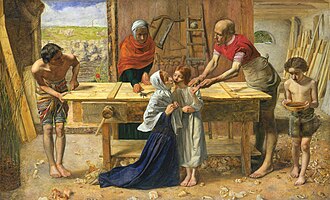 Le Christ dans la maison de ses parents - John Everett Millais (1849)
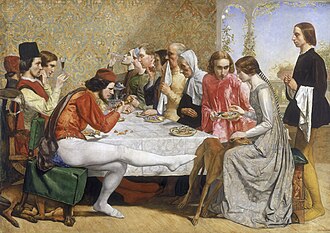 Isabella - John Everett Millais (1849)
 Feuilles d'automne - John Everett Millais (1856)
 Mariana - John Everett Millais (1851)
 Le Hussard noir de Brunswick - John Everett Millais (1860)
 La Vallée du repos - John Everett Millais (1850s)
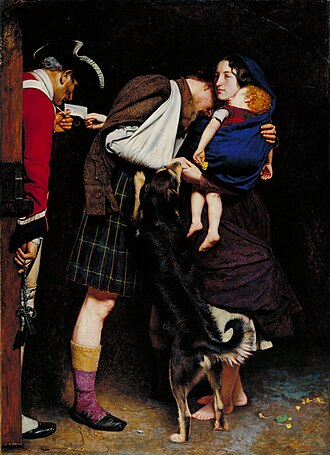 L'Ordre d'élargissement - John Everett Millais (1850s)
Œuvres d'artistes liés
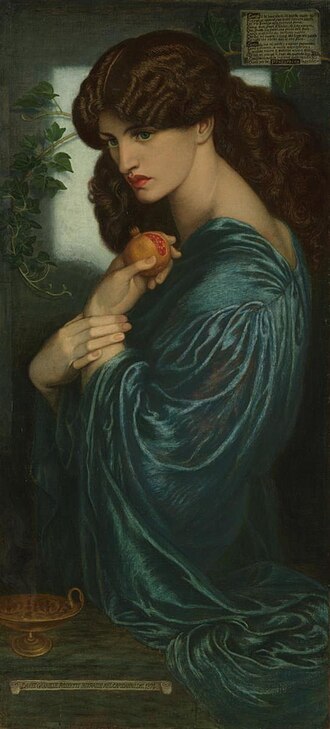 Perséphone - Dante Gabriel Rossetti (1874)
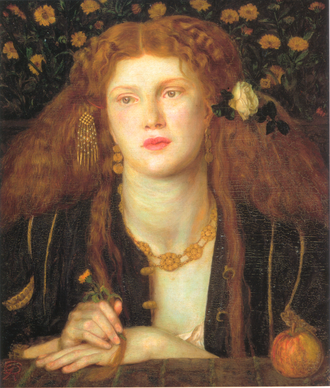 Bocca Baciata - Dante Gabriel Rossetti (1859)
 Hylas et les nymphes - John William Waterhouse (1896)
 The Lady of Shalott - John William Waterhouse (1888)