Le Sauvetage
John Everett Millais · 1855
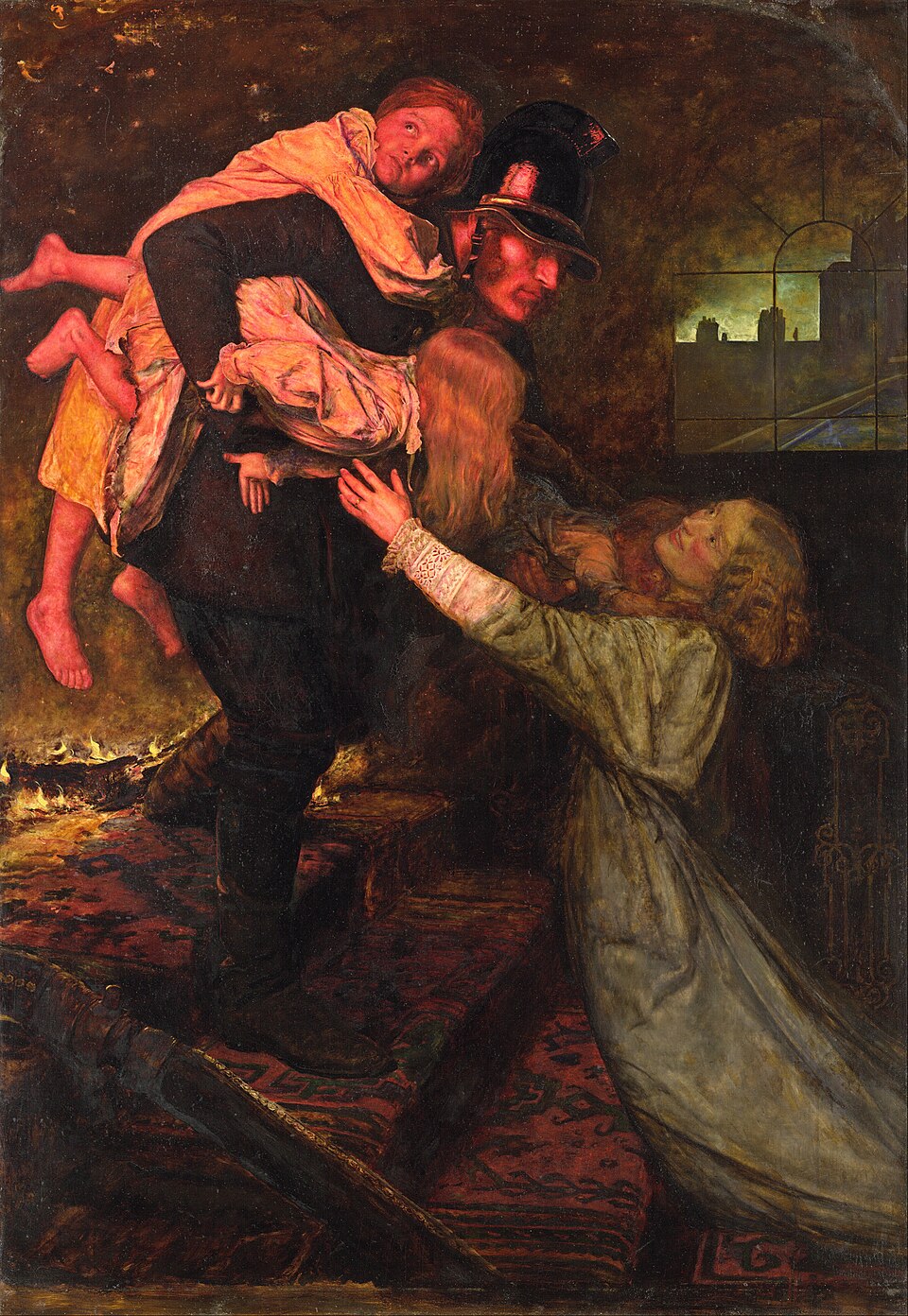
A fireman, black with smoke, carries three children down out of a burning house into their mother's open arms. Millais had watched a fireman die in a rescue, and turned that memory into one of the most modern pictures he ever painted.
The story behind the painting
Millais witnessed the death of a fireman during a rescue and decided to paint the subject. It was a timely choice. The fire brigade had only recently changed from private businesses that protected property into a public service whose first duty was to protect life. The Rescue, painted in 1855, shows that new kind of hero: a fireman bringing three children out of a house fire while their mother reaches up to receive them. Millais thought of it as a companion piece, or pendant, to his earlier painting The Order of Release, 1746, from 1852 to 1853, another scene of a family brought back together.
What to look for
Look at the light. To catch the glow of flames and the drift of smoke, Millais worked with a sheet of coloured glass and burned planks of wood, studying the effects as they happened. This attention to fleeting colour and light was a new departure in his art. The colour shifts are startling: the sleeve of the mother's nightgown changes from slate blue to pale pink as it moves through the firelight, an effect that drew much comment from critics at the time. The canvas is about 122 by 84 cm, tall and narrow, so the fireman, the children and the mother crowd together into one tight, glowing group.
Meaning and intent
Critics saw at once that the subject was startlingly modern for Millais. Instead of history or legend, he painted a working man doing his job on an ordinary night in the city. The scholar Robyn Cooper argues that some of the criticism came from what the scene implied: a strong working-class man saves middle-class children, while their father is nowhere to be seen. In her reading, the mother's open arms seem to welcome this vigorous new man as much as her own children. The picture is about courage, but also quietly about who gets to be the hero in modern life.
Legacy
Millais counted The Rescue among his greatest paintings and chose it as his submission for the Royal Academy exhibition of 1855. It was well received. John Ruskin, then the most influential critic in Britain, called it the only great picture exhibited that year, adding that it was very great and that the immortal element was in it to the full. Today the painting belongs to the National Gallery of Victoria in Melbourne, far from the London streets that inspired it, where visitors can still see the firelight turn blue into pink on the mother's sleeve.
Le saviez-vous ?
- Inspired by a fireman's death Millais witnessed.
- Shown at the Royal Academy in 1855.
- Ruskin called it the only great picture of that year.
- Now in the National Gallery of Victoria, Melbourne.
À propos de l'artiste
John Everett Millais (1829-1896)
scène de genre · préraphaélisme · musée national du Victoria
Autres œuvres de John Everett Millais
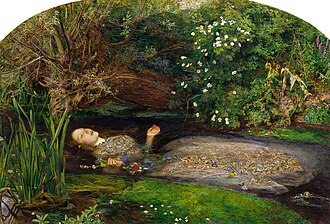 Ophélie - John Everett Millais (1851)
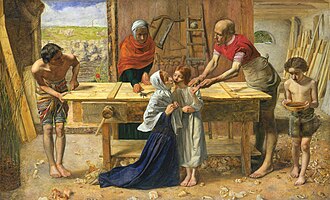 Le Christ dans la maison de ses parents - John Everett Millais (1849)
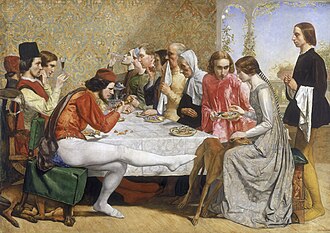 Isabella - John Everett Millais (1849)
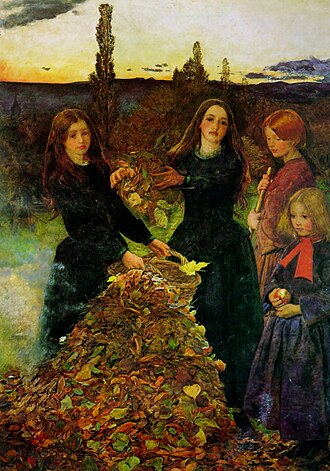 Feuilles d'automne - John Everett Millais (1856)
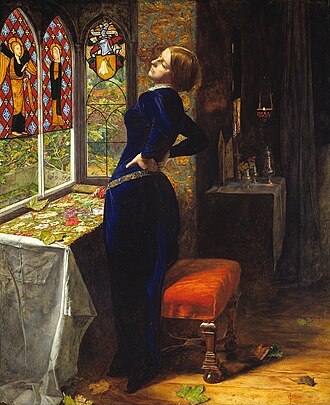 Mariana - John Everett Millais (1851)
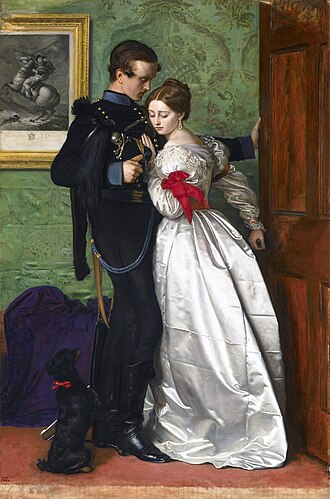 Le Hussard noir de Brunswick - John Everett Millais (1860)
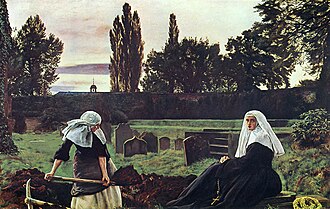 La Vallée du repos - John Everett Millais (1850s)
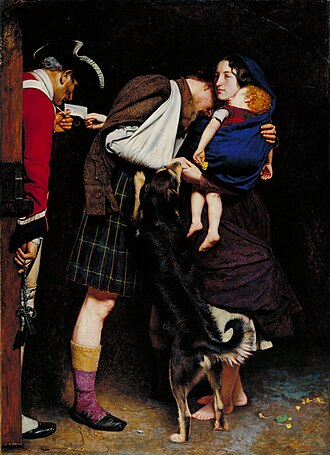 L'Ordre d'élargissement - John Everett Millais (1850s)
Œuvres d'artistes liés
 Perséphone - Dante Gabriel Rossetti (1874)
 Bocca Baciata - Dante Gabriel Rossetti (1859)
 Hylas et les nymphes - John William Waterhouse (1896)
 The Lady of Shalott - John William Waterhouse (1888)