Le Passage du Nord-Ouest
John Everett Millais · 1874
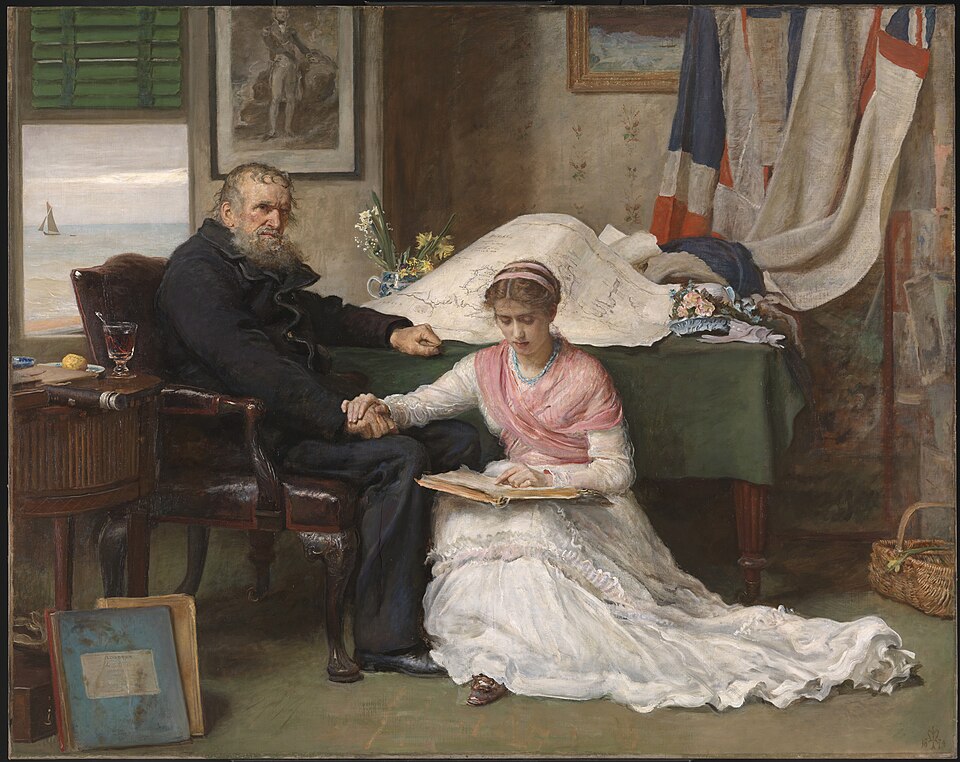
An old sailor grips the arm of his chair and stares out at us, while his daughter reads from a log-book beside a chart of half-mapped Arctic islands. Millais caught a whole nation's longing for the frozen north in one quiet room.
The story behind the painting
The search for a sea route around the north of America had been attempted again and again since Henry Hudson in the early 17th century. The most famous attempt, John Franklin's expedition of 1845, vanished, and later searches found that his crews had died over several years, some trying to escape across the ice. Millais had the idea for this picture in 1874, while a new British Arctic Expedition under George Nares was being prepared. He exhibited it with the subtitle It might be done and England should do it, a line imagined in the old sailor's mouth.
What to look for
The sailor sits in an 18th-century armchair at a desk, looking straight at the viewer, while his daughter on a stool reads aloud. The chart on the desk shows the northern coast of Canada as mapped on Robert McClure's expeditions of 1848 to 1853. On the wall, partly hidden by a flag, hangs a picture of a ship trapped in ice, resembling McClure's abandoned HMS Investigator. Outside the window a boat sails away, and behind the man's head is an etching of a young naval officer. Look also at the glass of grog and the lemon by his hand.
Meaning and intent
The old man was modelled by Edward John Trelawny, whom Millais met at the funeral of John Leech; Effie Gray won him over by agreeing to attend a Turkish bath he was promoting. Trelawny, who did not drink, was outraged to see himself painted with rum and a lemon, and later blamed Effie. The right side once showed two grandchildren, modelled by Millais's own children John and Alice, looking at a globe, but Millais felt they distracted from the main figure, cut that section out and painted a screen hung with naval flags instead.
Legacy
Praised at the Royal Academy in 1874 and shown in Paris in 1876, the picture was bought by Henry Tate in 1888 and given to the national collection he founded, today's Tate, to what was reported as a huge cheer. It was reproduced everywhere, and with The Boyhood of Raleigh came to stand for Britain's image of itself as a nation of heroic explorers; Nares himself wrote that it had stirred the national spirit. Punch turned it into a cartoon of Disraeli in 1874, and George Bernard Shaw drew on it for Heartbreak House and again in Shakes versus Shav.
Le saviez-vous ?
- Painted in 1874 as a British Arctic Expedition was being prepared.
- The old sailor was modelled by Edward John Trelawny.
- Millais cut away a section showing two of his own children.
- Henry Tate bought it in 1888 for the national collection.
À propos de l'artiste
John Everett Millais (1829-1896)
scène de genre · National Gallery · Tate
Autres œuvres de John Everett Millais
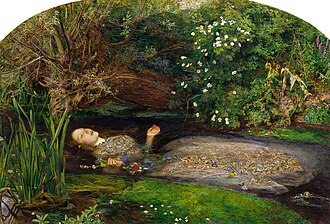 Ophélie - John Everett Millais (1851)
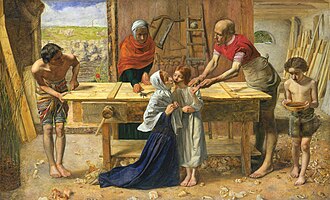 Le Christ dans la maison de ses parents - John Everett Millais (1849)
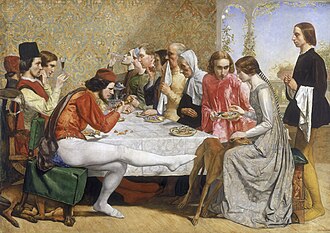 Isabella - John Everett Millais (1849)
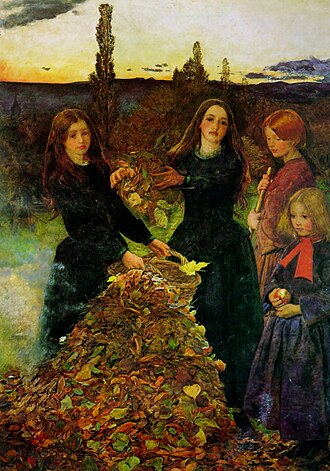 Feuilles d'automne - John Everett Millais (1856)
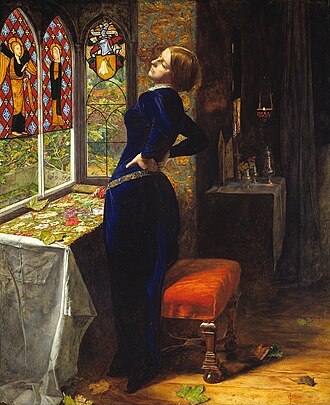 Mariana - John Everett Millais (1851)
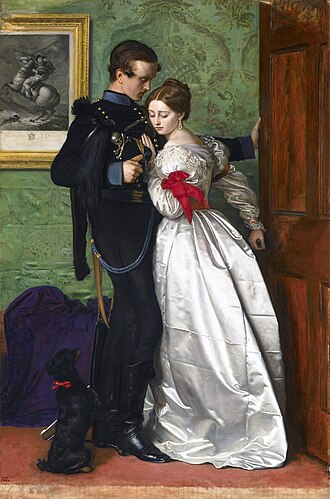 Le Hussard noir de Brunswick - John Everett Millais (1860)
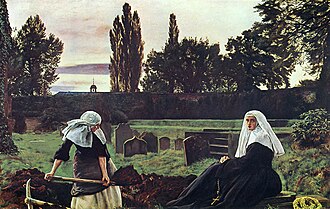 La Vallée du repos - John Everett Millais (1850s)
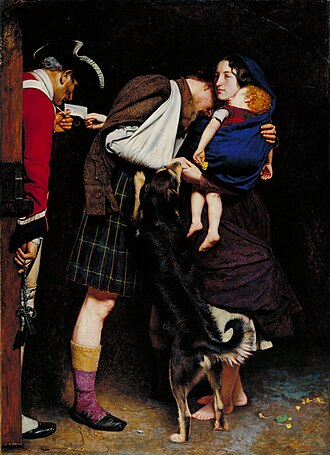 L'Ordre d'élargissement - John Everett Millais (1850s)
Œuvres d'artistes liés
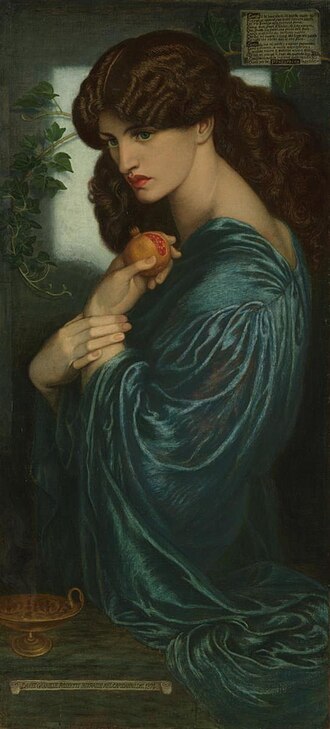 Perséphone - Dante Gabriel Rossetti (1874)
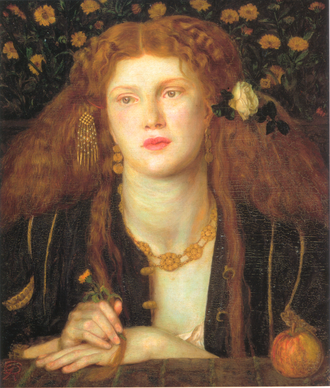 Bocca Baciata - Dante Gabriel Rossetti (1859)
 Hylas et les nymphes - John William Waterhouse (1896)
 The Lady of Shalott - John William Waterhouse (1888)