Le Mûrier
Vincent van Gogh · 1889
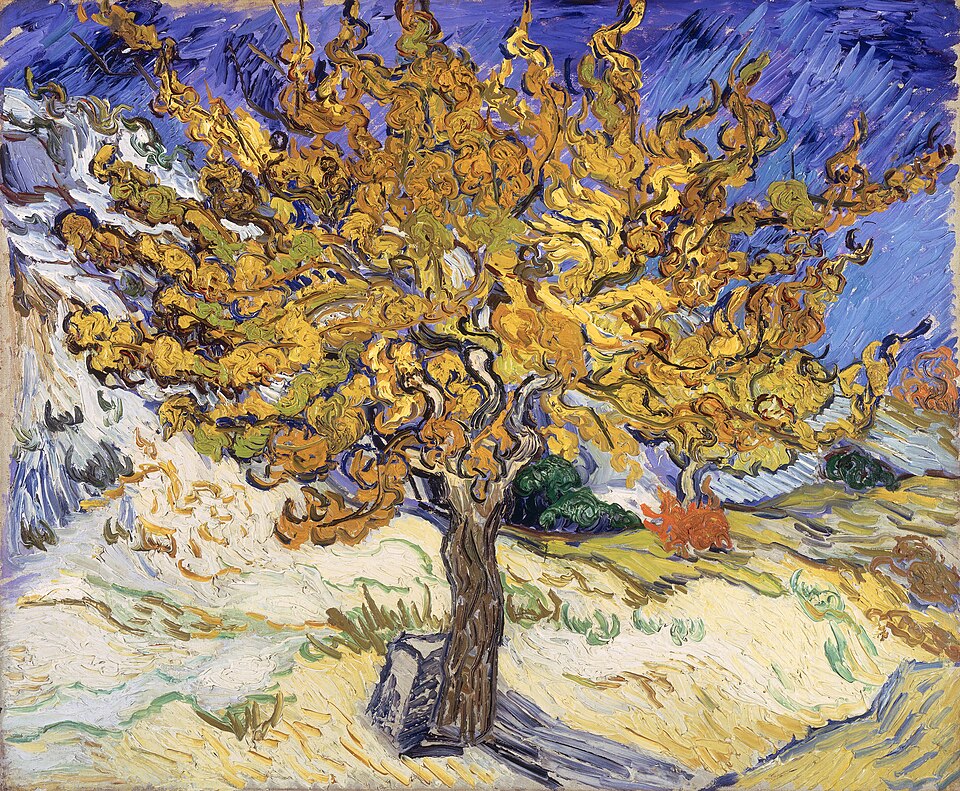
A lone mulberry tree blazes yellow and orange on a stony hillside under a very blue sky, its branches swirling as if in a strong wind. Van Gogh painted it in October 1889 at the asylum in Saint-Rémy and called it his best autumn study.
The story behind the painting
On 8 May 1889 Van Gogh voluntarily entered the asylum of Saint-Paul-de-Mausole at Saint-Rémy-de-Provence, where over the year he painted some 150 canvases, averaging two a week between debilitating attacks. In the first week of October he painted several works, among them The Mulberry Tree, The Reaper and Entrance to a Quarry. He wrote to his brother Theo: we are having some superb autumn days, and I am taking advantage of them. On 7 December he described three parcels sent to Theo, saying that the best of the autumn studies was the yellow mulberry tree against a very blue sky.
What to look for
The tree, not much bigger than a shrub, stands alone and almost symmetrical in the centre, growing from a bare rocky hillside. Its swirling yellow and orange foliage fills the canvas against the blue sky. In some places Van Gogh laid paint with the lightest touch, mere glances of colour for falling leaves; elsewhere he loaded his brush heavily to paint the serpentine web of bare limbs. The thick impasto makes the surface look almost three dimensional, and curling spirals of orange and black make the branches seem to move. To his sister Willemien he described the foliage as magnificent yellow, with a white, stony, sunlit field behind.
Meaning and intent
Van Gogh saw trees almost as people. He wrote to Theo of trees in which there was a drama in each figure, I mean in each tree, and back in 1881 he had written that unless we draw figures, or trees as though they were figures, we are like people without a spine. The Mulberry Tree gathers many styles he had tried, from the thin, loose paint of Paris to the sculptural impasto of Monticelli and the flat colour of Japanese prints. Painted in a turbulent time, it shows his ability to find beauty and vitality in nature, warm yellows ringing against cool blues and purples.
Legacy
The painting was shown at Bernheim-Jeune in Paris in 1901. The poet Hugo von Hofmannsthal described such a visit in a fictional letter, Colours, saying the pictures first seemed coarse and shrill, then made him lose his self-awareness as he looked. In 1892 the critic Charles Saunier called the extraordinary Mulberry Tree sculpted in a thick layer of cobalt and chrome yellow. The work passed through Camille Pissarro's hands, Ambroise Vollard and the collector Alphonse Kann, among others, and reached Norton Simon in 1961. It has been in the Norton Simon Museum in Pasadena since 1976.
Le saviez-vous ?
- Painted in October 1889 at the Saint-Rémy asylum.
- Van Gogh called it the best of his autumn studies.
- Once owned by Camille Pissarro.
- In the Norton Simon Museum, Pasadena, since 1976.
À propos de l'artiste
Vincent van Gogh (1853-1890)
Autres œuvres de Vincent van Gogh
 La Nuit étoilée - Vincent van Gogh (1889)
 Terrasse du café le soir - Vincent van Gogh (1888)
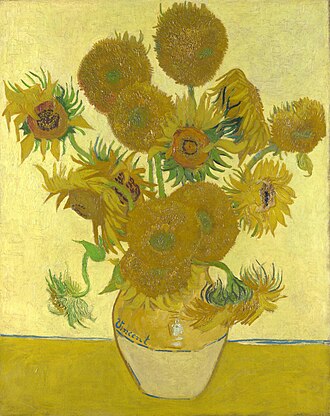 Les Tournesols - Vincent van Gogh (1888)
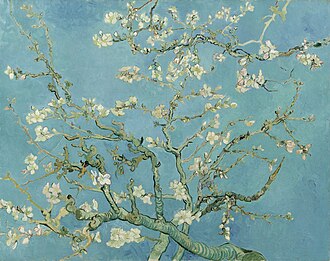 Amandier en fleurs - Vincent van Gogh (1890)
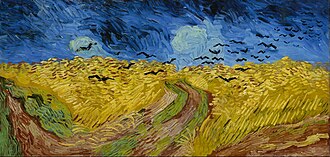 Champ de blé aux corbeaux - Vincent van Gogh (1890)
 La Chambre à coucher - Vincent van Gogh (1888)
 Les Mangeurs de pommes de terre - Vincent van Gogh (1885)
 Iris - Vincent van Gogh (1889)
Œuvres d'artistes liés
 Les Grandes Baigneuses - Paul Cézanne (1900s)
 Le Garçon au gilet rouge - Paul Cézanne
 D'où venons-nous ? Que sommes-nous ? Où allons-nous ? - Paul Gauguin (1897-1898)
 Le Christ jaune - Paul Gauguin (1889)
 L'Érection de la croix - Peter Paul Rubens (1609)
 L'Enlèvement des filles de Leucippe - Peter Paul Rubens (1618)
 Promenade au bord de la mer - Joaquín Sorolla (1909)
 Triste héritage - Joaquín Sorolla (1898)
 Bal du moulin de la Galette - Pierre-Auguste Renoir (1876)
 Le Déjeuner des canotiers - Pierre-Auguste Renoir (1881)
 Au Moulin-Rouge - Henri de Toulouse-Lautrec (1892)
 La Toilette - Henri de Toulouse-Lautrec (1896)