Le Moine au bord de la mer
Caspar David Friedrich · 1808
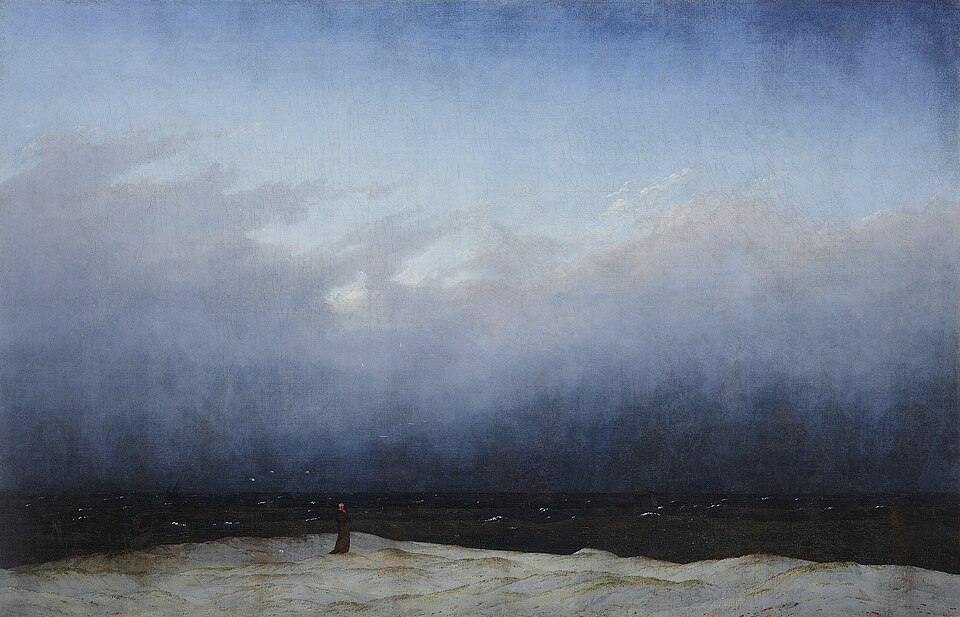
A tiny figure stands on a pale dune before a dark sea and a sky that fills three quarters of the canvas. Nothing frames the view, nothing softens it. Heinrich von Kleist wrote that looking at it felt as if one's eyelids had been cut away.
The story behind the painting
Caspar David Friedrich painted The Monk by the Sea in Dresden between 1808 and 1810; Wikidata gives 1808, the year he probably began. In a letter of February 1809 he described it for the first time, and visitors to his studio recorded its stages. In June 1809 the wife of the painter Gerhard von Kügelgen saw it and complained in a letter of its loneliness, with nothing to console the eye in the unending space of air. Friedrich had just found his first public success with the controversial Tetschen Altar, and this painting brought him even more attention.
What to look for
A single figure in a long garment, usually identified as a monk, stands at the tip of a low, grassy dune, turned almost completely away. It is unclear whether he stands on a high rock or a gentle slope. The sea is a narrow dark band with a few whitecaps, sometimes mistaken for seagulls, and the grey sky takes up about three quarters of the picture. Friedrich worked by subtraction: scientific study shows he first painted two small sailing ships on the horizon and then removed them, and right up to the exhibition he added blue, stars and a moon to the grey sky.
Meaning and intent
The broad sea and sky make the monk tiny before the vastness of nature and the presence of God. The art historian Albert Boime believed the figure was Friedrich himself, walking the cliffs of Rügen, and other scholars agree, pointing to the long blond hair and round skull, and to Friedrich's later self-portrait in a monk's habit. There is no repoussoir, no framing device to lead the eye in: the foreground is empty, and the viewer is cut off from the monk. It has been called perhaps the first abstract painting in a very modern sense.
Legacy
Shown at the Berlin Academy in October 1810, it caused controversy. Clemens Brentano wrote a critical article for the Berliner Abendblätter, but its editor Heinrich von Kleist rewrote it into a sympathetic piece that became central to how Friedrich is read. Goethe found it too minimal, saying it could be looked at standing on one's head. King Frederick William III bought it together with The Abbey in the Oakwood, and both now hang side by side in the Alte Nationalgalerie, Berlin. Robert Rosenblum later compared it with Rothko, saying that before such pictures we ourselves are the monk before the sea.
Le saviez-vous ?
- Painted in Dresden between 1808 and 1810; Wikidata gives 1808.
- Two ships on the horizon were painted and then removed.
- Shown at the Berlin Academy in 1810 with The Abbey in the Oakwood.
- In the Alte Nationalgalerie, Berlin.
À propos de l'artiste
Caspar David Friedrich (1774-1840)
paysage · ciel · mer · Alte Nationalgalerie · plage
Autres œuvres de Caspar David Friedrich
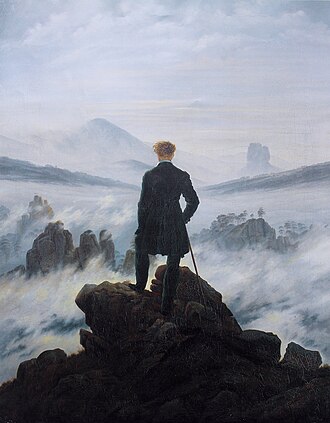 Le Voyageur contemplant une mer de nuages - Caspar David Friedrich (c. 1818)
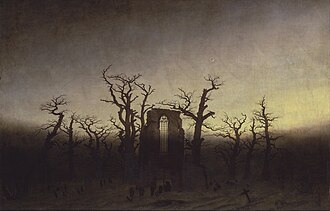 L'Abbaye dans une forêt de chênes - Caspar David Friedrich (1800s)
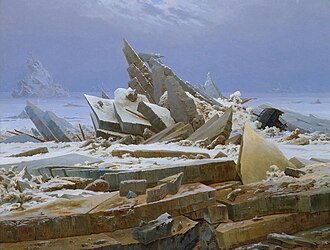 La Mer de glace - Caspar David Friedrich (1820s)
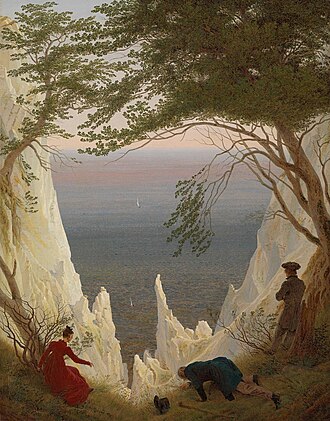 Falaises de craie sur l'île de Rügen - Caspar David Friedrich (1818)
.jpg) Les Âges de la vie - Caspar David Friedrich (1834)
Les Âges de la vie - Caspar David Friedrich (1834)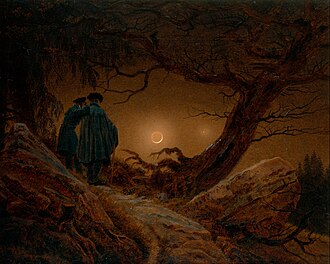 Deux Hommes contemplant la lune - Caspar David Friedrich (1810s)
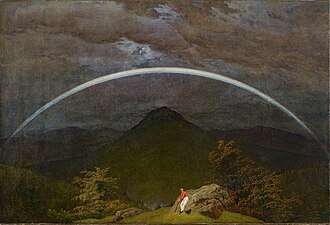 Paysage de montagne avec arc-en-ciel - Caspar David Friedrich (1809)
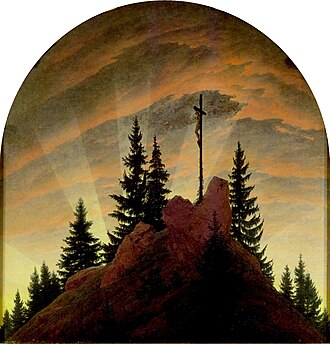 Le Retable de Tetschen - Caspar David Friedrich (1807)
Œuvres d'artistes liés
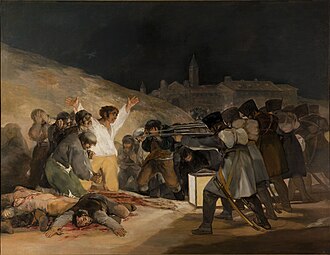 Tres de Mayo - Francisco Goya (1814)
.jpg) La Maja nue - Francisco Goya (1800)
La Maja nue - Francisco Goya (1800)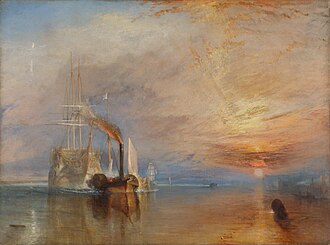 Le Dernier Voyage du Téméraire - J. M. W. Turner (1839)
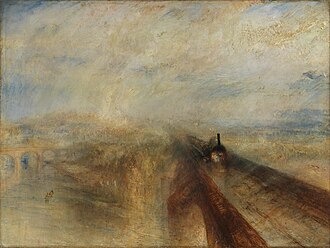 Pluie, Vapeur et Vitesse - J. M. W. Turner (1844)