La Prairie de Saint-Isidore
Francisco Goya · 1788
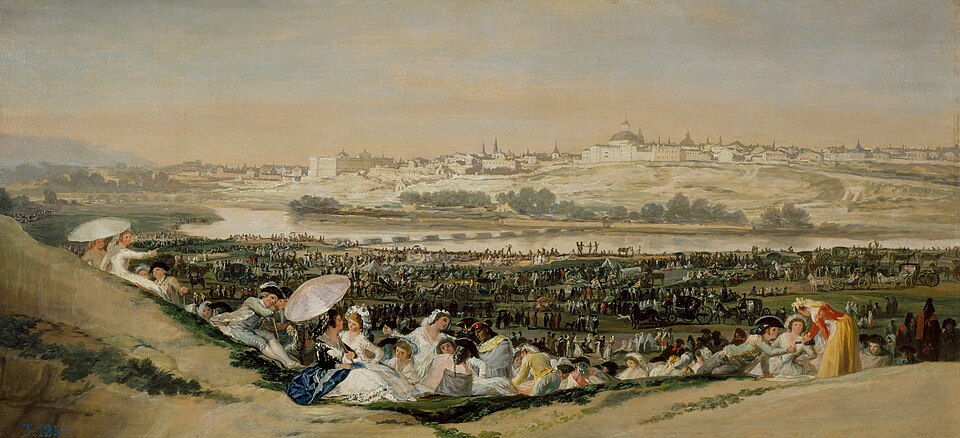
A whole city comes out to play: carriages, parasols, dancers by the river, and Madrid's domes floating in pale light beyond. Goya painted this small sketch in spring 1788 for a tapestry that was never woven.
The story behind the painting
Goya wrote to his childhood friend Martín Zapater that the subject was the meadow of San Isidro on the saint's own day, with all the bustle usual at Court. The picture is a sketch for a tapestry cartoon in the sixth series, meant for the bedroom of the infantas at the Palace of El Pardo, for the future Charles IV and Maria Luisa of Parma. It was painted in spring 1788. When Charles III died, the project stopped; the final work, meant to be 7.5 metres long, was never finished. Goya confided to Zapater that he worked on it with great effort and dismay.
What to look for
The view runs from the gentle hills near the hermitage of San Isidro, Madrid's patron saint, down to the river where pilgrims come and go, perhaps across the bridge of boats at the centre. On the right the Calle de Toledo descends to the Toledo bridge, on the left is the Segovia bridge. The topography is realistic, which was rare for Goya. Look just right of centre on the riverbank: two majos and two majas dance, outlined in black against the bright water, larger than some figures in the foreground. Whites, pinks, greens and blues, with touches of red on the dresses, give the crowd its sparkle.
Meaning and intent
As a genre scene, the crowd expresses an idea dear to the enlightened monarchy that was to receive it: a harmonious mixing of social classes. There are majos, merrymakers, vendors, walkers, and vehicles from elegant carriages to humble carts, and costumes from French-style coats to coarse wool. Goya used a cool ground here, breaking with the red earth preparation he learned in José Luzán's studio, which gave his early works warm, toasted tones. The composition has no single centre; the figures at the edges turn inward like brackets, and the dark middle band pushes the eye deep into the view.
Legacy
The dark band and the many tiny figures would have been hard for the Royal Tapestry Factory to weave, and such freely painted sketches caused Goya many problems. It is among his first paintings to use broad masses of very free paint. The canvas belonged to the Dukes of Osuna from 1799 to 1896, when the state acquired it for the Prado, where it is shown in room 93. The French Wikipedia article also says it was thought lost until 1869, found in the basement of the Royal Palace and handed to the Prado in 1870, an account it does not reconcile with the Osuna history.
Le saviez-vous ?
- A sketch for a tapestry cartoon, painted in spring 1788.
- The full tapestry design, meant to be 7.5 m long, was never finished.
- Shows Madrid seen from the meadow on the saint's feast day.
- Now in the Museo del Prado, Madrid.
À propos de l'artiste
Francisco Goya (1746-1828)
musée du Prado · guitare · Toison d'or · voiture à cheval
Autres œuvres de Francisco Goya
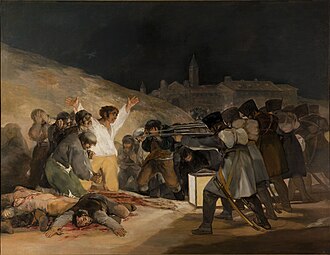 Tres de Mayo - Francisco Goya (1814)
.jpg) La Maja nue - Francisco Goya (1800)
La Maja nue - Francisco Goya (1800).jpg) Saturne dévorant un de ses enfants - Francisco Goya (1819)
Saturne dévorant un de ses enfants - Francisco Goya (1819)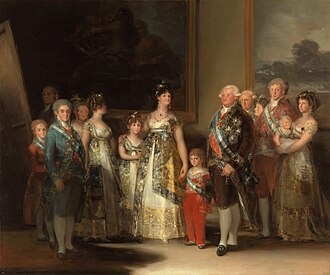 La Famille de Charles IV - Francisco Goya (1800)
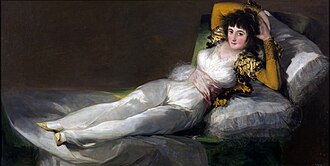 La Maja vêtue - Francisco Goya (1800)
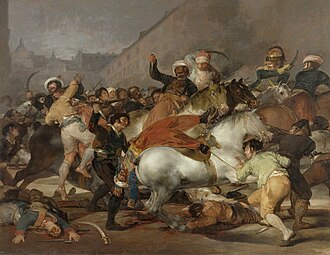 Dos de Mayo - Francisco Goya (1814)
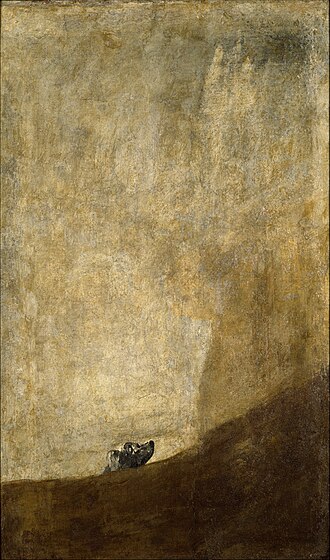 Le Chien - Francisco Goya (1819)
 Le Sabbat des sorcières - Francisco Goya (1820s)
Œuvres d'artistes liés
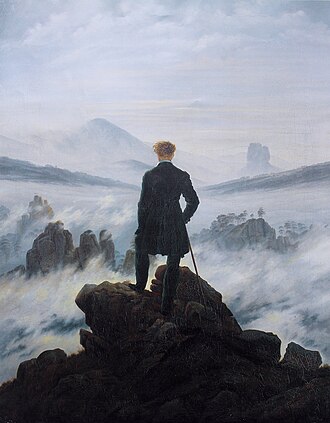 Le Voyageur contemplant une mer de nuages - Caspar David Friedrich (c. 1818)
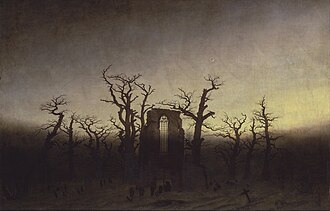 L'Abbaye dans une forêt de chênes - Caspar David Friedrich (1800s)
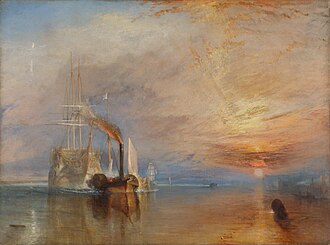 Le Dernier Voyage du Téméraire - J. M. W. Turner (1839)
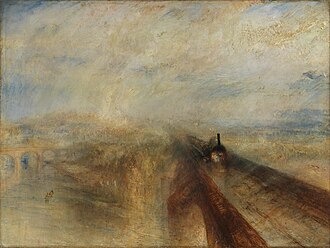 Pluie, Vapeur et Vitesse - J. M. W. Turner (1844)
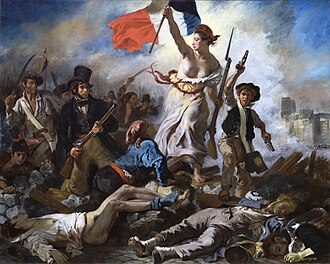 La Liberté guidant le peuple - Eugène Delacroix (1830)
 La Mort de Sardanapale - Eugène Delacroix (1827)