Saint Janvier dans l'amphithéâtre de Pozzuoli
Artemisia Gentileschi · 1636
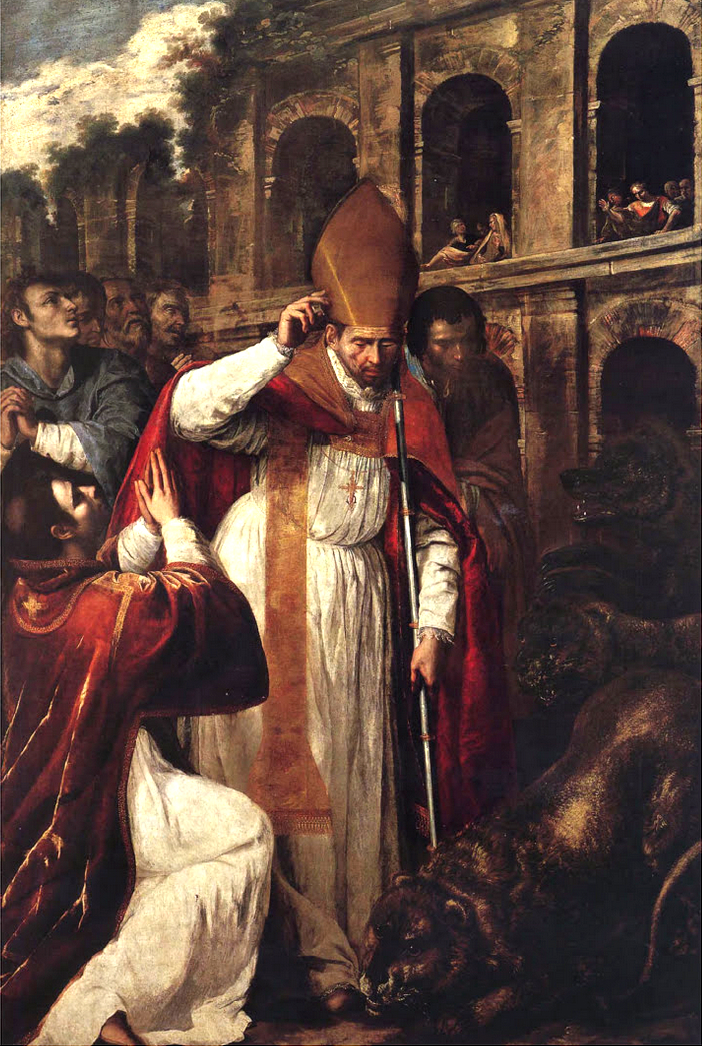
A bishop is thrown to the beasts, and the lion and bear lie down to lick his feet. Artemisia Gentileschi painted this miracle for the cathedral of Pozzuoli, and after a fire and decades away it hangs there again.
The story behind the painting
After a new bishop was appointed in 1631, the cathedral of Pozzuoli near Naples was extensively renovated. Artemisia Gentileschi was commissioned to paint three canvases to hang above the choir stalls: this one, the Adoration of the Magi, and Saints Proculus and Nicea. Her existing contacts, such as the Viceroy of Naples, Manuel de Acevedo y Zúñiga, probably helped her win the commission. Wikipedia dates the work 1635 to 1637, while Wikidata gives 1636. It is a large canvas, about 308 by 200 cm.
What to look for
The scene is the amphitheatre of Pozzuoli. Januarius, the bishop, stands among his followers, unharmed. The wild animals that were meant to kill him, a lion and a bear, have become tame and show their obedience to him with great docility, licking his feet. Kneeling at the lower left is Proculus, the deacon of Pozzuoli, who would also be martyred. The amphitheatre and the background figures were painted by one or more of Artemisia's collaborators from Rome. Her own signature was found beneath the lion's tail.
Meaning and intent
Januarius was an early Christian of the third and fourth centuries, Bishop of Naples and still its patron saint. His protection of Christians angered the Emperor Diocletian, and his biographers tell how he survived several attempts on his life. Artemisia chose the moment when the beasts refused to attack, a scene of calm faith rather than violence. Art historians have called it a balanced and conservative composition, with less drama than her earlier work, and others note she likely had to soften her style to blend with the other paintings made for the cathedral.
Legacy
In 1964 a fire damaged the cathedral, and the paintings were moved to the Certosa di San Martino, then to the Museo di Capodimonte in Naples. In 2014 they returned to Pozzuoli Cathedral, where all three of Artemisia's canvases are again in place. Restoration has partly repaired the fire damage, and in doing so it revealed her signature hidden beneath the tail of the lion, a quiet mark of the painter's hand in a work shared with her collaborators.
Le saviez-vous ?
- Painted for Pozzuoli Cathedral, dated 1635-1637 (Wikidata: 1636).
- One of three canvases by Artemisia for the choir.
- Damaged by fire in 1964; returned to the cathedral in 2014.
- Restoration revealed her signature under the lion's tail.
À propos de l'artiste
Artemisia Gentileschi (1593-1653)
Autres œuvres de Artemisia Gentileschi
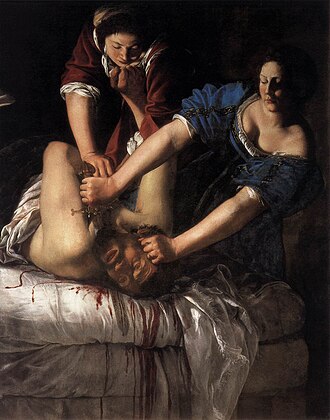 Judith décapitant Holopherne - Artemisia Gentileschi (1613)
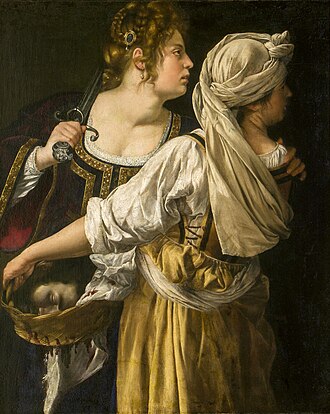 Judith et sa Servante - Artemisia Gentileschi (1618)
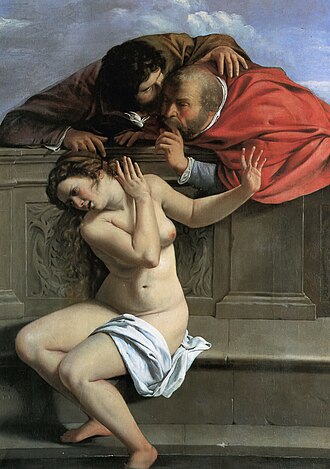 Suzanne et les Vieillards - Artemisia Gentileschi (1610)
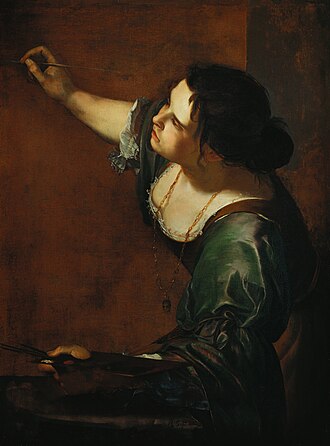 Autoportrait en allégorie de la Peinture - Artemisia Gentileschi (1638)
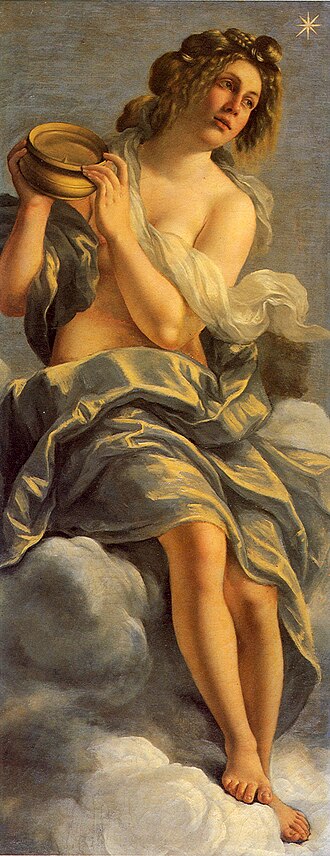 Allégorie de l'Inclination - Artemisia Gentileschi (1615)
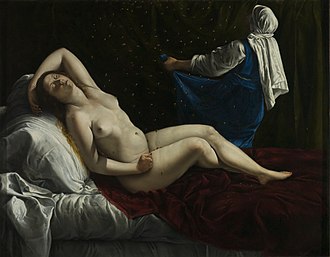 Danaé - Artemisia Gentileschi (1612)
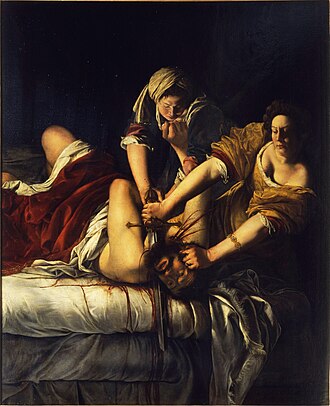 Judith décapitant Holopherne - Artemisia Gentileschi (1620)
 Esther et Assuérus - Artemisia Gentileschi (1620s)
Œuvres d'artistes liés
 Le Souper à Emmaüs - Caravaggio (1601)
 La Vocation de saint Matthieu - Caravaggio (1609)
 Les Ménines - Diego Velázquez (1656)
 La Reddition de Bréda - Diego Velázquez (1635)
 Saint Francis in Meditation - Francisco de Zurbarán (1639)
 The Immaculate Conception - Francisco de Zurbarán (1661)
 Triple portrait de Charles Ier - Anthony van Dyck (1635)
 Charles Ier à cheval avec Monsieur de Saint Antoine - Anthony van Dyck (1636)
 L'Érection de la croix - Peter Paul Rubens (1609)
 L'Enlèvement des filles de Leucippe - Peter Paul Rubens (1618)
 La Ronde de nuit - Rembrandt van Rijn (1642)
 Autoportrait - Rembrandt van Rijn (1659)