Judith décapitant Holopherne
Artemisia Gentileschi · 1613
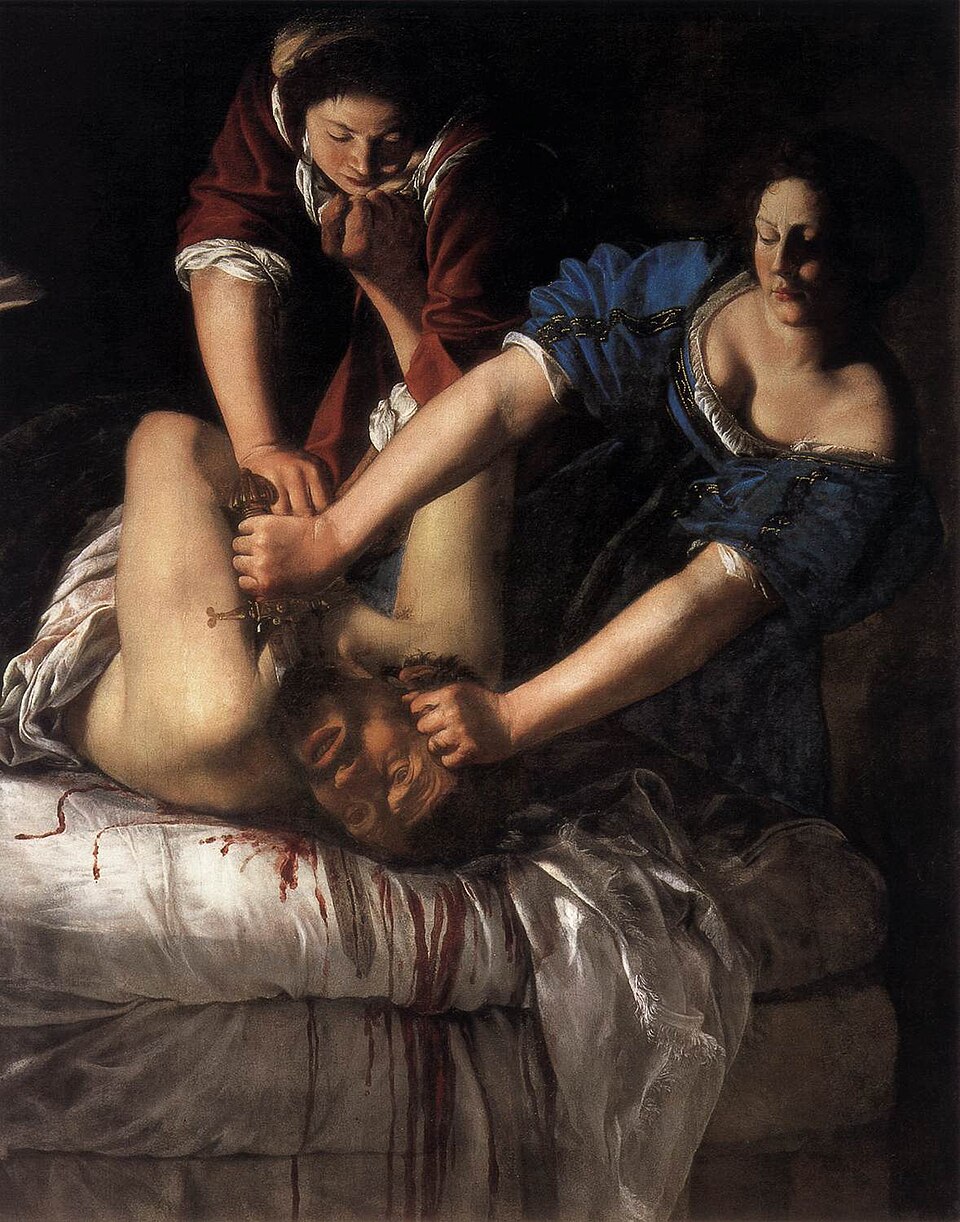
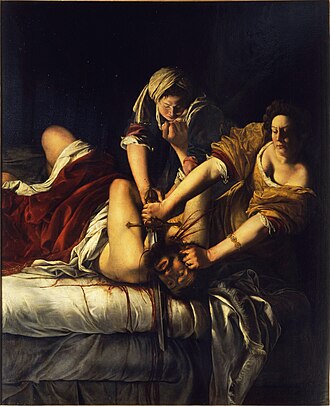
A young woman of about twenty painted Judith not standing over a defeated tyrant, but in the middle of the struggle, arms locked, blade at work. Artemisia Gentileschi's Naples canvas is one of her iconic works.
The story behind the painting
Artemisia completed Judith Slaying Holofernes in 1612 to 1613, when she was about twenty; Wikidata gives 1613. Before it she had painted Susanna and the Elders and a Madonna and Child, works that already showed her skill with movement and expression. The subject comes from the Book of Judith: the Israelite widow Judith, helped by her maid Abra, beheads the Assyrian general Holofernes after he falls into a drunken sleep. X-rays show that she changed the position of both of Judith's arms and the drapery several times before reaching the final picture.
What to look for
Judith is on the right, holding Holofernes down with one arm while she cuts, and Abra presses him in place from behind. The space is tight, the figures framed close together, so the action feels physically near. Strong chiaroscuro throws light on the bodies and the effort of the deed, while the surrounding darkness keeps attention fixed on the killing. Earlier artists such as Lucas Cranach showed Judith calmly holding the severed head; Artemisia chooses the moment of action itself, with attention to struggle and anatomy.
Meaning and intent
Early feminist critics read the painting as a form of visual revenge after her rape by Agostino Tassi in 1611, while many other historians see it as part of her achievement in portraying strong women. Mary Garrard argues that the composition stresses Judith's active physical role, unlike male painters such as Caravaggio, who often kept more restraint or distance. Caravaggio's Judith is still seen as a major influence on hers, through its naturalism and stark light, but Artemisia intensifies the physical engagement and gives the maidservant an active part.
Legacy
The painting now hangs in the Museo di Capodimonte in Naples and is considered one of Artemisia's iconic works. She painted a second version, now in the Uffizi in Florence, sometime between 1613 and 1621. Together the two canvases have become central to discussions of gender and power in Baroque art, of how female figures can be shown exercising control, strength and agency, and they keep Judith's story at the heart of the artist's fame.
Le saviez-vous ?
- Painted in 1612 to 1613, when Artemisia was about twenty.
- X-rays show she changed Judith's arms and the drapery.
- A second version is in the Uffizi, Florence.
- Now in the Museo di Capodimonte, Naples.
À propos de l'artiste
Artemisia Gentileschi (1593-1653)
art religieux · femme · homme · Judith · musée de Capodimonte · décapitation · Holopherne · homicide
Autres œuvres de Artemisia Gentileschi
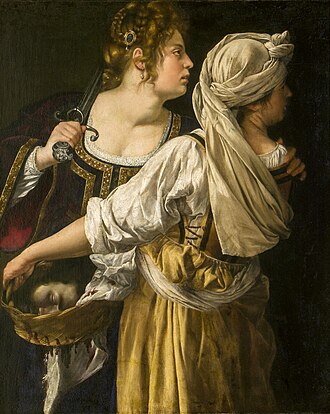 Judith et sa Servante - Artemisia Gentileschi (1618)
%2C%20Artemisia%20GentileschiFXD.jpg) Suzanne et les Vieillards - Artemisia Gentileschi (1610)
Suzanne et les Vieillards - Artemisia Gentileschi (1610)%20-%20Artemisia%20Gentileschi.jpg) Autoportrait en allégorie de la Peinture - Artemisia Gentileschi (1638)
Autoportrait en allégorie de la Peinture - Artemisia Gentileschi (1638)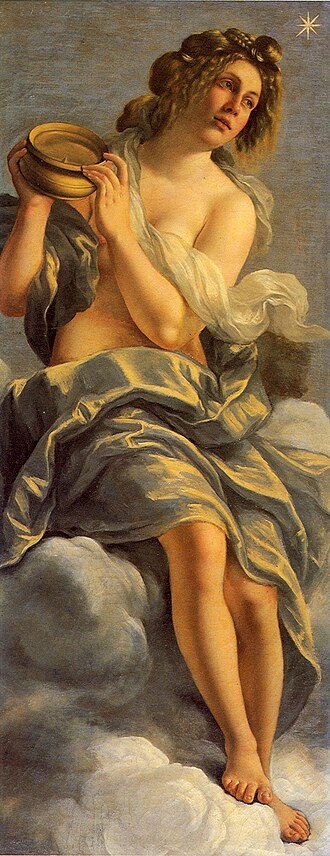 Allégorie de l'Inclination - Artemisia Gentileschi (1615)
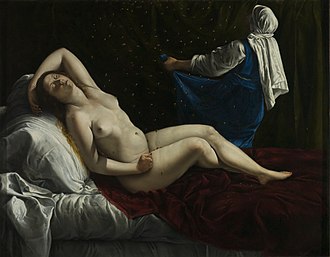 Danaé - Artemisia Gentileschi (1612)
 Judith décapitant Holopherne - Artemisia Gentileschi (1620)
 Esther et Assuérus - Artemisia Gentileschi (1620s)
 Marie Madeleine - Artemisia Gentileschi (1616)