Les licteurs rapportant à Brutus les corps de ses fils
Jacques-Louis David · 1789
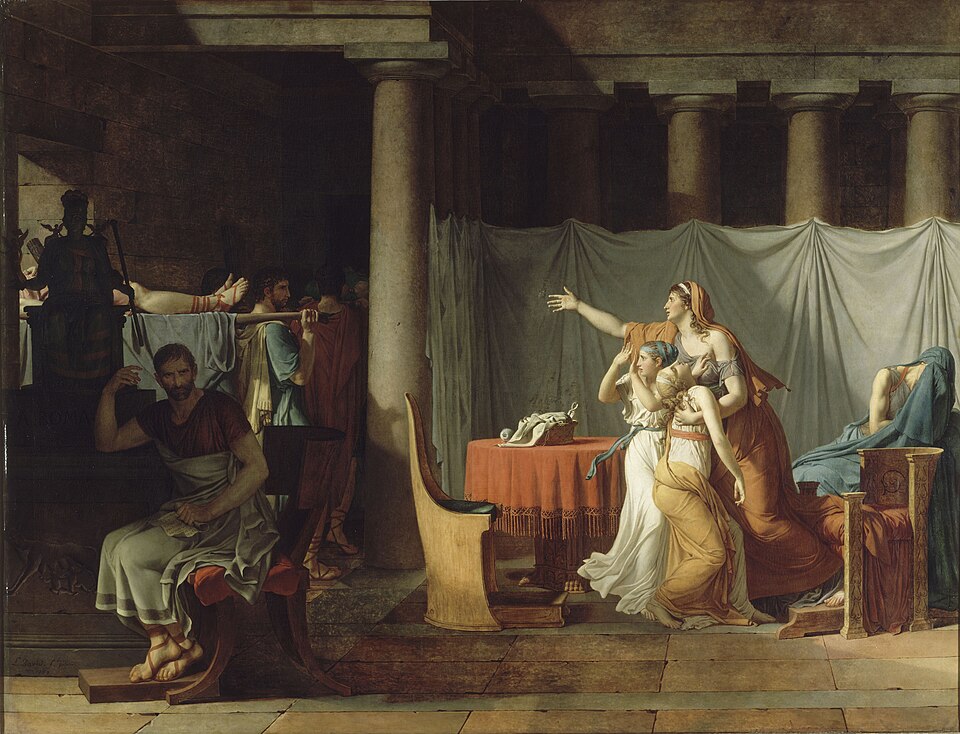
A father sits in shadow, turned away, as the bodies of the sons he condemned are carried home. David showed Brutus at the Salon of 1789, the first year of the Revolution, and the public would not let it be hidden.
The story behind the painting
Lucius Junius Brutus founded the Roman Republic. When his own sons conspired to restore the monarchy, he was compelled to order their deaths, defending the republic at the cost of his family. David had been drawn to the Brutus story since at least the early 1780s, when he painted The Oath of the Horatii; the oath itself was part of the Brutus legend, transposed to the Horatii. He laboured more than two years on this canvas. The return of the bodies is his own invention, not found in Livy or Plutarch. Whether David was already a committed republican is disputed; many historians think his inspiration was more prosaic, drawn from classical history.
What to look for
The canvas is huge, 323 by 422 cm. On the left Brutus sits alone and brooding on a klismos chair, in shadow; he does not even look back as the bodies of his headless sons, Tiberius and Titus, are brought in. On the right, in light, his wife holds their two horrified daughters, the elder about to faint, and a servant at the far edge shakes with anguish. Notice Brutus's tense crossed feet, and the sharp scissors lying in the centre of the painting. Light and dark separate the father, who chose the republic, from the family who simply grieve.
Meaning and intent
The painting is a bold allegory of civic virtue: duty to the nation placed above love of family. Its themes of virtue, sacrifice and devotion had immense resonance for the growing cause of republicanism, and stirred controversy in the politically charged first year of the Revolution. The full title in the 1789 Salon booklet spelled out the story: Brutus, first consul, returned home after condemning his two sons, who had allied with the Tarquins and conspired against Roman liberty; the lictors bring back their bodies for burial. David's own intentions were questioned even by contemporaries, and the debate remains unresolved.
Legacy
In 1789 every Salon painting had to be approved as politically acceptable. David's portrait of Lavoisier had already been refused, and Brutus was almost withheld for fear of inflaming revolutionary passions, but public insistence forced the authorities to give in. Afterward David's friend, the actor François-Joseph Talma, played Brutus in Voltaire's tragedy and added a scene staged exactly like the painting. The work is on permanent display in the Louvre. A study in ink and chalk from 1787 is in the Metropolitan Museum of Art, and an oil study is in the Nationalmuseum in Stockholm. It featured in the 1980 BBC series 100 Great Paintings.
Le saviez-vous ?
- First shown at the Paris Salon of 1789.
- Almost withheld for political reasons, until the public insisted.
- The scene of the returning bodies is David's invention.
- On permanent display in the Louvre.
À propos de l'artiste
Jacques-Louis David (1748-1825)
femme · homme · département des peintures du musée du Louvre · néo-classicisme · peinture d'histoire · table · enfant · drapé
Autres œuvres de Jacques-Louis David
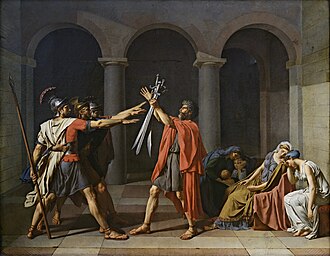 Le Serment des Horaces - Jacques-Louis David (1784)
.jpg) Les Sabines - Jacques-Louis David (1799)
Les Sabines - Jacques-Louis David (1799)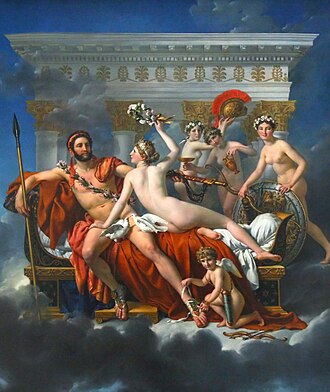 Mars désarmé par Vénus - Jacques-Louis David (1824)
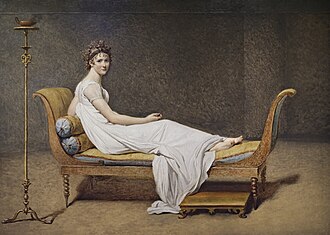 Madame Récamier - Jacques-Louis David (1800)
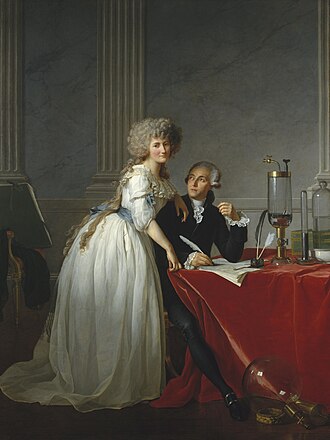 Portrait d'Antoine-Laurent Lavoisier et de sa femme - Jacques-Louis David (1788)
 Bélisaire demandant l'aumône - Jacques-Louis David (1781)
L'Amour et Psyché - Jacques-Louis David (1817)
 Le Serment du jeu de paume - Jacques-Louis David (1791)
Œuvres d'artistes liés
 La Source - Jean-Auguste-Dominique Ingres (1856)
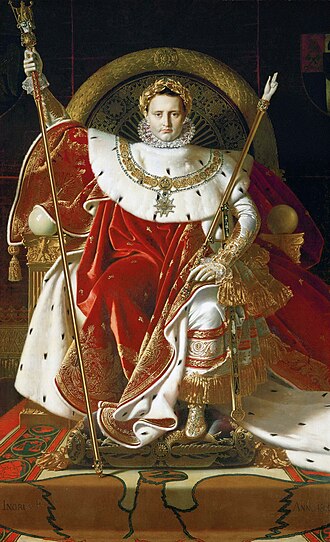 Napoléon Ier sur le trône impérial - Jean-Auguste-Dominique Ingres (1806)
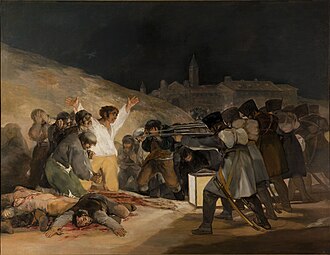 Tres de Mayo - Francisco Goya (1814)
.jpg) La Maja nue - Francisco Goya (1800)
La Maja nue - Francisco Goya (1800)