Le Combat de Carnaval et Carême
Pieter Bruegel the Elder · 1559
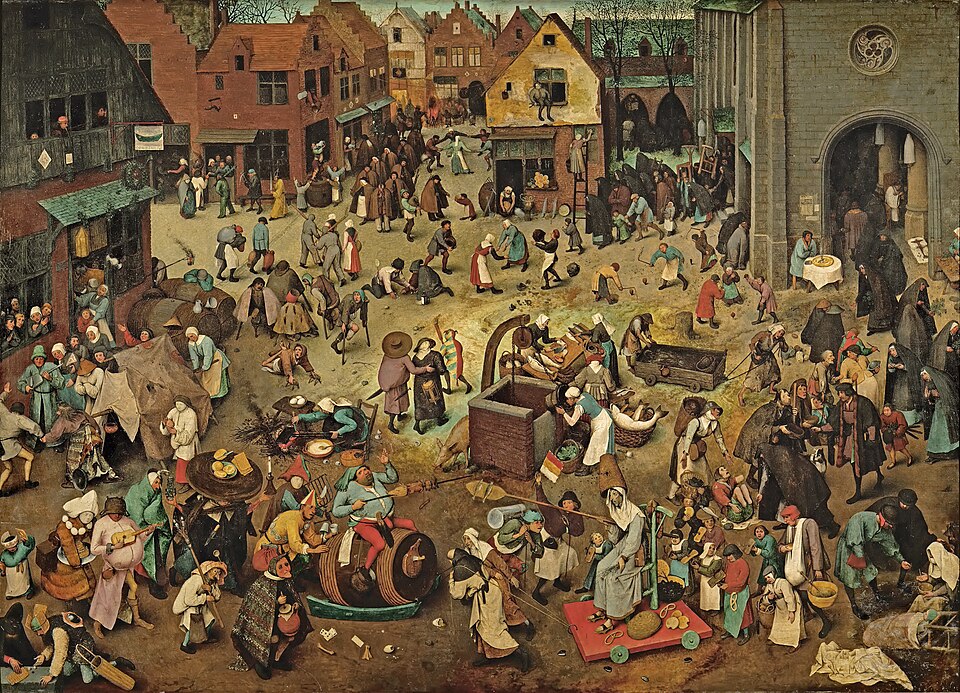
A fat butcher astride a beer barrel charges with a spit of roast pig; a thin woman on a cart answers with two herrings on a baker's peel. Around their mock joust, nearly 200 villagers drink, pray, beg and play in one Flemish market square.
The story behind the painting
Pieter Bruegel the Elder painted this oil on panel in 1559, a panorama of life in the Southern Netherlands on the turn from Shrove Tuesday to Lent, the forty days before Easter. The battle between feast and fast was an old literary theme, from the Psychomachia of around 400 to a thirteenth-century French poem in which meat fights fish. A likely model was a 1558 etching by Hieronymus Cock after Frans Hogenberg. In the same year Bruegel painted Netherlandish Proverbs, and a year later Children's Games; together they are catalogues of folk custom and mark his move from draughtsman to painter of large panels.
What to look for
In front, Carnival, a butcher with a pouch of knives, rides a barrel on a sled, a pork chop on the front and a cooking pot as stirrup, his lance a spit with a pig's head, poultry and sausages; he wears a pie on his head. Lent, a thin woman on a three-legged chair, wears a beehive and is pulled by a monk and a nun, followed by children with Ash Wednesday crosses and clappers. On the left, the Blue Barge inn, where actors play The Dirty Bride and a bagpiper leans out of a window to vomit. On the right, the church, with veiled statues, alms for beggars and a stall of fish. In the centre, a well, and young people juggling clay pots, with shards on the ground.
Meaning and intent
The picture is framed by an inn and a church, like a stage, and its border is loose: followers of each side wander into the other's space. Bare trees on the left suggest winter; budding trees by the church suggest spring. Bruegel does not crown either side; both are presented as extremes of human life. Small details carry moral weight, such as the beggar woman with pilgrim badges whose basket holds a monkey, a sign of pretending. The village feast would already have felt nostalgic to viewers who knew the professional processions of Antwerp.
Legacy
The painting is now in the Kunsthistorisches Museum in Vienna, and its dense crowd still rewards slow looking. X-rays show that an unknown hand later altered it: a bloated corpse partly covered by a white shroud was painted out, and a figure in a wheeled container near the fish stall was hidden. Both figures survive in copies made in Bruegel's own time. Its high horizon and bird's eye view belong to the world landscape tradition, and with Proverbs and Children's Games it remains one of the richest records of everyday sixteenth-century Flemish life.
Le saviez-vous ?
- Painted in 1559, oil on panel, about 118 by 164.5 cm.
- Contains nearly 200 figures.
- Framed by an inn on the left and a church on the right.
- In the Kunsthistorisches Museum, Vienna.
À propos de l'artiste
Pieter Bruegel the Elder (1525-1569)
scène de genre · musée d'Histoire de l'art de Vienne
Autres œuvres de Pieter Bruegel the Elder
%20-%20Google%20Art%20Project.jpg) Les Chasseurs dans la neige - Pieter Bruegel the Elder (1565)
Les Chasseurs dans la neige - Pieter Bruegel the Elder (1565)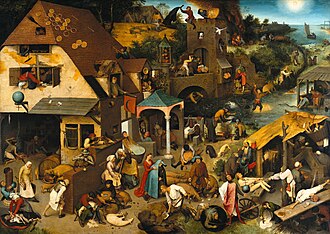 Les Proverbes flamands - Pieter Bruegel the Elder (1551)
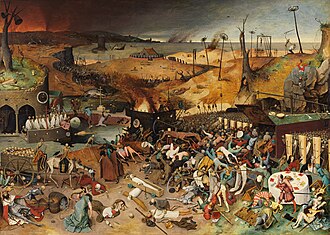 Le Triomphe de la Mort - Pieter Bruegel the Elder (1560s)
%20-%20Blind%20leading%20the%20blind%20Google%20Art%20Project.jpeg) La Parabole des aveugles - Pieter Bruegel the Elder (1568)
La Parabole des aveugles - Pieter Bruegel the Elder (1568)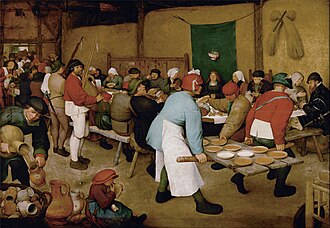 Le Repas de noce - Pieter Bruegel the Elder (1560s)
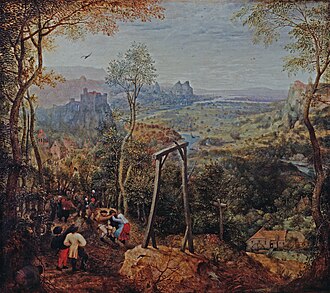 La Pie sur le Gibet - Pieter Bruegel the Elder (1568)
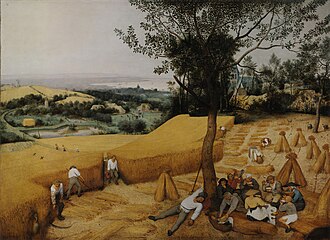 Les Moissonneurs - Pieter Bruegel the Elder (1565)
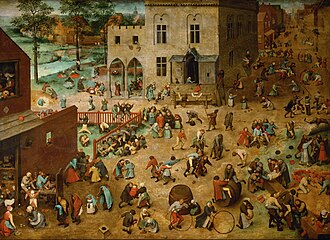 Les Jeux d’enfants - Pieter Bruegel the Elder (1560)
Œuvres d'artistes liés
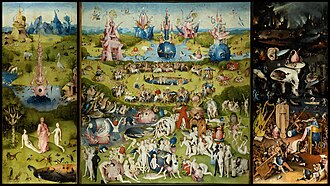 Le Jardin des délices - Hieronymus Bosch
 La Nef des fous - Hieronymus Bosch (1500s)
 Les Ambassadeurs - Hans Holbein the Younger (1533)
 Le Christ mort - Hans Holbein the Younger (1520s)