Les Jeux d’enfants
Pieter Bruegel the Elder · 1560
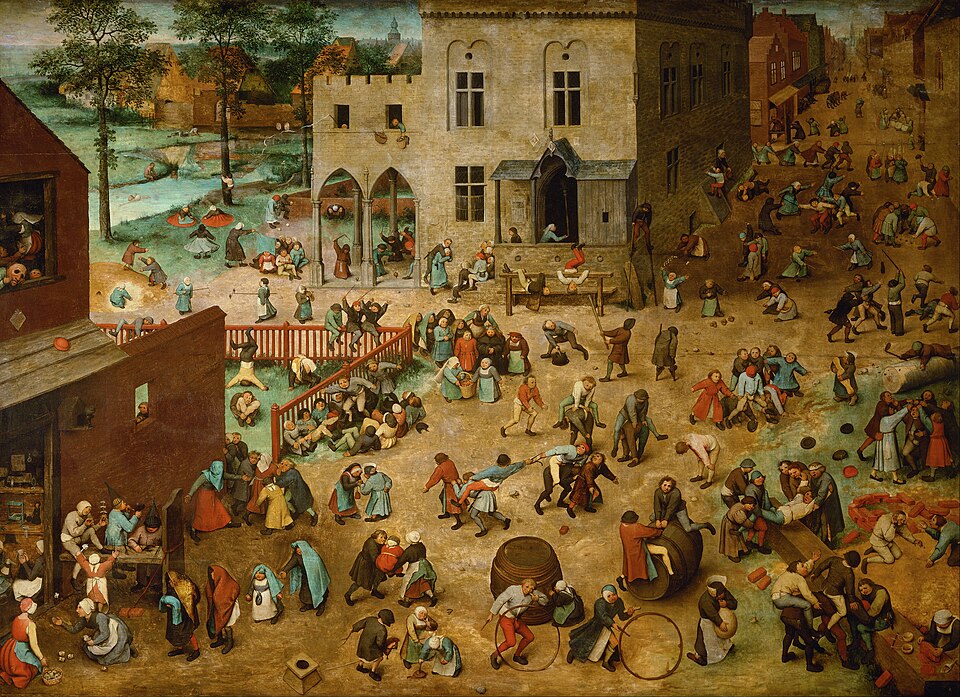
A whole town square has been taken over by children. They roll hoops, walk on stilts, wrestle and play leap-frog, and Bruegel painted every one of them in 1560, as seriously as if they were running the world.
The story behind the painting
Pieter Bruegel the Elder painted Children's Games in oil on panel in 1560. It is about 118 by 161 cm and hangs in the Kunsthistorisches Museum in Vienna. Archduke Ernest of Austria acquired it in 1594, and Karel van Mander first mentioned it in writing in 1604. It has been suggested that it was meant to open a series on the Ages of Man, standing for Youth. If so, the series probably never went further, since no related pictures are mentioned by contemporaries or later writers.
What to look for
Let your eye wander, because the whole panel is full of play. Children from toddlers to teenagers roll and spin hoops, walk on stilts, ride hobby-horses, stage mock tournaments, play leap-frog and blind man's bluff, do handstands, blow up pigs' bladders and play with dolls and other toys. They have even taken over the large building that dominates the square, perhaps a town hall. In the top left a landscape opens a little air, yet even there children bathe in the river and play on its banks. Wikipedia gives over 90 identified games in one place and some eighty in another, so the exact count differs.
Meaning and intent
Bruegel meant more than an illustrated catalogue of pastimes. He shows the children absorbed in their games with the same seriousness adults bring to their apparently weightier affairs. The moral is that in the eyes of God, children's games matter as much as the business of their parents. Placing them in a civic building hints that the adults who run the town are themselves children in God's sight. The idea was familiar at the time: an anonymous Flemish poem printed in Antwerp in 1530 by Jan van Doesborch compares mankind to children lost in foolish games.
Legacy
Children's Games has become a kind of record of how children played in the sixteenth century, and scholars still work through it game by game, starting from the bottom left corner. Its crowded square rewards slow looking, since each corner holds another game. Above all it keeps something warm and recognisable: almost five centuries later, a viewer can still find hoops, stilts and leap-frog, games that children somewhere are playing today.
Le saviez-vous ?
- Oil on panel, 1560, about 118 x 161 cm.
- In the Kunsthistorisches Museum, Vienna; acquired by Archduke Ernest in 1594.
- Around 80 to more than 90 different games have been identified.
- Possibly planned as Youth in a series on the Ages of Man.
À propos de l'artiste
Pieter Bruegel the Elder (1525-1569)
scène de genre · musée d'Histoire de l'art de Vienne
Autres œuvres de Pieter Bruegel the Elder
%20-%20Google%20Art%20Project.jpg) Les Chasseurs dans la neige - Pieter Bruegel the Elder (1565)
Les Chasseurs dans la neige - Pieter Bruegel the Elder (1565)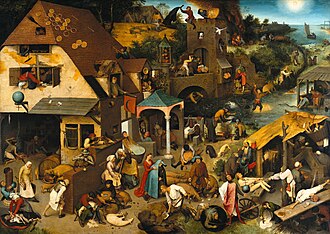 Les Proverbes flamands - Pieter Bruegel the Elder (1551)
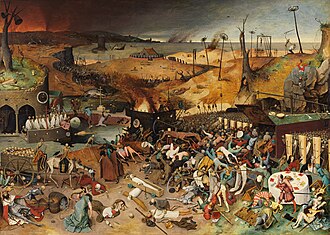 Le Triomphe de la Mort - Pieter Bruegel the Elder (1560s)
%20-%20Blind%20leading%20the%20blind%20Google%20Art%20Project.jpeg) La Parabole des aveugles - Pieter Bruegel the Elder (1568)
La Parabole des aveugles - Pieter Bruegel the Elder (1568)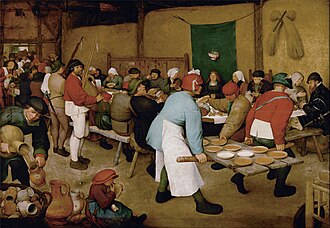 Le Repas de noce - Pieter Bruegel the Elder (1560s)
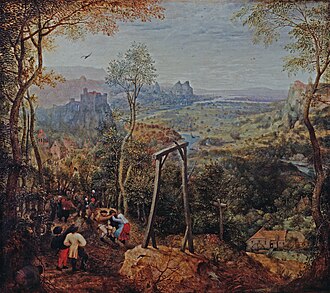 La Pie sur le Gibet - Pieter Bruegel the Elder (1568)
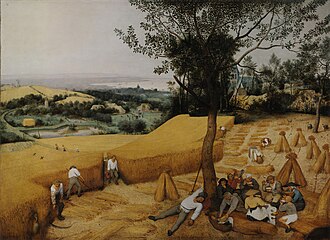 Les Moissonneurs - Pieter Bruegel the Elder (1565)
%20-%20Christ%20and%20the%20woman%20taken%20in%20adultery.jpg) Le Christ et la femme adultère - Pieter Bruegel the Elder (1565)
Le Christ et la femme adultère - Pieter Bruegel the Elder (1565)
Œuvres d'artistes liés
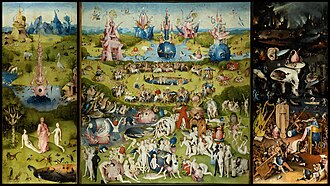 Le Jardin des délices - Hieronymus Bosch
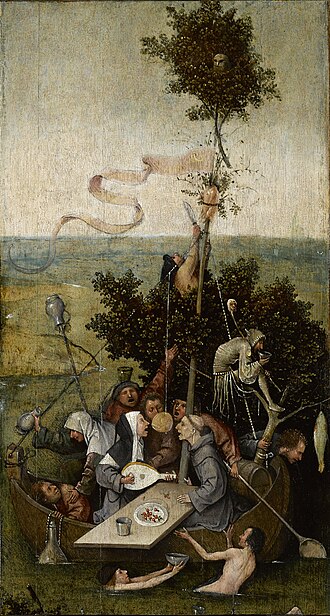 La Nef des fous - Hieronymus Bosch (1500s)