La Chute des anges rebelles
Pieter Bruegel the Elder · 1562
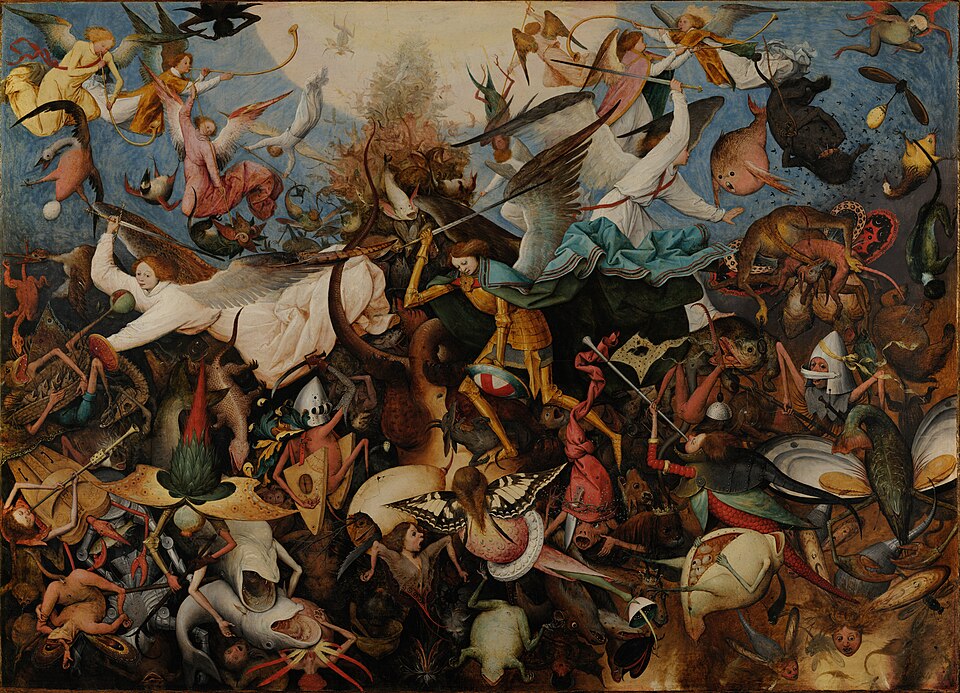
Out of a blazing hole in the sky, angels tumble and turn into monsters: fish with legs, butterflies with human faces, armoured beasts. In the middle, Saint Michael swings his sword. For centuries this crowded vision was believed to be by Hieronymus Bosch.
The story behind the painting
Pieter Bruegel the Elder painted this oil on panel in 1562. It takes its subject from Revelation 12: Lucifer, created a perfect angel, rebels out of pride, draws a third of the angels after him, and the archangel Michael is charged with driving them out of heaven. When the Royal Museums of Fine Arts of Belgium received the picture there was no signature to be seen, so it was believed to be by Hieronymus Bosch. In 1900 a signature with Bruegel's name was found under the frame; it was first given to Pieter the Younger, and only after a date was found was it settled as the work of the Elder.
What to look for
The panel, about 117 by 162 cm, is filled almost to the edges. At the top is heaven in light blues and bright colours; below, the dark tones of hell. In the centre stands Michael in triumph, sword raised, flanked by two good angels in white whose brightness stands out against the darkness beneath them. From the sun above, the rebels pour down and become hybrids: heads on the wrong bodies, exotic animals, armour, weapons and musical instruments. In both upper corners angels blow trumpets, as if the battle were already won. Look for the butterflies and fish mixed among the creatures.
Meaning and intent
Good against evil and virtue against vice run through Bruegel's work, and here they become a single falling avalanche. His debt to Bosch is clear: The Garden of Earthly Delights and The Last Judgement both show hybrid creatures and fallen angels, and Bruegel took Bosch's small scene and made it the whole subject. He also drew on Dürer's woodcut of Saint Michael fighting the dragon, on Frans Floris's own Fall of the Rebel Angels, and on his 1558 drawing of the Last Judgement for the trumpet angels. Tine Luk Meganck compares the painting to a cabinet of curiosities, mixing natural and man-made objects.
Legacy
Bruegel was called a second Bosch, and their methods were so close, sketching with a brush and then building thin layers of pigment, that their works could be hard to tell apart, which explains the long confusion over this panel. It is now in the Oldmasters Museum in Brussels, part of the Royal Museums of Fine Arts of Belgium. The painting has found a life in popular culture: it appears at the start of the Korean music video for BTS's Blood Sweat and Tears, on a 2016 jacket by Supreme and Undercover, and as a jigsaw puzzle in the series Interview with the Vampire.
Le saviez-vous ?
- Painted in 1562, oil on panel, about 117 by 162 cm.
- Long attributed to Hieronymus Bosch; a Bruegel signature was found under the frame in 1900.
- Subject taken from Revelation 12.
- In the Oldmasters Museum, Brussels.
À propos de l'artiste
Pieter Bruegel the Elder (1525-1569)
art religieux · musées royaux des Beaux-Arts de Belgique
Autres œuvres de Pieter Bruegel the Elder
%20-%20Google%20Art%20Project.jpg) Les Chasseurs dans la neige - Pieter Bruegel the Elder (1565)
Les Chasseurs dans la neige - Pieter Bruegel the Elder (1565)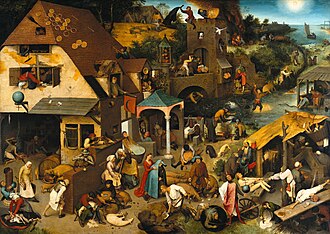 Les Proverbes flamands - Pieter Bruegel the Elder (1551)
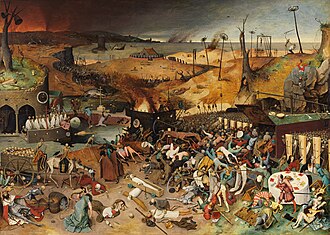 Le Triomphe de la Mort - Pieter Bruegel the Elder (1560s)
%20-%20Blind%20leading%20the%20blind%20Google%20Art%20Project.jpeg) La Parabole des aveugles - Pieter Bruegel the Elder (1568)
La Parabole des aveugles - Pieter Bruegel the Elder (1568)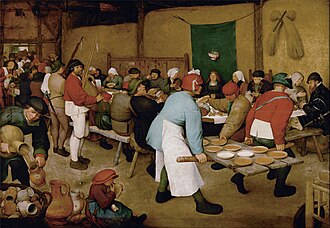 Le Repas de noce - Pieter Bruegel the Elder (1560s)
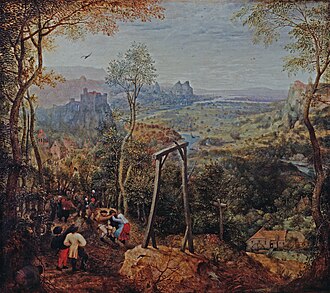 La Pie sur le Gibet - Pieter Bruegel the Elder (1568)
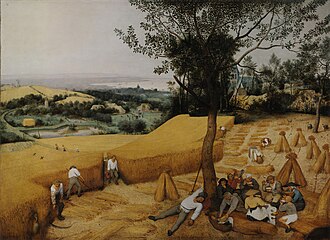 Les Moissonneurs - Pieter Bruegel the Elder (1565)
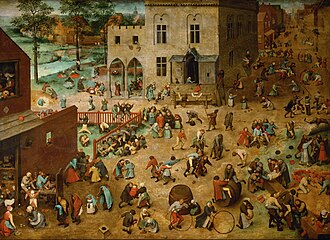 Les Jeux d’enfants - Pieter Bruegel the Elder (1560)
Œuvres d'artistes liés
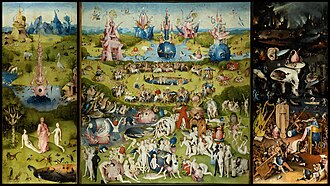 Le Jardin des délices - Hieronymus Bosch
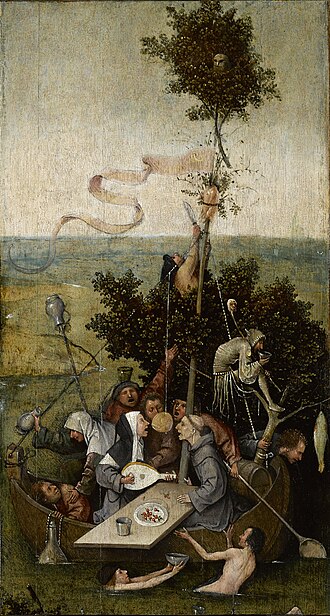 La Nef des fous - Hieronymus Bosch (1500s)
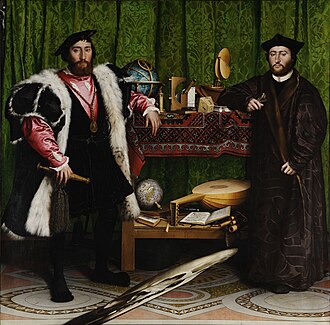 Les Ambassadeurs - Hans Holbein the Younger (1533)
 Le Christ mort - Hans Holbein the Younger (1520s)