L'Enterrement de la sardine
Francisco Goya · 1814
.jpg)
Masked revellers dance toward the river under a black banner with a grinning face. Goya's carnival looks joyful at first glance, then the blank masks and darkening trees start to unsettle.
The story behind the painting
The title was given after Goya's death and refers to the Entierro de la Sardina, the closing event of a three-day carnival in Madrid that ended on Ash Wednesday. Masked and disguised revellers dance their way to the banks of the Manzanares, where a ceremonial sardine will be buried. The panel has been dated anywhere between 1793 and 1819, though most accounts place it toward the end of that range; Wikidata gives 1814.
What to look for
Goya shows neither the sardine nor the large straw doll, the pelele, from which it hung. The centrepiece is the darkly grinning King of the Carnival on a black banner. Women in white dance gaily, surrounded by masked and blank faces, grey twisted trees and encroaching dark colours. The word mortus, death, is barely visible on the banner, though in Goya's preparatory ink sketch it stands out over an indistinct shape that may be the sardine itself.
Meaning and intent
The painting is a tribute to the common people, an exuberant crowd carousing on the first day of Lent while other Catholics worship in church. Yet such festivals began with themes of mortality: masks were worn to ward off the spirits of criminals and of those who had died violently. The scholar Fred Licht praised every brushstroke as a calligraphic marvel, and felt beneath the gaiety the disturbing undertones of mass hysteria.
Legacy
The work stands between Goya's bright tapestry cartoons of popular entertainments and his later, darker Black Paintings; Licht called it the perfect balancing point between them. It forms a loose set with other scenes of religious ceremony from the same years, such as A Procession of Flagellants and Inquisition Scene. Today the panel is held at the Real Academia de Bellas Artes de San Fernando in Madrid, the city whose carnival it shows.
Le saviez-vous ?
- Shows the carnival ritual that ended on Ash Wednesday in Madrid.
- Dated between 1793 and 1819; Wikidata gives 1814.
- The word mortus is barely visible on the banner.
- Held at the Real Academia de Bellas Artes de San Fernando.
À propos de l'artiste
Francisco Goya (1746-1828)
scène de genre · arbre · Académie royale des Beaux-Arts Saint-Ferdinand · foule
Autres œuvres de Francisco Goya
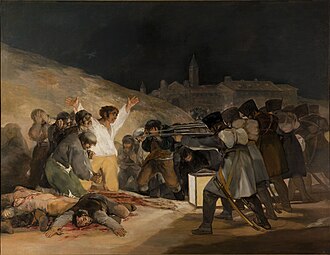 Tres de Mayo - Francisco Goya (1814)
.jpg) La Maja nue - Francisco Goya (1800)
La Maja nue - Francisco Goya (1800).jpg) Saturne dévorant un de ses enfants - Francisco Goya (1819)
Saturne dévorant un de ses enfants - Francisco Goya (1819)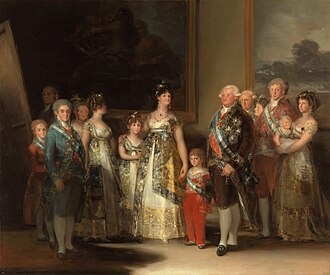 La Famille de Charles IV - Francisco Goya (1800)
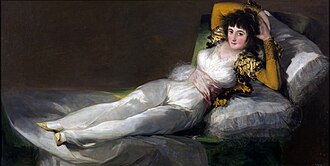 La Maja vêtue - Francisco Goya (1800)
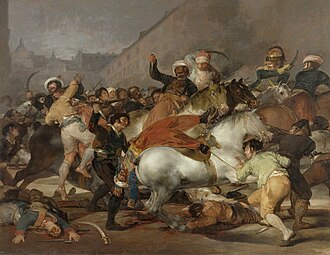 Dos de Mayo - Francisco Goya (1814)
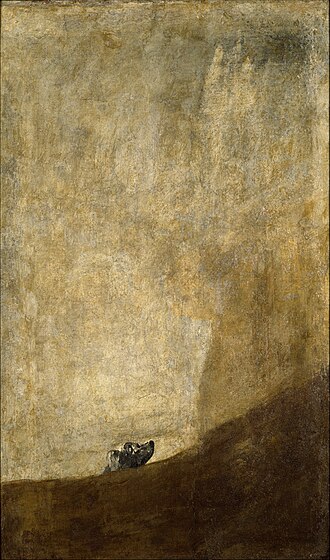 Le Chien - Francisco Goya (1819)
 Le Sabbat des sorcières - Francisco Goya (1820s)
Œuvres d'artistes liés
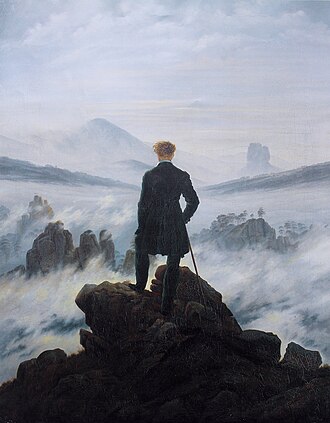 Le Voyageur contemplant une mer de nuages - Caspar David Friedrich (c. 1818)
 L'Abbaye dans une forêt de chênes - Caspar David Friedrich (1800s)
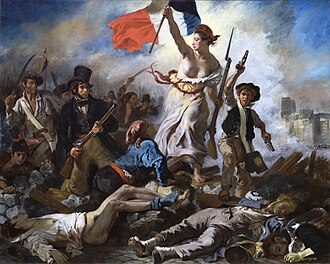 La Liberté guidant le peuple - Eugène Delacroix (1830)
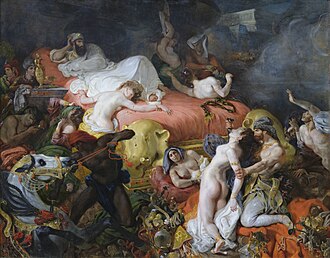 La Mort de Sardanapale - Eugène Delacroix (1827)
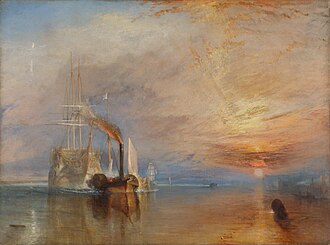 Le Dernier Voyage du Téméraire - J. M. W. Turner (1839)
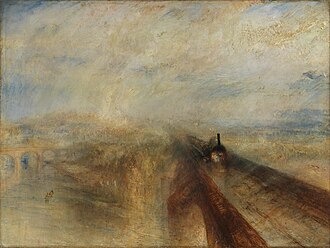 Pluie, Vapeur et Vitesse - J. M. W. Turner (1844)
.jpg) L'Enfant bleu - Thomas Gainsborough (1770)
L'Enfant bleu - Thomas Gainsborough (1770).jpg) Les Époux Andrews - Thomas Gainsborough (1748)
Les Époux Andrews - Thomas Gainsborough (1748)