Le Serpent d'airain
Michel-Ange Buronarroti · 1511
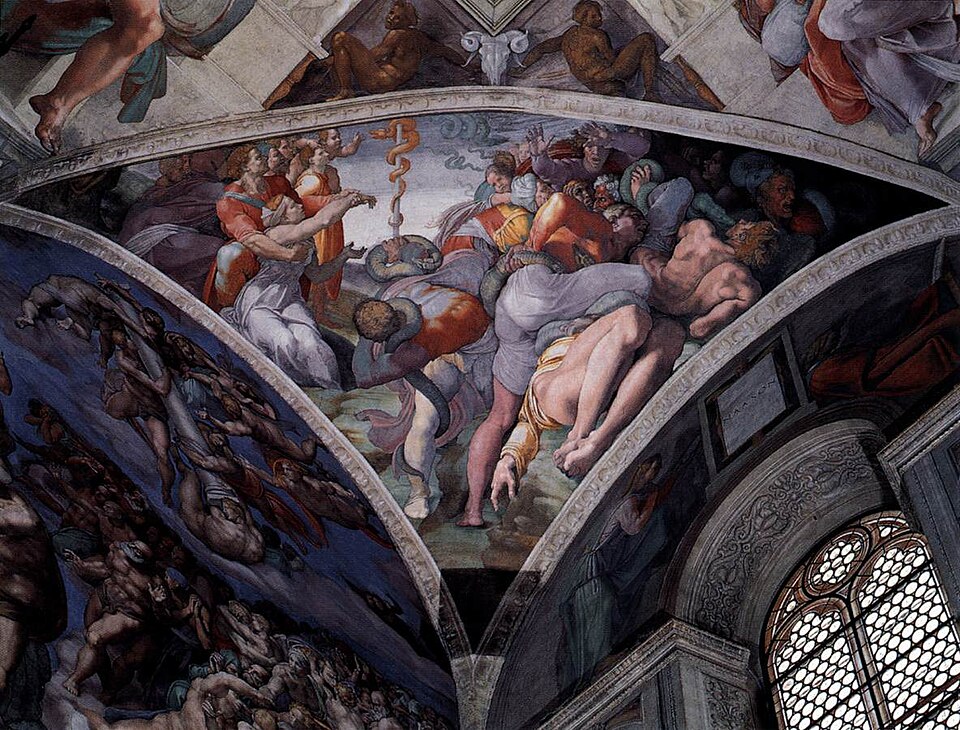
Bodies twist and scream as venomous snakes strike, while on the other side people lift their eyes to a bronze serpent and are saved. In one corner of the Sistine ceiling, Michelangelo painted terror and hope side by side.
The story behind the painting
The Brazen Serpent is a fresco by Michelangelo, about 585 by 985 cm, dated to around 1511-1512, part of the Sistine Chapel ceiling commissioned by Pope Julius II. Michelangelo worked across the vault starting from the entrance used for the Pope's solemn processions and finished above the altar. This scene from the Book of Numbers decorates the pendentive to the left of the altar, so it was one of the very last to be painted. Wikidata gives the year as 1511.
What to look for
The story is told in two halves. On the right, a tumult of tangled bodies is struck down by snakes, made even more expressive by violent, shimmering reds and yellows. Faces become masks screaming with terror, and men whirl about, like the half-naked figure in the foreground seen upside down with his legs bent. In the centre the bronze serpent stands raised, and on the left the survivors beg with their eyes and great gestures to be saved. A few dark rectangles were left to show the state of the paintings before restoration.
Meaning and intent
It is one of four pendentives with Old Testament stories about God protecting the people of Israel. The Israelites spoke against God and Moses and were punished with venomous snakes, but Moses made a bronze serpent, and anyone bitten who looked at it was saved. The scene was read as a foreshadowing of the Crucifixion, after the Gospel of John: as Moses lifted up the serpent in the desert, so must the Son of Man be lifted up. Michelangelo broke with earlier versions by not showing Moses clearly at all.
Legacy
The fresco is described as one of the most complex paintings on the Sistine vault. Vasari admired it greatly, and it became a model for a line of Mannerist painters, from Giulio Romano to Vasari himself. Scholars point to the Laocoon, the ancient sculpture of a man and his sons fighting serpents discovered in 1506, as a likely source for the struggle between people and snakes. Like the scenes around it, it is painted with strong foreshortening, meant to be read along the central axis from the ceremonial door to the altar.
Le saviez-vous ?
- Fresco about 585 x 985 cm on the Sistine Chapel ceiling.
- One of the last ceiling scenes painted, around 1511-1512.
- Read as a foreshadowing of the Crucifixion.
- The Laocoon, found in 1506, is seen as a likely model.
À propos de l'artiste
Michel-Ange Buronarroti (1475-1564)
art religieux · Haute Renaissance · chapelle Sixtine
Autres œuvres de Michel-Ange Buronarroti
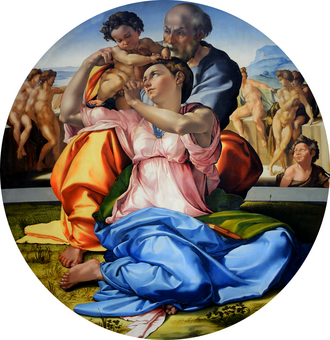 Tondo Doni - Michelangelo (1500s)
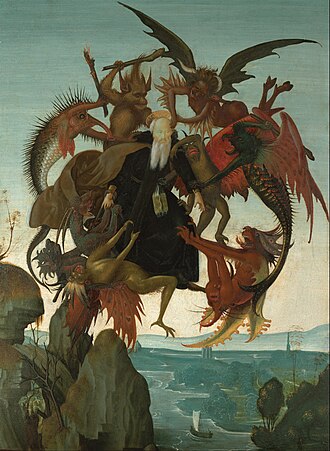 Le Tourment de saint Antoine - Michelangelo (1487)
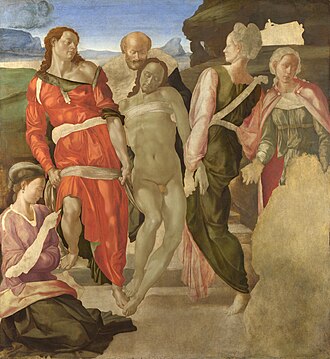 La Mise au tombeau - Michelangelo (1500s)
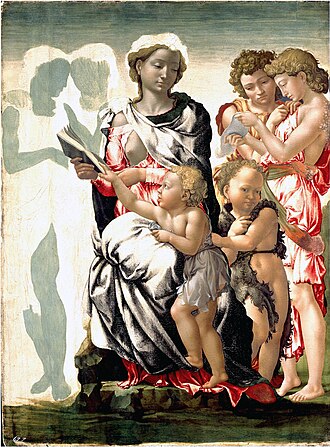 Madone de Manchester - Michelangelo (1494)
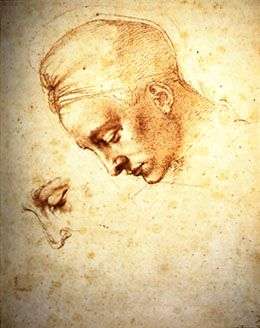 Léda - Michelangelo (1530)
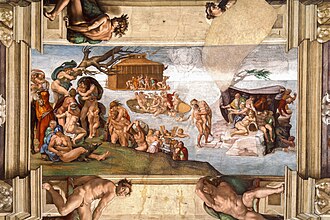 Le Déluge - Michelangelo (1508)
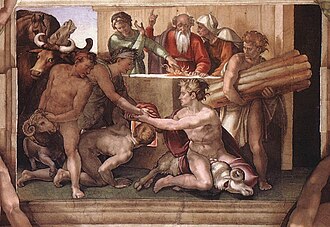 Le Sacrifice de Noé - Michelangelo (1508)
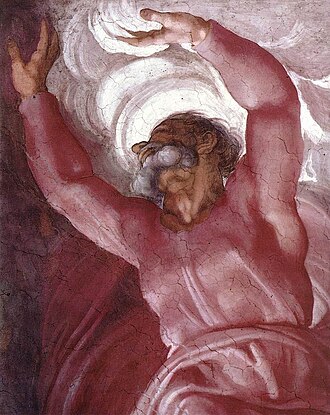 La Séparation de la lumière et des ténèbres - Michelangelo (1512)
Œuvres d'artistes liés
 La Madone Sixtine - Raphael (1510s)
.jpg) La Fornarina - Raphael
La Fornarina - Raphael.jpg) Vénus d'Urbin - Titian (1538)
Vénus d'Urbin - Titian (1538) L'Assomption de la Vierge - Titian (1510s)
 La Joconde - Leonardo da Vinci (1503-1519)
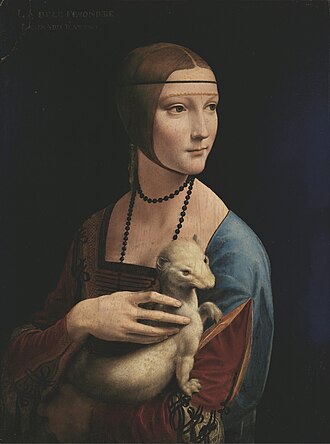 La Dame à l'hermine - Leonardo da Vinci (1490)
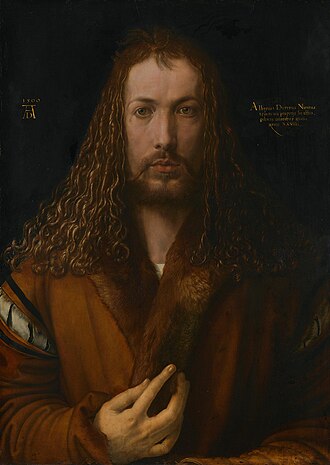 Autoportrait - Albrecht Dürer (1500)
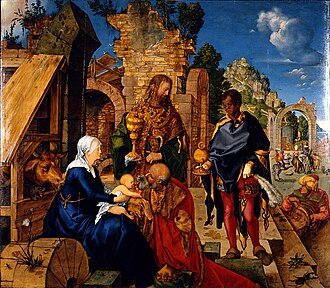 Adoration des mages - Albrecht Dürer (1504)
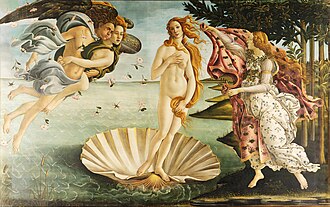 La Naissance de Vénus - Sandro Botticelli (c. 1485)
 Le Printemps - Sandro Botticelli (1480s)
 Le Jardin des délices - Hieronymus Bosch
 La Nef des fous - Hieronymus Bosch (1500s)