L'Aveuglement de Samson
Rembrandt van Rijn · 1636
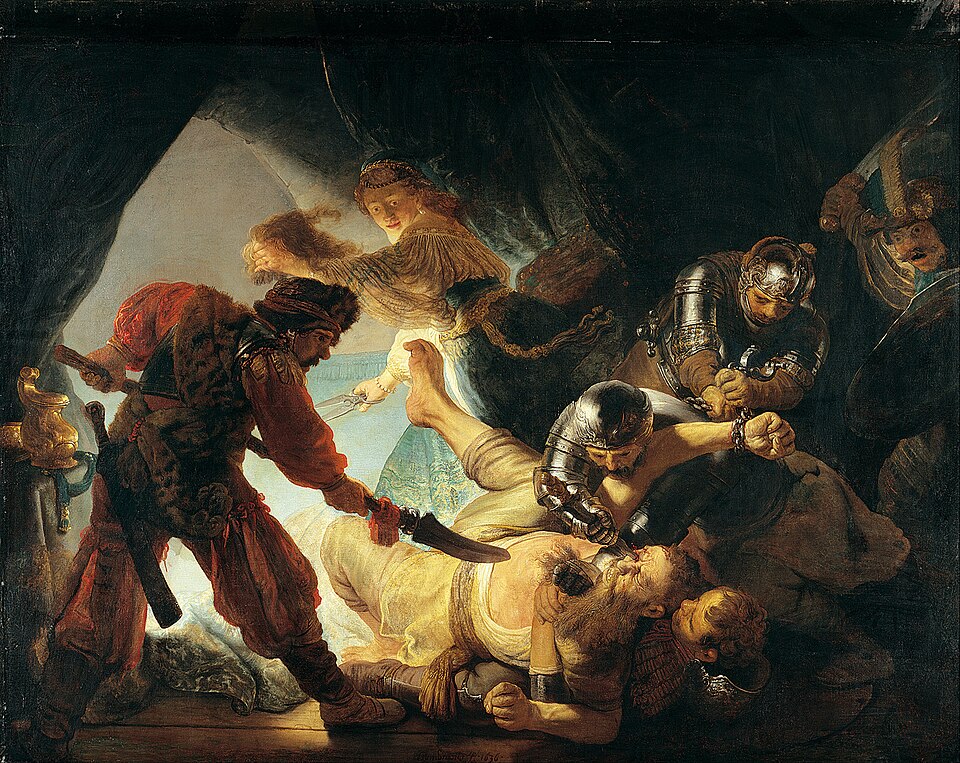
Soldiers pin a strong man to the ground while, behind them, a woman flees with his cut hair in her hand. Rembrandt chose the cruellest moment of an old story and painted it so we cannot look away from what betrayal costs.
The story behind the painting
Rembrandt painted The Blinding of Samson in 1636. He gave it to the House of Orange, his patron for several commissions, through its secretary Constantijn Huygens, as a way of excusing his delay with a series of Passion paintings he had been commissioned to make. Later the painting was acquired by Friedrich Karl von Schönborn and stayed in the Palais Schönborn-Batthyány in Vienna until the Städel Museum in Frankfurt acquired it in 1905. It is a huge canvas, about 219 by 305 centimetres. According to the source, it was the first of its kind in pictorial tradition: no other artist at the time had painted this particular moment of the story.
What to look for
The scene follows the biblical account of Samson, whose great strength depended on keeping certain vows, including never cutting his hair. In the background, Delilah, who betrayed him to the Philistines, flees with a shock of his hair and the scissors still in her hand. In the foreground the struggle is at its height. One soldier enters fearfully, another holds Samson down, another binds him, and one drives a blade toward his eye. Rembrandt does not hide the violence, but notice how he arranges it so that each figure tells a different stage of the event while Delilah's flight in the background keeps the cause of it all in view.
Meaning and intent
Rembrandt chose the climax of the story, the moment of the blinding itself, yet the painting lets the viewer reconstruct the whole sequence: the hair cut, the hero wrestled to the ground, tied, and then blinded. In a single image we see cause and consequence together. The emotional centre is the gap between Delilah, escaping, and Samson, overpowered because of her betrayal. It is a picture about trust broken and strength lost, shown without softening. The brutality is part of its honesty: Rembrandt makes us feel the weight of the moment rather than admire it from a comfortable distance.
Legacy
The painting began as a gift with a purpose: Rembrandt sent it to the House of Orange to make amends for the slow progress of the Passion paintings he owed them. That practical origin did not make it a modest work. It is enormous, more than three metres wide, and it took on a subject no painter of the time had attempted. Its later journey, from the House of Orange to the Schönborn palace in Vienna and finally, in 1905, to Frankfurt, kept it in the hands of collectors for centuries. Today at the Städel, it still confronts visitors with its scale and intensity, and with the courage of a painter who refused to look away.
Le saviez-vous ?
- Painted in 1636 and given to the House of Orange via Constantijn Huygens.
- Acquired by the Städel Museum, Frankfurt, in 1905; 219.3 × 305 cm.
- Described as the first painting to depict this specific moment of the Samson story.
À propos de l'artiste
Rembrandt van Rijn (1606-1669)
art religieux · homme · musée Städel
Autres œuvres de Rembrandt van Rijn
 La Ronde de nuit - Rembrandt van Rijn (1642)
 Autoportrait - Rembrandt van Rijn (1659)
 La Leçon d'anatomie du docteur Tulp - Rembrandt van Rijn (1632)
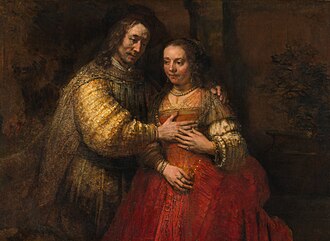 La Fiancée juive - Rembrandt van Rijn (1660s)
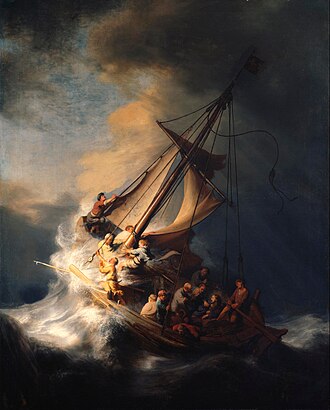 La Tempête sur la mer de Galilée - Rembrandt van Rijn (1633)
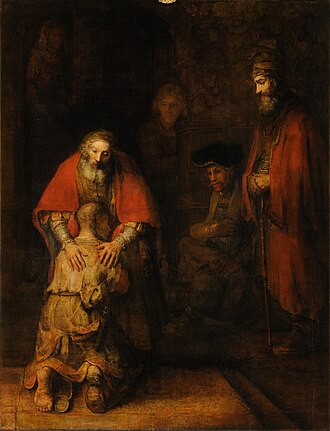 Le Retour du fils prodigue - Rembrandt van Rijn (1668)
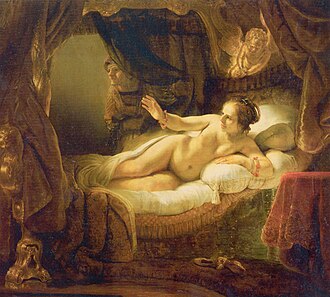 Danaé - Rembrandt van Rijn (1636)
 Le Festin de Balthazar - Rembrandt van Rijn (1636)
Œuvres d'artistes liés
 La Jeune Fille à la perle - Johannes Vermeer (1665)
 La Laitière - Johannes Vermeer (c. 1658)
 Le Souper à Emmaüs - Caravaggio (1601)
 La Vocation de saint Matthieu - Caravaggio (1609)
 Les Ménines - Diego Velázquez (1656)
 La Reddition de Bréda - Diego Velázquez (1635)