Femmes d'Alger dans leur appartement
Eugène Delacroix · 1834
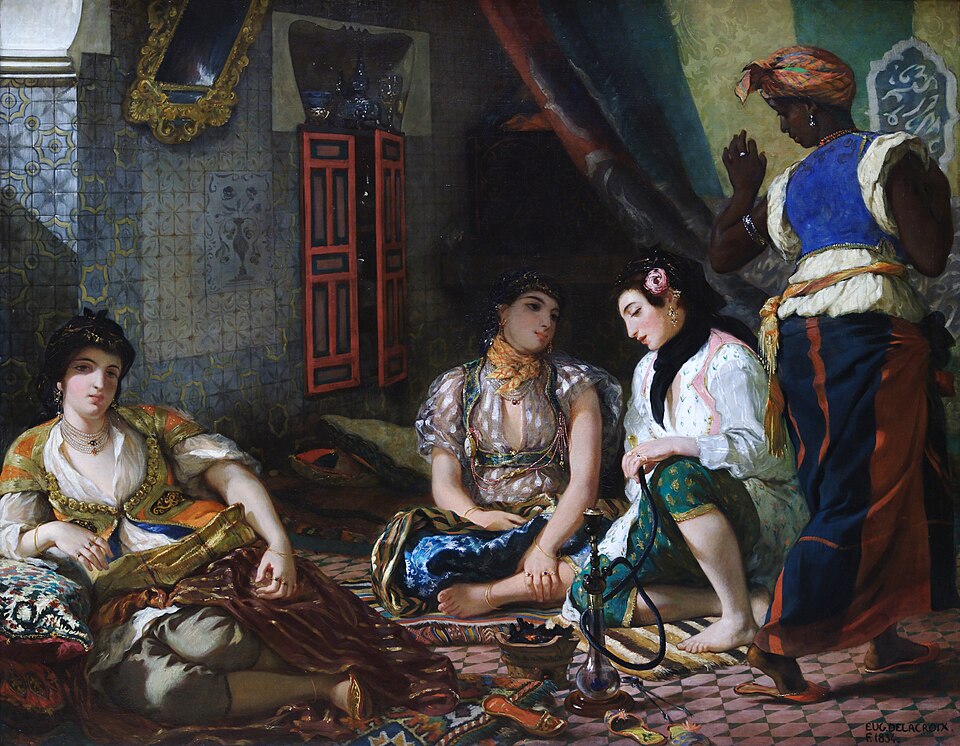
Four women in a closed, richly decorated room, one glancing back as she leaves. Delacroix built this picture from a rare three-day visit to Algiers, and its colours made Cézanne feel drunk.
The story behind the painting
In 1832 Delacroix travelled with a French diplomatic mission to Morocco, led by the young diplomat Charles de Mornay, and joined it by chance through an old friend, Henri Duponchel. During six months he filled seven large sketchbooks. Sketching Arab women was nearly impossible: women hanging washing on roof terraces would alert their husbands as soon as he tried. On his way home he stayed three days in Algeria, where a merchant let him into his household's private women's quarters. Two small sketches made there became this oil painting, finished in Paris in 1834.
What to look for
Four women sit in a lavishly decorated room. Three wear loose, billowing garments and gold jewellery, and one has a pink flower in her hair. The fourth, a Black enslaved woman, is leaving the scene, looking back over her left shoulder at the others. Delacroix rendered the clothes, ornaments and interior in great detail, carried over from his 1832 sketches. Notice the narghile pipe and the charcoal burner, and the stare of the woman on the left, which seems to resent the intrusion. The canvas measures 180 by 229 cm, and a 2021 restoration removed yellowed varnish to reveal his colour.
Meaning and intent
Scholars have praised the picture's attempt at an ethnographic view: the women are relatively clothed, and the title avoids words like odalisque or harem. It is far less eroticised than Ingres' Grande Odalisque of 1814. Yet the women hardly interact and there is almost no story. With so little to go on from his stolen glance, Delacroix filled the gaps with a European fantasy of the Orient: exposed décolletage, loose clothing, languid poses and the pipe, which European viewers linked with hashish or opium. The picture sits between careful observation and a Western dream.
Legacy
At the Salon of 1834 the painting had mixed reviews; the critic Gustave Plance wrote that it was about painting and nothing more, fresh, vigorous and Venetian in its audacity. King Louis Philippe bought it that year and gave it to the Musée du Luxembourg, and in 1874 it moved to the Louvre, where it remains. Delacroix painted a second version between 1847 and 1849, now in Montpellier, which Van Gogh and Gauguin went to see in 1888. Picasso answered the theme in 1954 with a series of 15 paintings, and Cézanne compared the colour to a glass of wine.
Le saviez-vous ?
- Based on sketches made during three days in Algeria in 1832.
- Shown at the Paris Salon of 1834.
- Bought by King Louis Philippe; in the Louvre since 1874.
- Inspired a series of 15 paintings by Picasso in 1954.
À propos de l'artiste
Eugène Delacroix (1798-1863)
femme · scène de genre · département des peintures du musée du Louvre · domestique · coussin
Autres œuvres de Eugène Delacroix
 La Liberté guidant le peuple - Eugène Delacroix (1830)
 La Mort de Sardanapale - Eugène Delacroix (1827)
 Scènes des massacres de Scio - Eugène Delacroix (1824)
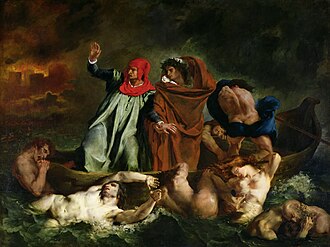 La Barque de Dante - Eugène Delacroix (1822)
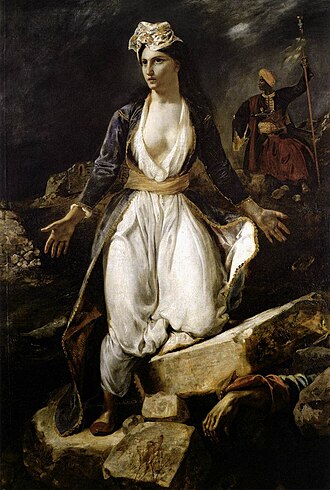 La Grèce sur les ruines de Missolonghi - Eugène Delacroix (1826)
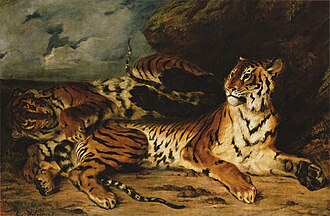 Jeune Tigre jouant avec sa mère - Eugène Delacroix (1830)
.jpg) Dernières Paroles de l’empereur Marc Aurèle - Eugène Delacroix (1844)
Dernières Paroles de l’empereur Marc Aurèle - Eugène Delacroix (1844)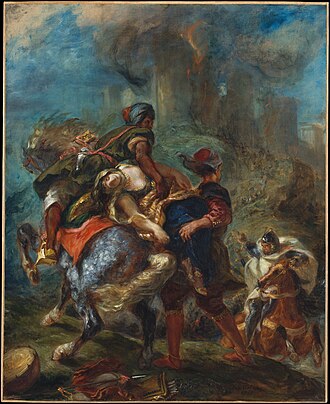 L'Enlèvement de Rebecca - Eugène Delacroix (1846)
Œuvres d'artistes liés
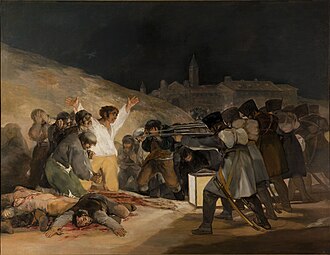 Tres de Mayo - Francisco Goya (1814)
.jpg) La Maja nue - Francisco Goya (1800)
La Maja nue - Francisco Goya (1800)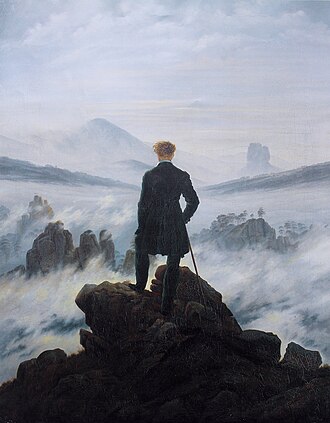 Le Voyageur contemplant une mer de nuages - Caspar David Friedrich (c. 1818)
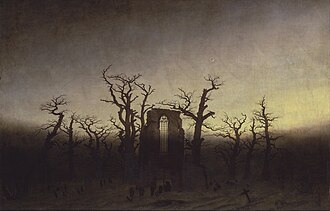 L'Abbaye dans une forêt de chênes - Caspar David Friedrich (1800s)
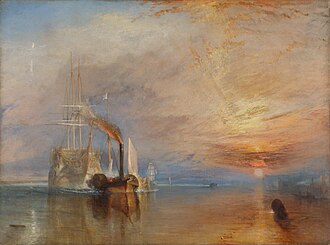 Le Dernier Voyage du Téméraire - J. M. W. Turner (1839)
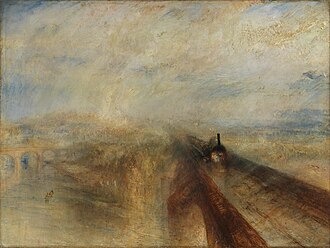 Pluie, Vapeur et Vitesse - J. M. W. Turner (1844)