Suzanne et les Vieillards
Artemisia Gentileschi · 1622
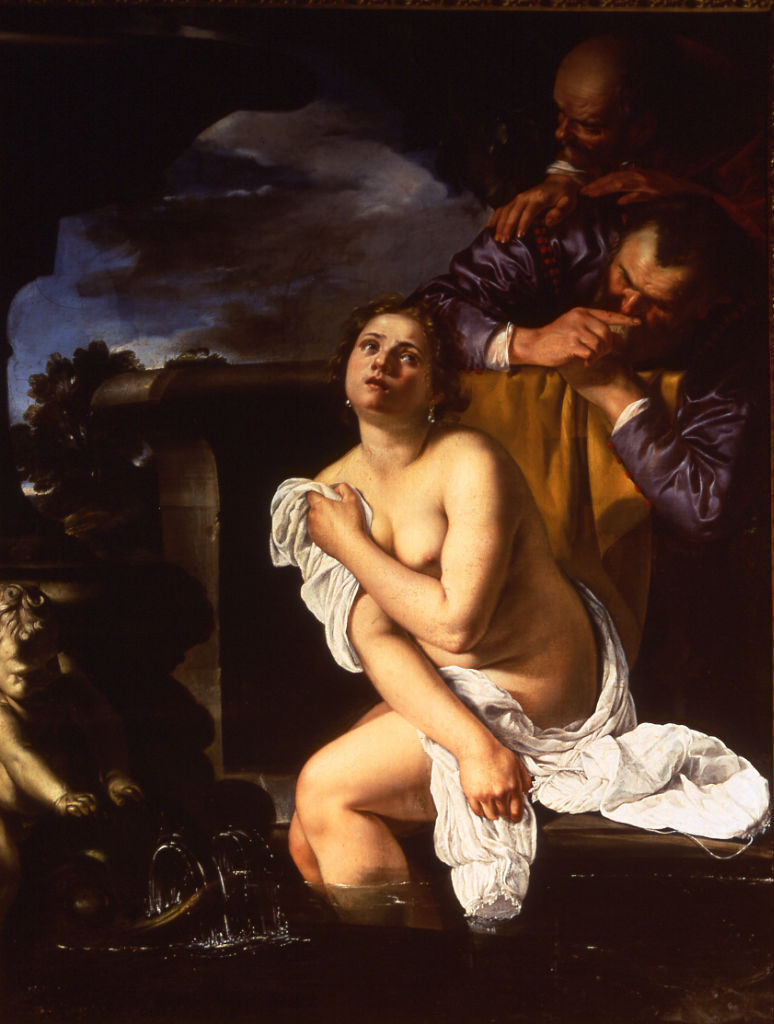
A woman at the edge of a pool raises her eyes in distress as two old men lean over the wall behind her. Artemisia Gentileschi signed this Susanna in 1622, and for a time it was thought to be by Caravaggio.
The story behind the painting
Artemisia Gentileschi painted the story of Susanna from the Book of Daniel several times, with versions at Pommersfelden from 1610, Brno dated 1649 and Bologna from 1652. This one is signed and dated 1622, two years after she returned to Rome, having begun her career as an independent artist in Florence. It may have been commissioned by the papal nephew Cardinal Ludovico Ludovisi, which could explain its Bolognese flavour. The painting is at Burghley House near Stamford in England.
What to look for
A realistically proportioned nude woman sits at the edge of a pool, beside a small fountain. Behind her, two older men lean over the wall, leering. Her distress shows in her upward-cast eyes and in the way she tries to cover herself with her arms and her chemise. Her arms take the pose known as Venus pudica, best known from the classical Crouching Venus. Look on the stone wall above her knees: the painting is signed ARTEMITIA GENTILESCHI LOMI. The canvas measures about 161 by 123 cm.
Meaning and intent
Compared with her 1610 Susanna, this picture is more traditional, shaped by her own development and by an etching of the same subject by Annibale Carracci. More landscape appears than in the earlier version, a sign of the influence of Bolognese artists such as Guercino, who had come to Rome after the election of a Bolognese pope. The story is the same, a woman cornered by two powerful men, but the painter now tells it in the refined language of her time.
Legacy
The difference from her 1610 version was so great that this work was at first attributed to Caravaggio. It has been in the collection of the family of the Marquess of Exeter since at least the 1700s, listed in the Burghley inventory of 1763, and was presumably acquired by Brownlow Cecil, 9th Earl of Exeter, on the Grand Tour. A copy is at Nottingham Castle Museum. It was lent to the Gentileschi exhibition at the National Gallery in London, held in 2020 after a delay caused by the COVID-19 pandemic.
Le saviez-vous ?
- Signed and dated 1622.
- Signed ARTEMITIA GENTILESCHI LOMI on the wall.
- Once attributed to Caravaggio.
- At Burghley House since at least the 1700s.
À propos de l'artiste
Artemisia Gentileschi (1593-1653)
art religieux · femme · nu · nudité · lavage · Suzanne · surpoids
Autres œuvres de Artemisia Gentileschi
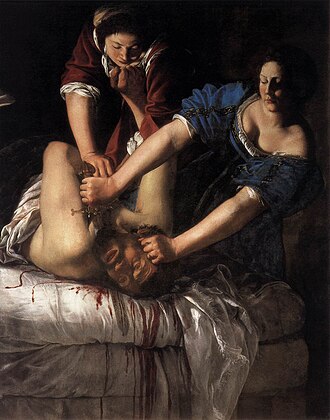 Judith décapitant Holopherne - Artemisia Gentileschi (1613)
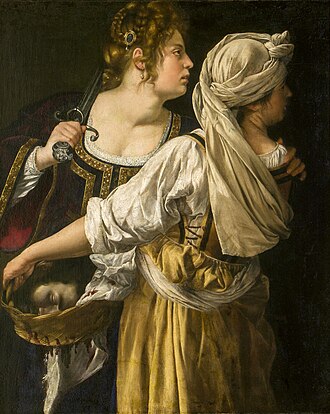 Judith et sa Servante - Artemisia Gentileschi (1618)
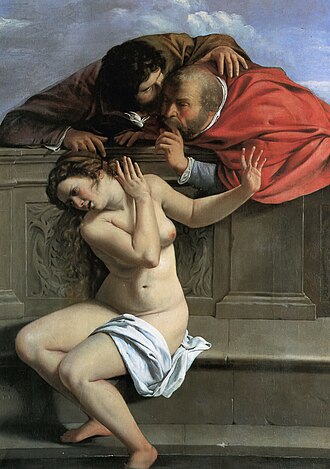 Suzanne et les Vieillards - Artemisia Gentileschi (1610)
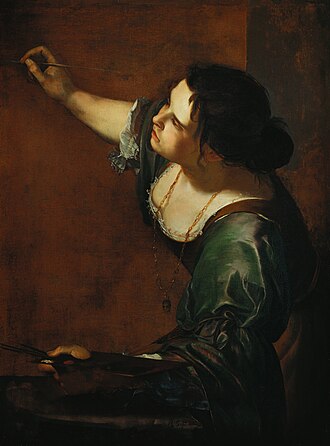 Autoportrait en allégorie de la Peinture - Artemisia Gentileschi (1638)
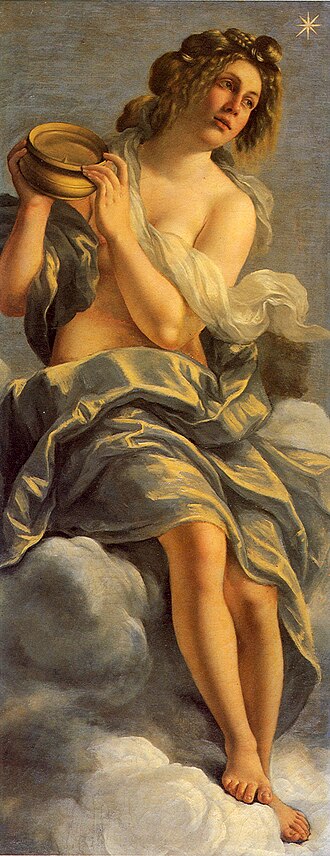 Allégorie de l'Inclination - Artemisia Gentileschi (1615)
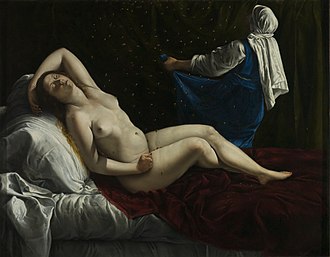 Danaé - Artemisia Gentileschi (1612)
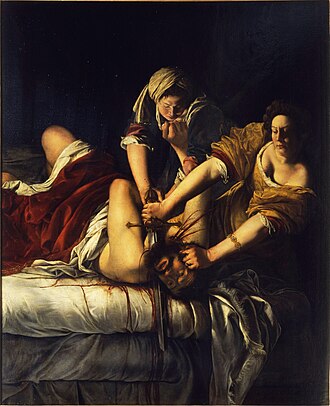 Judith décapitant Holopherne - Artemisia Gentileschi (1620)
 Esther et Assuérus - Artemisia Gentileschi (1620s)
Œuvres d'artistes liés
 Le Souper à Emmaüs - Caravaggio (1601)
 La Vocation de saint Matthieu - Caravaggio (1609)
 Les Ménines - Diego Velázquez (1656)
 La Reddition de Bréda - Diego Velázquez (1635)
 Saint Francis in Meditation - Francisco de Zurbarán (1639)
 The Immaculate Conception - Francisco de Zurbarán (1661)
 Triple portrait de Charles Ier - Anthony van Dyck (1635)
 Charles Ier à cheval avec Monsieur de Saint Antoine - Anthony van Dyck (1636)
 L'Érection de la croix - Peter Paul Rubens (1609)
 L'Enlèvement des filles de Leucippe - Peter Paul Rubens (1618)
 La Ronde de nuit - Rembrandt van Rijn (1642)
 Autoportrait - Rembrandt van Rijn (1659)