nature morte au chapeau de paille
Vincent van Gogh · 1885
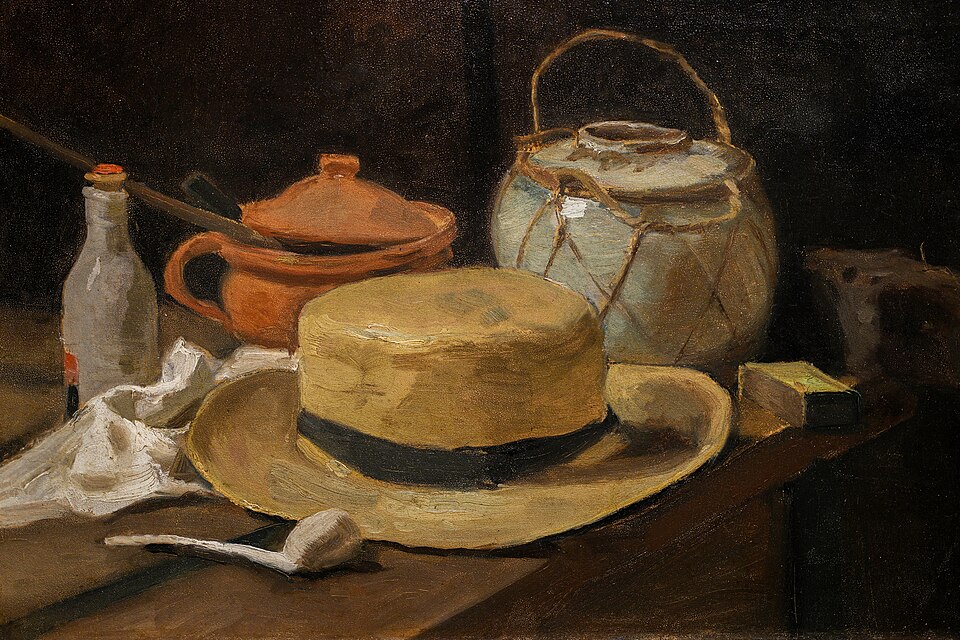
Before the sunflowers and the starry skies, there was a straw hat on a table in a dark Dutch room, painted with the patience of someone teaching himself to see.
The story behind the painting
Van Gogh painted this still life in Nuenen, the Brabant village where he spent two years. The sources disagree on the date: Wikipedia gives late November to mid-December 1881 or possibly 1885, while Wikidata records 1885. Its context is clearer. In November 1884 he taught some friends from nearby Eindhoven to paint inanimate objects in oil, and in his enthusiasm produced a series of still lifes of bottles, bowls, pots and other things. He admitted such pictures would be hard to sell, but judged the effort worthwhile and kept painting still lifes all winter. The canvas measures 36.5 by 53.5 cm.
What to look for
According to Wikidata, the objects gathered on the table include a straw hat, a pipe, a bottle and an earthenware crock. Let your eye move slowly across them. Critics single out this painting, together with Still Life with Earthen Pot and Clogs, for its technical mastery: the brushwork is smooth and meticulous, and the colours are shaded with great finesse. Notice the palette, dominated by sombre earth tones, especially dark brown, so that the pale straw of the hat becomes a quiet focus of light in the gloom.
Meaning and intent
For Van Gogh, still life was a school. Humble objects stay still, and they let a painter study form, light and colour without distraction. In Nuenen he produced numerous drawings and watercolours and nearly 200 oil paintings, a sustained effort to master his craft. Yet this dark palette shows no sign yet of the vivid colour that would define his famous later work. When he complained that his brother Theo was not trying hard enough to sell his paintings in Paris, Theo replied that they were too dark, out of step with the bright Impressionist style of the day.
Legacy
Seen today, the painting is a precious record of a beginning: the discipline beneath the later blaze of colour. It belongs to the Kröller-Müller Museum in Otterlo, in the Netherlands. That collection grew from the passion of Helene Kröller-Müller, wife of Anton Kröller, who spent her life and fortune collecting Van Gogh, and whose 19th- and 20th-century collection passed to the Dutch state. Standing before this modest table, visitors can sense how much patient looking lay behind the painter the world would later celebrate.
Le saviez-vous ?
- The painting is also known as Still Life with Yellow Straw Hat and Still Life with Hat and Pipe.
- In Nuenen Van Gogh made nearly 200 oil paintings in two years.
- Theo told Vincent his Nuenen paintings were too dark for the Impressionist taste of the time.
- Sources disagree on the date: 1881 or 1885.
À propos de l'artiste
Vincent van Gogh (1853-1890)
nature morte · table · musée Kröller-Müller · pipe · chapeau de paille
Autres œuvres de Vincent van Gogh
 La Nuit étoilée - Vincent van Gogh (1889)
.jpg) Terrasse du café le soir - Vincent van Gogh (1888)
Terrasse du café le soir - Vincent van Gogh (1888)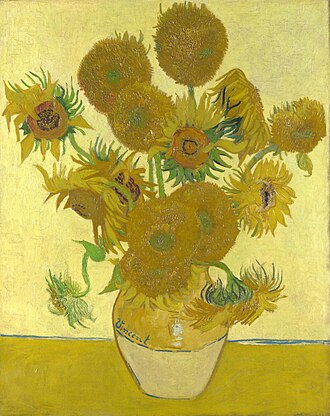 Les Tournesols - Vincent van Gogh (1888)
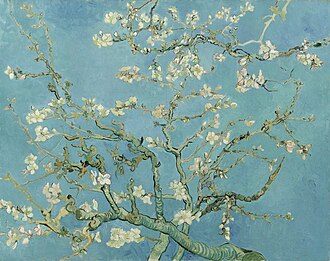 Amandier en fleurs - Vincent van Gogh (1890)
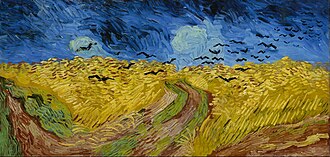 Champ de blé aux corbeaux - Vincent van Gogh (1890)
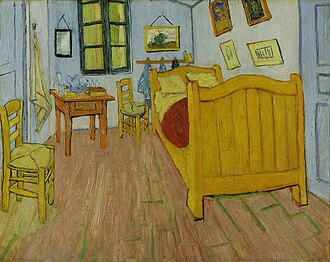 La Chambre à coucher - Vincent van Gogh (1888)
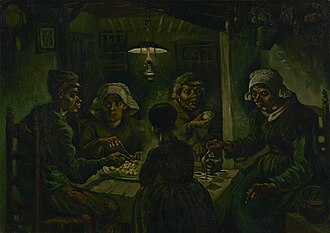 Les Mangeurs de pommes de terre - Vincent van Gogh (1885)
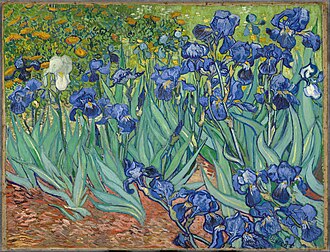 Iris - Vincent van Gogh (1889)
Œuvres d'artistes liés
 D'où venons-nous ? Que sommes-nous ? Où allons-nous ? - Paul Gauguin (1897-1898)
%201889.jpg) Le Christ jaune - Paul Gauguin (1889)
Le Christ jaune - Paul Gauguin (1889) Le Déjeuner sur l'herbe - Édouard Manet (1863)
 Olympia - Édouard Manet (1863)