Autoportrait aux deux cercles
Rembrandt van Rijn · 1665
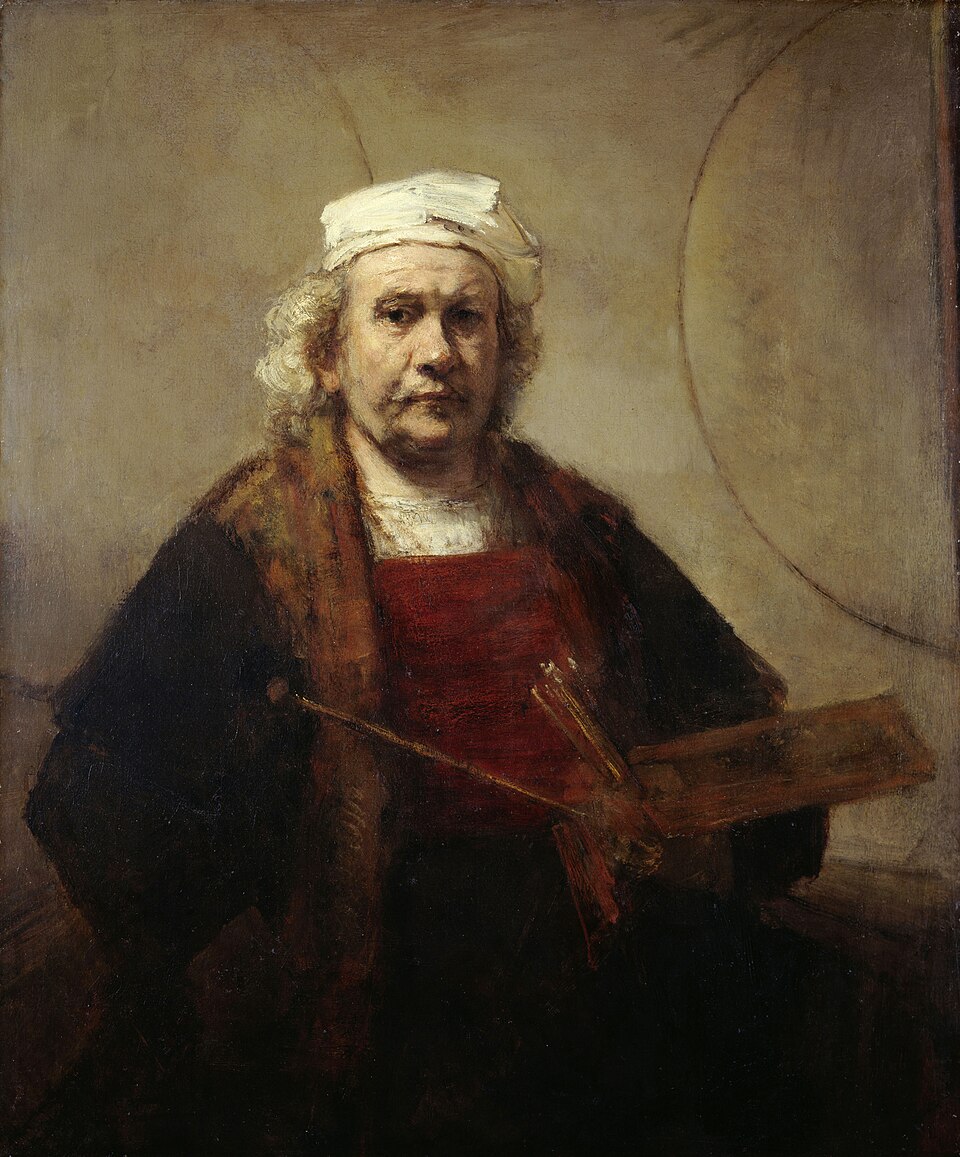
Palette and brushes in hand, one fist on his hip, the old Rembrandt stands before a wall marked with two mysterious circles. Nobody knows for certain what they mean, and he never signed the picture.
The story behind the painting
Rembrandt painted this canvas around 1665 to 1669, near the end of his life. It is one of his more than forty painted self-portraits and one of many works, from at least 1629, that show him at work. He holds his palette, brushes and maulstick, and wears a fur-lined robe over a red garment and a white cap like those in other late self-portraits. X-rays show that at first he was turned further to the right, arm raised, painting on a canvas at the edge of the picture, marked by the vertical line at the far right. It now hangs at Kenwood House in London.
What to look for
Look at the head, built of many nuanced colours, thickly painted. Against it, the eye sockets are made with subtle glazes, one eye in shadow. In the face and the right side of the cap a grey layer serves as a middle tone under bold lights and dark accents, sometimes wet into wet. He incised lines into the wet paint in the moustache, left eyebrow and collar. The hands, palette, brushes and fur were painted very fast and read as unfinished. Behind him, on a flat surface that may be a wall or a canvas, two partial circles curve across the background.
Meaning and intent
The circles have been read as hemispheres of a world map, though they are far apart and show no geography; as the Aristotelian form of the world; as kabbalistic symbols of God's perfection; or as a sign of perfect skill, like Giotto drawing a perfect circle for the pope. Perry Chapman notes they are two partial circles, not one perfect one, and that a steady drawing hand hardly fits such loose painting. For her, the picture is about practice: a master in working clothes, defiant, asserting that his identity rests on his art. The missing signature may mean he thought it unfinished.
Legacy
Later artists admired the unfinished passages. Joshua Reynolds spoke of its very unfinished manner but found it admirable for colour and effect, and Jean-Honore Fragonard made a painted copy. Changes such as repainting the left hand on the hip reduced the figure's movement and increased its monumentality, and the work has been compared with Titian's late, apparently unfinished self-portrait in Berlin. Whether or not Rembrandt meant to finish it, its force makes the question seem beside the point, and it remains one of the most commanding images he left of himself.
Le saviez-vous ?
- Painted around 1665 to 1669.
- Shows Rembrandt with palette, brushes and maulstick.
- The meaning of the two circles is still debated.
- Unsigned and undated, held at Kenwood House, London.
À propos de l'artiste
Rembrandt van Rijn (1606-1669)
âge d'or de la peinture néerlandaise · autoportrait · Rembrandt
Autres œuvres de Rembrandt van Rijn
 La Ronde de nuit - Rembrandt van Rijn (1642)
 Autoportrait - Rembrandt van Rijn (1659)
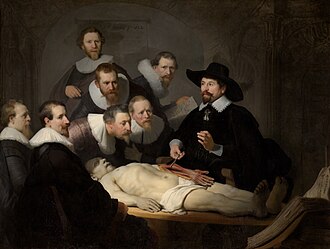 La Leçon d'anatomie du docteur Tulp - Rembrandt van Rijn (1632)
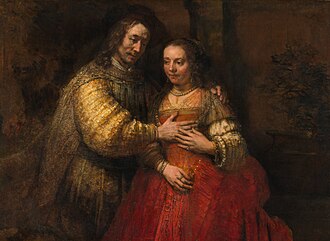 La Fiancée juive - Rembrandt van Rijn (1660s)
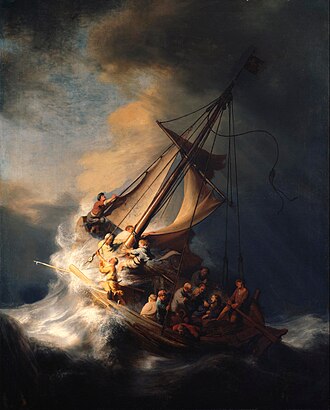 La Tempête sur la mer de Galilée - Rembrandt van Rijn (1633)
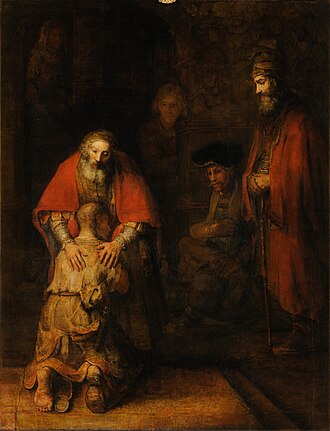 Le Retour du fils prodigue - Rembrandt van Rijn (1668)
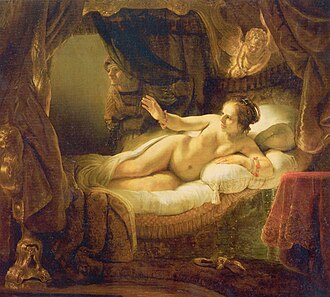 Danaé - Rembrandt van Rijn (1636)
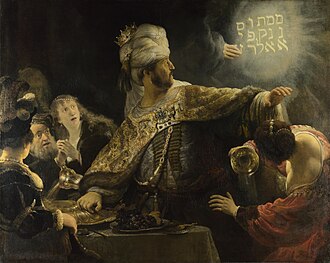 Le Festin de Balthazar - Rembrandt van Rijn (1636)
Œuvres d'artistes liés
 La Jeune Fille à la perle - Johannes Vermeer (1665)
 La Laitière - Johannes Vermeer (c. 1658)
 La Fête de la Saint-Nicolas - Jan Steen (1660s)
 La Mangeuse d'huîtres - Jan Steen (1658)
 Le Joyeux Buveur - Frans Hals (1620s)
 Le Cavalier riant - Frans Hals (1624)
 Le Moulin près de Wijk bij Duurstede - Jacob van Ruisdael (1670)
 Le Cimetière juif - Jacob van Ruisdael (1650s)
 La Cour d'une maison à Delft - Pieter de Hooch (1658)
 La Peleuse de pommes - Pieter de Hooch (1663)