Érudit à sa table de travail
Rembrandt van Rijn · 1641
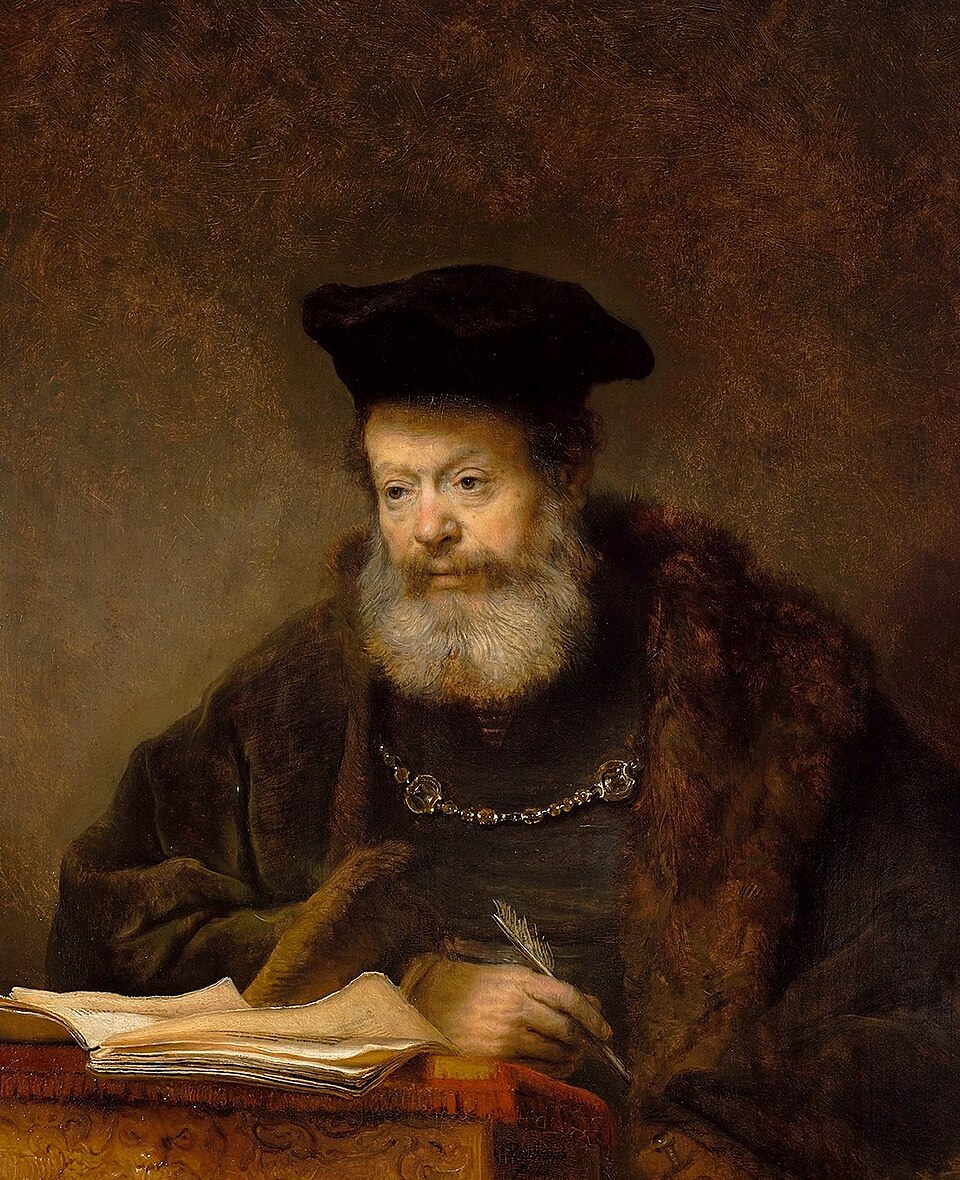
An old man in a fur-lined cloak pauses at his lectern, a wart on his cheek and a red nose giving him away as a real person. Seized by the Gestapo and doubted by scholars, Rembrandt's panel has finally come home to Warsaw.
The story behind the painting
Rembrandt painted this oil on panel in 1641. It is one of only three of his paintings in Polish collections, with The Girl in a Picture Frame and Landscape with the Good Samaritan, and it hangs today in the Royal Castle in Warsaw. King Stanislaw August Poniatowski bought it together with The Girl in a Picture Frame in 1777 through the dealer Jakob Triebel, and first displayed both at the Lazienki Palace. After his death they passed through the Poniatowski family, were bought in 1815 by Kazimierz Rzewuski, and came down to the Lanckoronski family.
What to look for
The sitter wears a black hat, a grey-brown cloak with a hint of green lined with dark brown fur, and a gold chain. Old scholars and philosophers are a familiar subject in Rembrandt's work, but this face is unusually specific: the wart on the left cheek and the red nose suggest a real sitter rather than a type. The support is poplar wood, rare for Rembrandt. The two Royal Castle pictures are among five examples where he or his workshop may have used poplar, probably a small batch of panels bought around 1639 to 1641 to experiment with.
Meaning and intent
In 1769 the picture was called the Bride's Father Writing Down the Dowry, and later the Father of the Jewish Bride, titles that tied it to The Girl in a Picture Frame. Both were painted in the same year, at the same size and on the same support, so they were assumed to be a pair. They were not. Rembrandt's paired portraits always put the man on the left and the woman on the right, the opposite of these two, and the figures differ in scale and setting. A real pair would both have had a painted frame, as in his 1641 portraits of Agatha Bas and her husband.
Legacy
The Gestapo seized the painting during the Second World War. It was returned to its owners in 1947, taken to Hohenems Castle, and in 1950 placed in a Swiss bank vault, so it was long considered lost. Doubts about its authorship appeared in 1969, and it was left out of the 1989 volume of the Rembrandt Research Project. After it was shown at the Royal Castle in 1994, Karolina Lanckoronska donated it and The Girl in a Picture Frame to the castle. The Project examined them there and confirmed Rembrandt's authorship in February 2006.
Le saviez-vous ?
- Oil on poplar panel, painted in 1641.
- Long called the Father of the Jewish Bride, though not a true pair.
- Seized by the Gestapo during the Second World War.
- Authorship confirmed by the Rembrandt Research Project in 2006.
À propos de l'artiste
Rembrandt van Rijn (1606-1669)
portrait · âge d'or de la peinture néerlandaise · Munich Central Collecting Point · plume
Autres œuvres de Rembrandt van Rijn
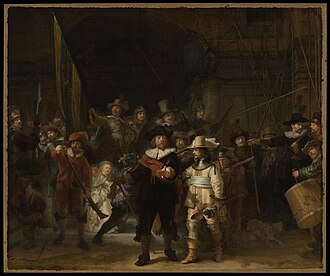 La Ronde de nuit - Rembrandt van Rijn (1642)
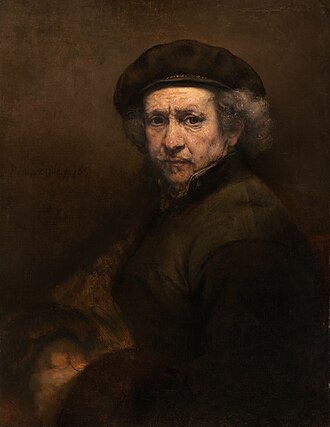 Autoportrait - Rembrandt van Rijn (1659)
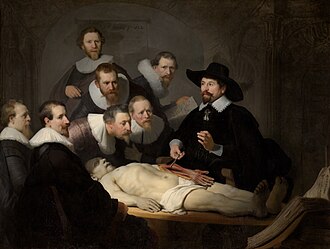 La Leçon d'anatomie du docteur Tulp - Rembrandt van Rijn (1632)
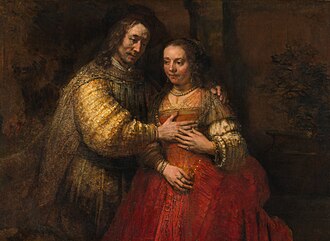 La Fiancée juive - Rembrandt van Rijn (1660s)
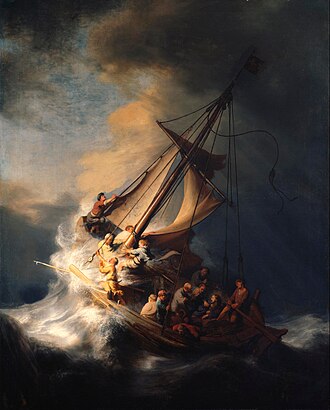 La Tempête sur la mer de Galilée - Rembrandt van Rijn (1633)
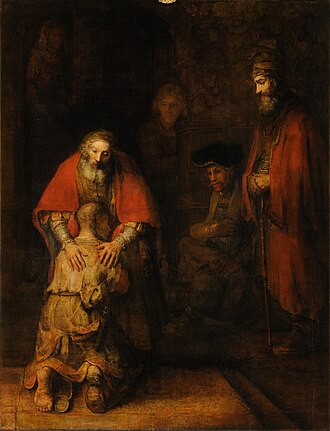 Le Retour du fils prodigue - Rembrandt van Rijn (1668)
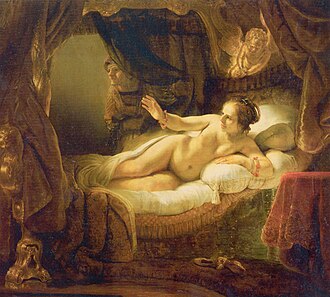 Danaé - Rembrandt van Rijn (1636)
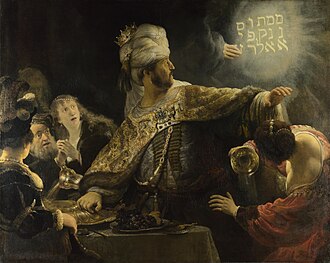 Le Festin de Balthazar - Rembrandt van Rijn (1636)
Œuvres d'artistes liés
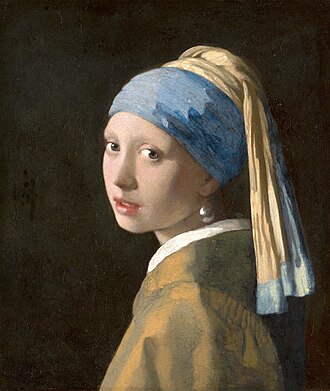 La Jeune Fille à la perle - Johannes Vermeer (1665)
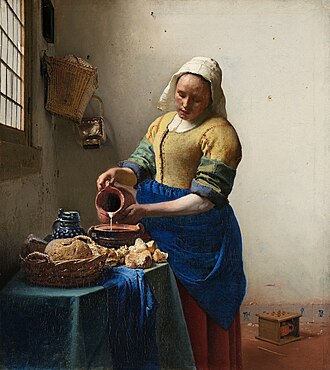 La Laitière - Johannes Vermeer (c. 1658)