Saint Lawrence
Francisco de Zurbarán · 1630s
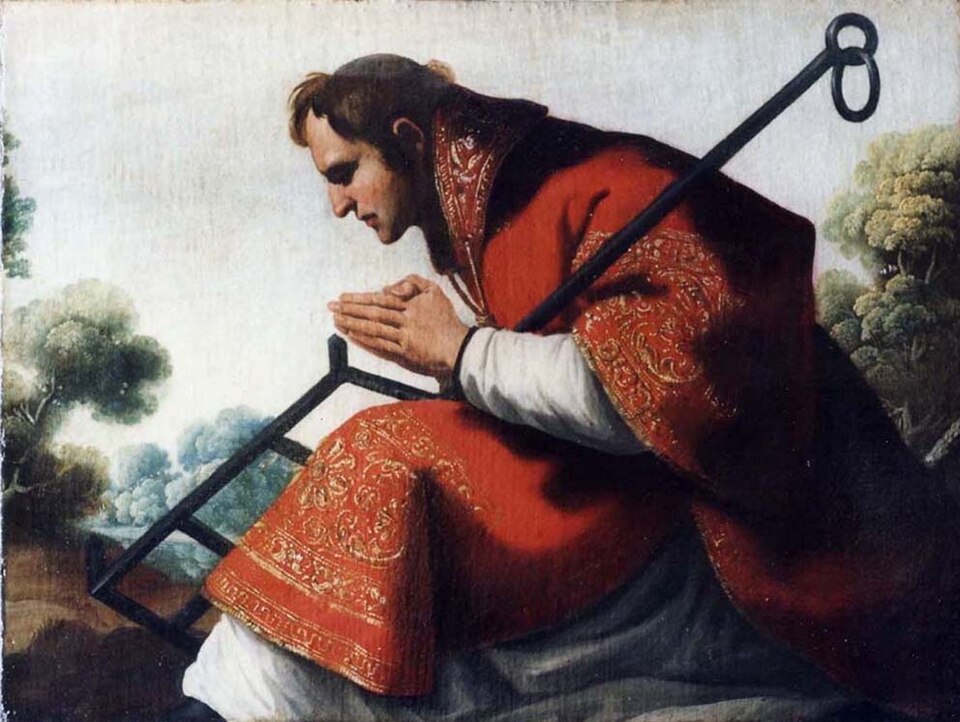
A deacon in deep red, hands joined in prayer, sits beside the gridiron on which he would be burned. Zurbarán fitted saint and instrument into a small panel for a Carthusian altarpiece, and still made it monumental.
The story behind the painting
According to tradition, Lawrence was born in Huesca. Pope Sixtus II made him archdeacon in 257, in charge of the Church's goods. During Valerian's persecution in 258 he was ordered to hand them over, but instead he gave them to the poor, and was burned alive on a gridiron, which became his attribute. Zurbarán painted Lawrence twice. This smaller version, about 61 by 81 cm, was made around 1638 to 1639 for the right compartment of the lower tier of the high altarpiece of the Charterhouse of Jerez, as a pendant to Saint John the Baptist on the left. Wikidata dates it simply to the 1630s.
What to look for
Lawrence sits in profile, his body leaning forward, his hands joined in prayer. He wears a dalmatic of intense red, a thick cloth embroidered with gold. The gridiron is set diagonally, its rectangular part behind him and its handle in front. With this arrangement Zurbarán manages to fit both the gridiron and almost the whole figure into the format imposed by the altarpiece. The figure stands out against a very clear sky and a landscape of grey-blue trees, which make the red garment glow.
Meaning and intent
The painting is calm, not violent. There is no fire, only the instrument of death resting quietly beside a man at prayer, as if the martyrdom were already accepted. The rich red and gold of the dalmatic honour the deacon who gave the Church's treasure to the poor. Despite the small size, the source notes great refinement of touch and colour and a real monumentality, so the saint feels larger than the panel that holds him.
Legacy
The painting stayed at the Charterhouse of Our Lady of La Defensión in Jerez until the Napoleonic period, when it went to a depot in Madrid from 1810 to 1813 and then to the Royal Academy of San Fernando until 1820. It returned to the Charterhouse, and entered the Museum of Cádiz in 1835 to 1836, where it remains as inventory number 67. Zurbarán's larger Saint Lawrence of 1636, painted for a Seville convent, is now in the Hermitage in Saint Petersburg.
Le saviez-vous ?
- Painted about 1638 to 1639 for the Charterhouse of Jerez.
- Pendant to a Saint John the Baptist on the same altarpiece.
- About 61 by 81 cm, now in the Museum of Cádiz.
- A larger 1636 version is in the Hermitage.
À propos de l'artiste
Francisco de Zurbarán (1598-1664)
art religieux · baroque · Laurent de Rome
Autres œuvres de Francisco de Zurbarán
 Saint Francis in Meditation - Francisco de Zurbarán (1639)
 The Immaculate Conception - Francisco de Zurbarán (1661)
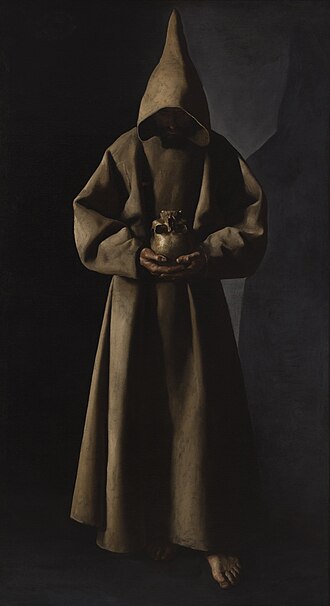 Saint François d'Assise dans sa tombe - Francisco de Zurbarán (1635)
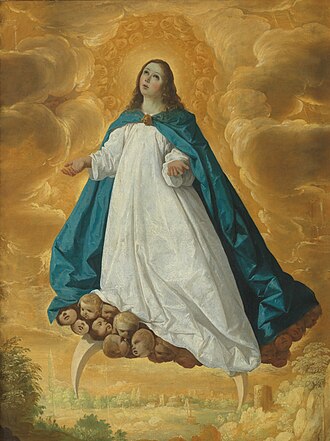 Immaculée Conception - Francisco de Zurbarán (1635)
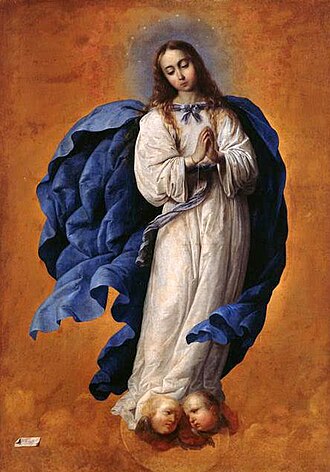 Immaculée Conception - Francisco de Zurbarán (1661)
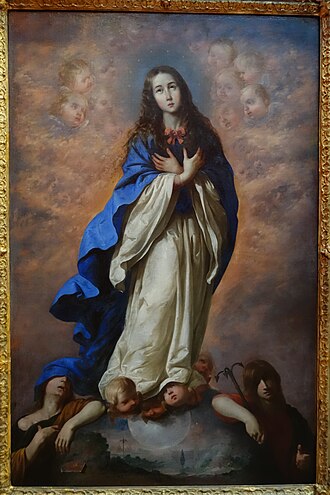 The Immaculate Conception - Francisco de Zurbarán (1658)
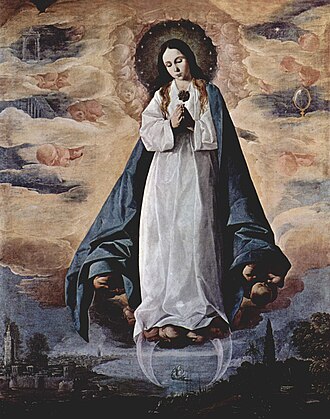 The Immaculate Conception - Francisco de Zurbarán (1630)
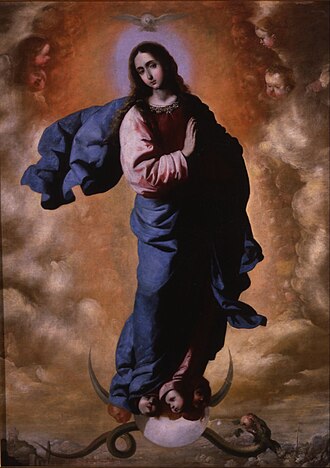 Inmaculada Concepción Cerralbo - Francisco de Zurbarán (1645)
Œuvres d'artistes liés
 Le Souper à Emmaüs - Caravaggio (1601)
 La Vocation de saint Matthieu - Caravaggio (1609)
 Les Ménines - Diego Velázquez (1656)
 La Reddition de Bréda - Diego Velázquez (1635)
 Triple portrait de Charles Ier - Anthony van Dyck (1635)
 Charles Ier à cheval avec Monsieur de Saint Antoine - Anthony van Dyck (1636)
 L'Érection de la croix - Peter Paul Rubens (1609)
 L'Enlèvement des filles de Leucippe - Peter Paul Rubens (1618)
 La Ronde de nuit - Rembrandt van Rijn (1642)
 Autoportrait - Rembrandt van Rijn (1659)
 Le Joyeux Buveur - Frans Hals (1620s)
 Le Cavalier riant - Frans Hals (1624)