Saint François d'Assise dans sa tombe
Francisco de Zurbarán · 1635
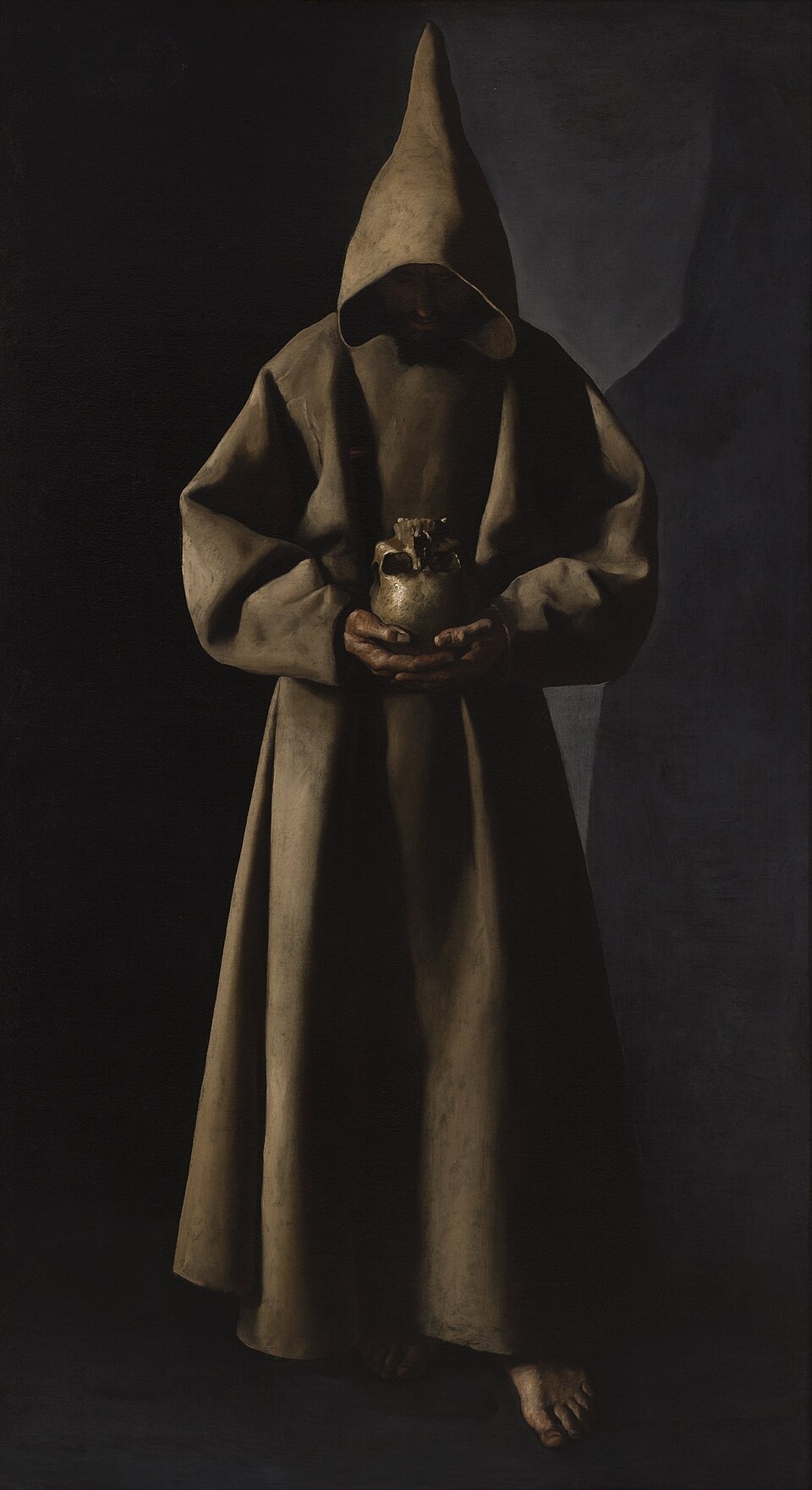
Out of near-total darkness, a standing friar contemplates a skull. Zurbarán painted Saint Francis as a pope was said to have found him in his tomb: upright, preserved, and lost in God.
The story behind the painting
The painting is tied to a legend popular in the seventeenth century. When Pope Nicholas V visited Assisi in 1449 and the saint's tomb was opened, he was said to have seen the body of Francis miraculously preserved, standing upright in communion with God. The work was commissioned for Gaspar de Guzmán, Count-Duke of Olivares, the powerful minister and favourite of King Philip IV of Spain. Wikipedia dates it between 1630 and 1634, while Wikidata gives 1635.
What to look for
Saint Francis stands in a dark space contemplating a human skull. Zurbarán uses strong chiaroscuro: light falls on the coarse Franciscan habit, the face, the skull and one protruding foot, against an almost black background. The canvas is tall and narrow, about 205 by 113 cm, so the figure rises like a statue in a niche. That is no accident: the picture draws on the painted wooden sculptures common in Spanish churches. Look at how little is shown, and how much weight each lit detail carries.
Meaning and intent
The austere composition reflects Zurbarán's focus on spiritual contemplation and devotion, qualities especially valued in Counter-Reformation Spain. The skull speaks of death, yet the saint himself is the miracle of a body that has not decayed. Intense naturalism and mystical stillness meet in one figure. Saint Francis mattered deeply to monastic communities across the Iberian Peninsula, and Zurbarán painted him many times, with versions in Lyon, Munich, London, San Diego, St. Louis and Barcelona.
Legacy
The Milwaukee Art Museum acquired the painting in 1958 from Felipe Subervielle, a French-Mexican count and film producer. It has become one of the museum's best-known European paintings and is regarded as one of the most important examples of seventeenth-century Spanish art in an American collection. In 2024 the British artist Idris Khan took inspiration from it for his first solo exhibition in the United States, organised by the museum.
Le saviez-vous ?
- Commissioned for the Count-Duke of Olivares.
- Based on Pope Nicholas V's vision of 1449.
- Acquired by the Milwaukee Art Museum in 1958.
- Inspired an exhibition by Idris Khan in 2024.
À propos de l'artiste
Francisco de Zurbarán (1598-1664)
art religieux · François d'Assise
Autres œuvres de Francisco de Zurbarán
 Saint Francis in Meditation - Francisco de Zurbarán (1639)
 The Immaculate Conception - Francisco de Zurbarán (1661)
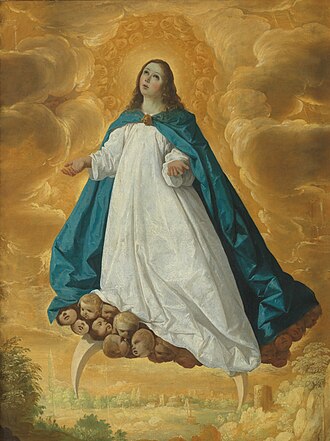 Immaculée Conception - Francisco de Zurbarán (1635)
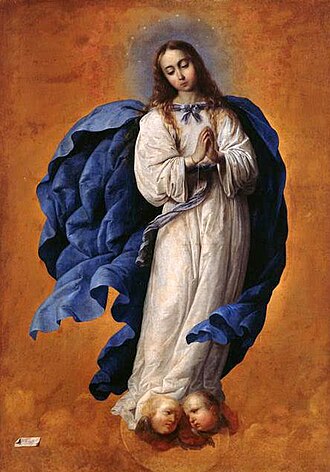 Immaculée Conception - Francisco de Zurbarán (1661)
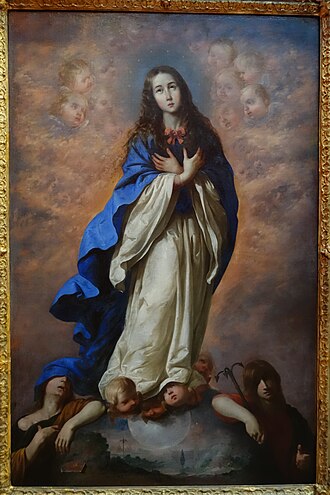 The Immaculate Conception - Francisco de Zurbarán (1658)
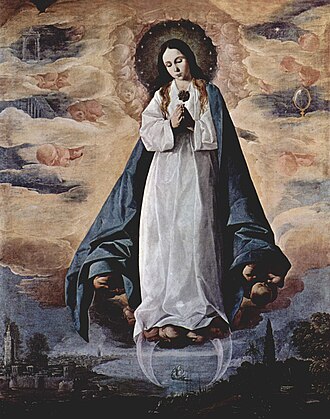 The Immaculate Conception - Francisco de Zurbarán (1630)
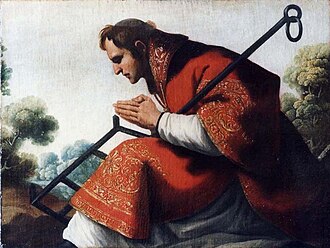 Saint Lawrence - Francisco de Zurbarán (1630s)
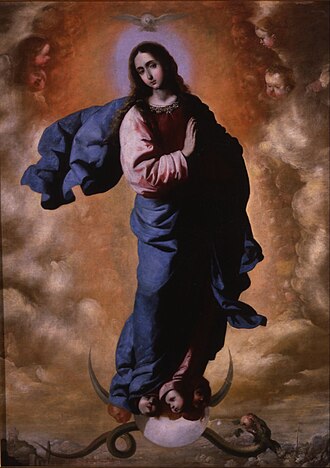 Inmaculada Concepción Cerralbo - Francisco de Zurbarán (1645)
Œuvres d'artistes liés
 Le Souper à Emmaüs - Caravaggio (1601)
 La Vocation de saint Matthieu - Caravaggio (1609)
 Les Ménines - Diego Velázquez (1656)
 La Reddition de Bréda - Diego Velázquez (1635)
 Triple portrait de Charles Ier - Anthony van Dyck (1635)
 Charles Ier à cheval avec Monsieur de Saint Antoine - Anthony van Dyck (1636)
 L'Érection de la croix - Peter Paul Rubens (1609)
 L'Enlèvement des filles de Leucippe - Peter Paul Rubens (1618)
 La Ronde de nuit - Rembrandt van Rijn (1642)
 Autoportrait - Rembrandt van Rijn (1659)
 Le Joyeux Buveur - Frans Hals (1620s)
 Le Cavalier riant - Frans Hals (1624)