Champ mouillé sous la pluie
Vincent van Gogh · 1889
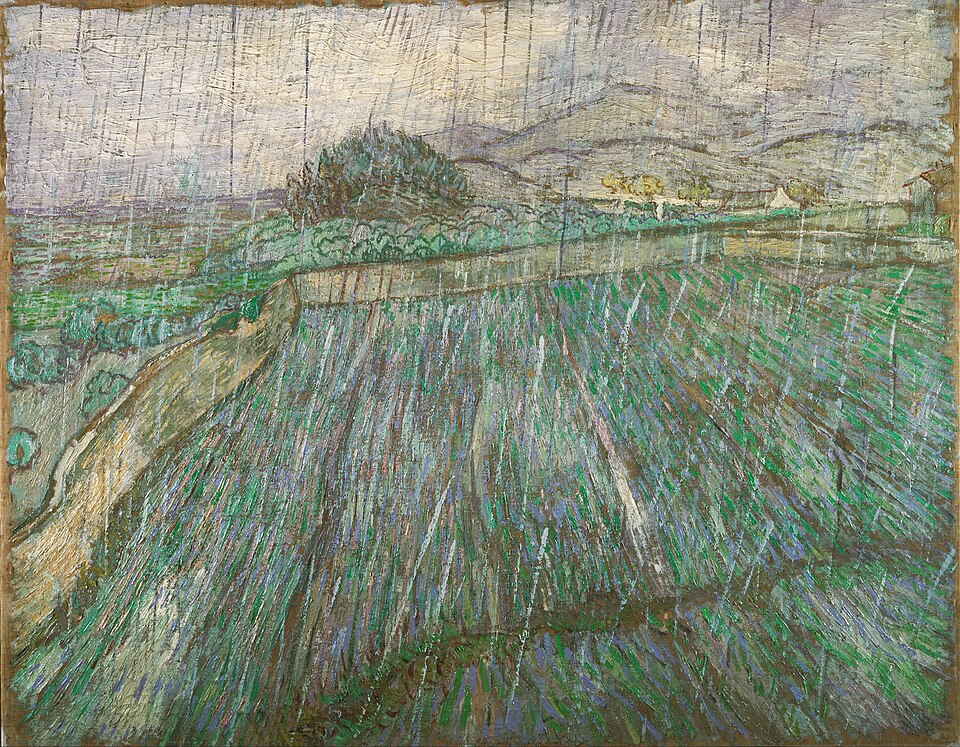
Through the window of his asylum room, van Gogh watched a walled field soak under an autumn shower and painted the rain as slanting lines. He simply called it The Rain.
The story behind the painting
From May 1889 to May 1890 van Gogh was a voluntary patient at the asylum of Saint-Paul-de-Mausole, a former monastery at Saint-Remy-de-Provence. Again and again he painted the view from his window: a walled field behind the hospital, which he showed in at least 14 paintings and as many sketches, at different times of day and in changing seasons. After The Reaper in June 1889 and Enclosed Field with Peasant around 12 October, he painted the field again during a rain shower a few weeks later, in November 1889 or during the heavy rainfall of 31 October 1889.
What to look for
The rain falls as slanting lines set at a different angle from the lines of the wheat field behind, so the downpour seems to cut across the land. The colours are those of autumn, subdued greens, grape blues and soft violets. The picture was painted on untreated cotton canvas and measures about 73 by 92 cm. Van Gogh took the idea of drawing rain as lines from Japanese prints, such as those of Hiroshige, which he knew well. Look for the enclosing wall that turns the open landscape into the small world he could see from his room.
Meaning and intent
For a man confined to an asylum, this one field became a whole calendar of weather and light. Van Gogh mentioned the picture twice to his brother Theo. Around 3 November 1889 he wrote that a painting of a rain effect was in progress, and on 3 January 1890, sending several paintings to Theo, he gave it the plain title La Pluie, The Rain. He liked the device enough to use it again, in Landscape at Auvers in the Rain and in two drawings of a sower in the rain.
Legacy
After van Gogh's death in 1890 the painting passed to his sister-in-law, Johanna van Gogh-Bonger. In 1903 it was shown at the Munich Secession, where the collector Hugo von Tschudi bought it. His widow Angela inherited it in 1911 and lent it to the Neue Pinakothek in Munich. In 1928 it went to the dealer Paul Rosenberg, who sold it in 1949 to Henry Plumer McIlhenny, later chairman of the Philadelphia Museum of Art. He bequeathed his collection to the museum in memory of his mother, and the painting is there today.
Le saviez-vous ?
- Painted at the Saint-Remy asylum in late October or November 1889.
- One of at least 14 paintings of the walled field behind the hospital.
- Van Gogh titled it La Pluie in a letter to Theo.
- Bequeathed by Henry McIlhenny to the Philadelphia Museum of Art.
À propos de l'artiste
Vincent van Gogh (1853-1890)
paysage · champ · Philadelphia Museum of Art · pluie
Autres œuvres de Vincent van Gogh
 La Nuit étoilée - Vincent van Gogh (1889)
.jpg) Terrasse du café le soir - Vincent van Gogh (1888)
Terrasse du café le soir - Vincent van Gogh (1888) Les Tournesols - Vincent van Gogh (1888)
 Amandier en fleurs - Vincent van Gogh (1890)
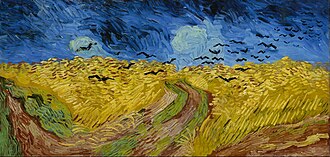 Champ de blé aux corbeaux - Vincent van Gogh (1890)
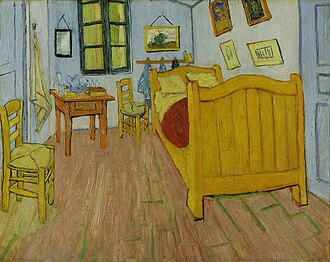 La Chambre à coucher - Vincent van Gogh (1888)
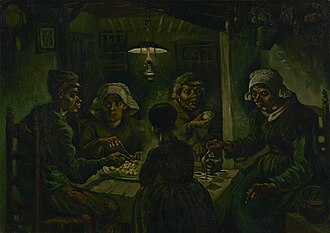 Les Mangeurs de pommes de terre - Vincent van Gogh (1885)
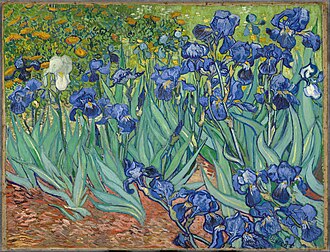 Iris - Vincent van Gogh (1889)
Œuvres d'artistes liés
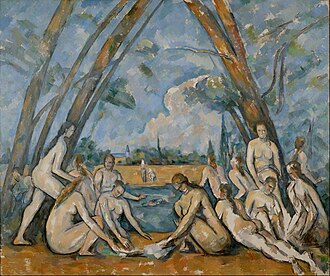 Les Grandes Baigneuses - Paul Cézanne (1900s)
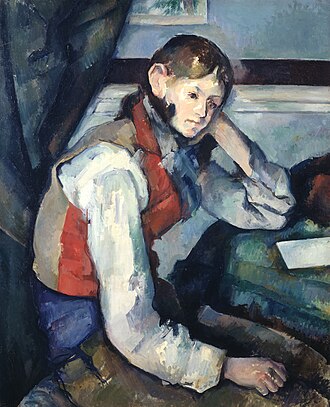 Le Garçon au gilet rouge - Paul Cézanne
 D'où venons-nous ? Que sommes-nous ? Où allons-nous ? - Paul Gauguin (1897-1898)
%201889.jpg) Le Christ jaune - Paul Gauguin (1889)
Le Christ jaune - Paul Gauguin (1889).jpg) L'Érection de la croix - Peter Paul Rubens (1609)
L'Érection de la croix - Peter Paul Rubens (1609)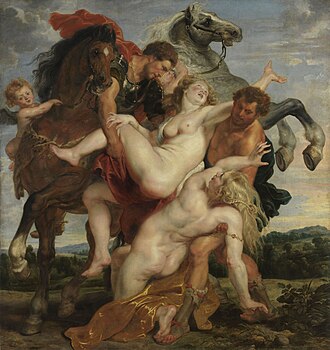 L'Enlèvement des filles de Leucippe - Peter Paul Rubens (1618)
 Promenade au bord de la mer - Joaquín Sorolla (1909)
 Triste héritage - Joaquín Sorolla (1898)
 Bal du moulin de la Galette - Pierre-Auguste Renoir (1876)
 Le Déjeuner des canotiers - Pierre-Auguste Renoir (1881)
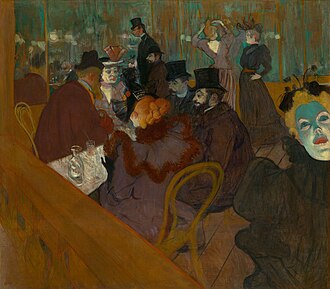 Au Moulin-Rouge - Henri de Toulouse-Lautrec (1892)
%20Rousse%20(La%20Toilette)%20-%201889%20-%20Henri%20de%20Toulouse-Lautrec%20-%20Mus%C3%A9e%20d'Orsay%2C%20Paris.jpg) La Toilette - Henri de Toulouse-Lautrec (1896)
La Toilette - Henri de Toulouse-Lautrec (1896)