Queen María Luisa on horseback
Francisco Goya · 1799
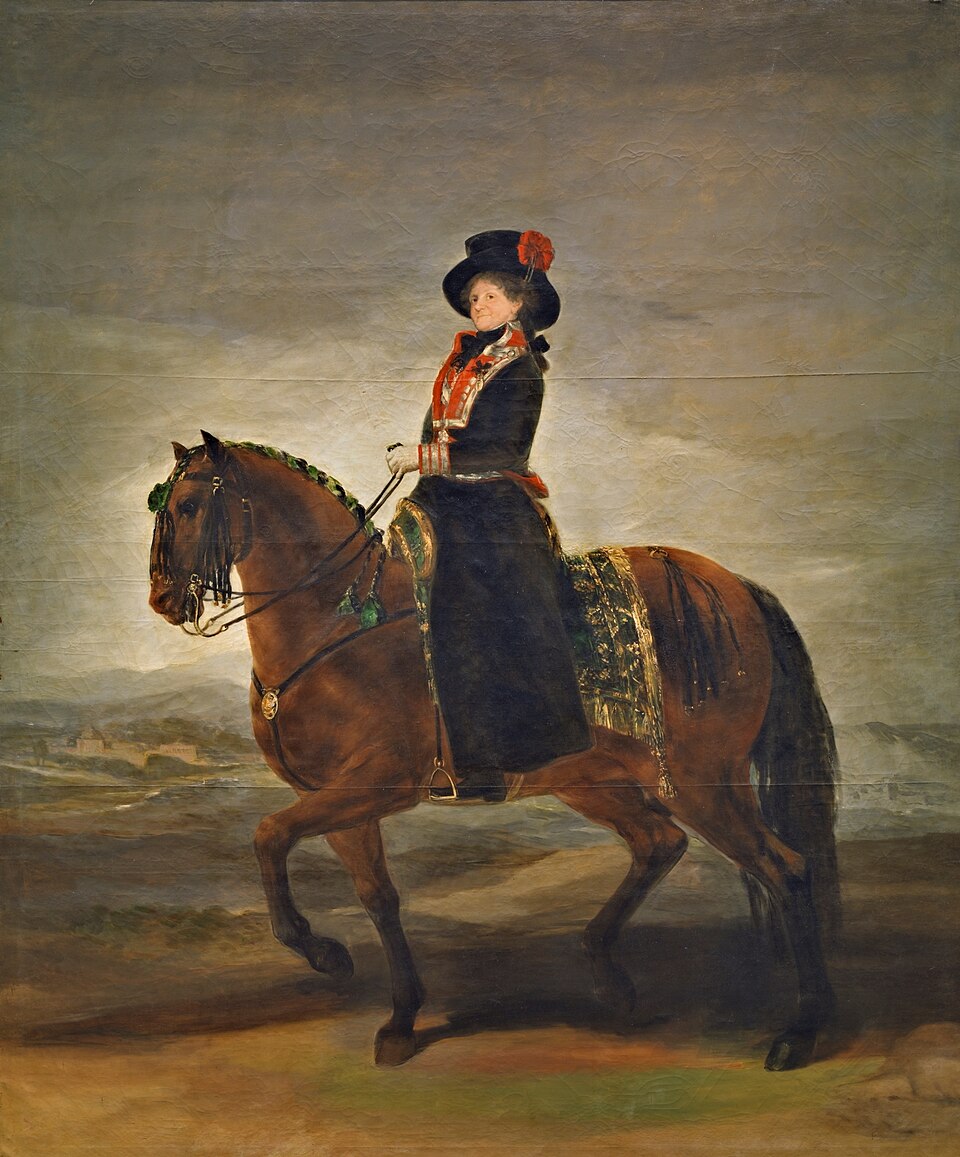
A queen in a colonel's uniform sits astride a calm horse, reins held with easy confidence, a stormy sky behind her. Goya painted Maria Luisa of Parma for the royal palace in 1799, to hang beside the great equestrian portraits of Velazquez and Titian.
The story behind the painting
Charles III of Spain, at whose court Goya worked, died in 1788, and his son came to Madrid in 1789 to take the throne as Charles IV with his wife, Maria Luisa of Parma. Goya became their court painter and portrayed them many times. This equestrian portrait of the queen was made in 1799; its pair, Charles IV on Horseback, followed in 1800 to 1801. The queen sat for Goya three times and was pleased with the result. Both pictures were meant for the grand hall of the Royal Palace in Madrid, where the king dined before foreign dignitaries.
What to look for
The queen wears the uniform of a colonel of the Royal Bodyguard, in a female version made specially for her, with the sash of the order bearing her own name across her chest and the Order of the Starry Cross pinned to a black ribbon. She rides Marcial, a horse given to the royal couple by their favourite Manuel Godoy. She sits astride like a rider, not side-saddle as decorum expected of ladies. Look at the horse's ears and legs: many changes of mind by the painter are still visible there. Behind her rise the mountains of the Guadarrama and the outline of El Escorial.
Meaning and intent
The setting carried a political message. In the palace hall the portraits hung beside Velazquez's Philip IV on Horseback and Titian's Charles V at Muhlberg, images of the Habsburg rulers of Spain. The Bourbon dynasty of Charles IV and Maria Luisa felt insecure after its French branch was overthrown in the Revolution, and setting the two dynasties side by side stressed the continuity of the Spanish crown. Goya followed Velazquez's portraits of queens on horseback, which he had drawn and engraved in 1778, choosing a calm, majestic horse instead of a rearing one. The queen's proud gaze is read as satisfaction at mastering a spirited mount.
Legacy
Goya often found horses difficult to paint, as he admitted in letters to his friend Martin Zapater, and the source notes that his horses are more dynamic than those of the Baroque master he admired. He even prepared sketches near El Escorial for the background. The canvas is very large, about 338 by 282 cm. It hung in the Royal Palace of Madrid and, with part of the royal collection, passed into the Museo del Prado, where it is still shown with its pendant of the king.
Le saviez-vous ?
- Painted by Goya in 1799 for the Royal Palace of Madrid.
- The queen rides the horse Marcial, a gift from Manuel Godoy.
- Pendant of Charles IV on Horseback (1800-1801).
- Now in the Museo del Prado.
À propos de l'artiste
Francisco Goya (1746-1828)
musée du Prado · portrait équestre
Autres œuvres de Francisco Goya
 Tres de Mayo - Francisco Goya (1814)
.jpg) La Maja nue - Francisco Goya (1800)
La Maja nue - Francisco Goya (1800).jpg) Saturne dévorant un de ses enfants - Francisco Goya (1819)
Saturne dévorant un de ses enfants - Francisco Goya (1819) La Famille de Charles IV - Francisco Goya (1800)
 La Maja vêtue - Francisco Goya (1800)
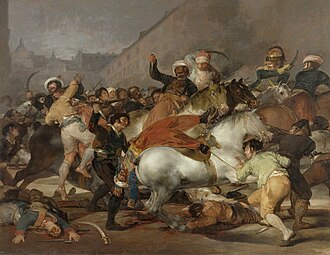 Dos de Mayo - Francisco Goya (1814)
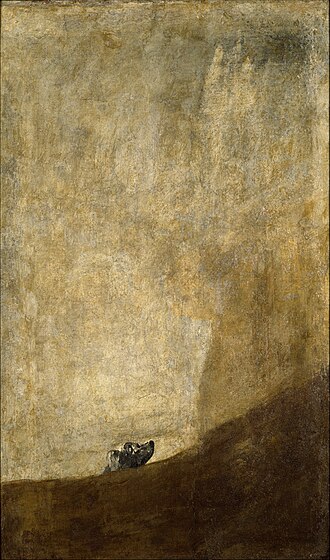 Le Chien - Francisco Goya (1819)
 Le Sabbat des sorcières - Francisco Goya (1820s)
Œuvres d'artistes liés
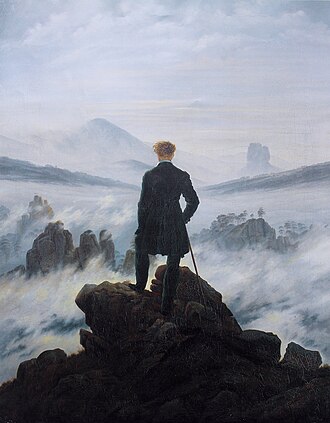 Le Voyageur contemplant une mer de nuages - Caspar David Friedrich (c. 1818)
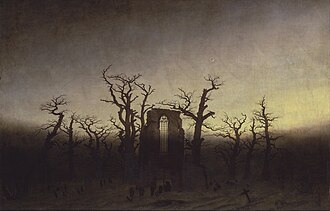 L'Abbaye dans une forêt de chênes - Caspar David Friedrich (1800s)
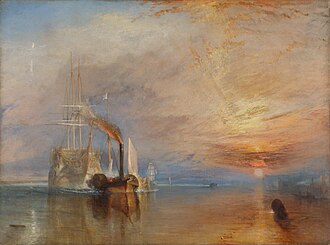 Le Dernier Voyage du Téméraire - J. M. W. Turner (1839)
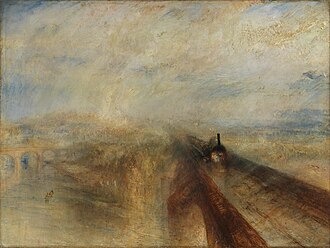 Pluie, Vapeur et Vitesse - J. M. W. Turner (1844)
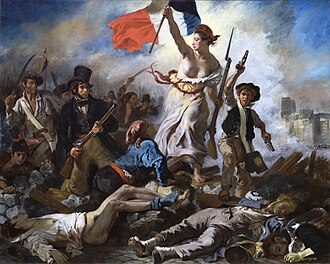 La Liberté guidant le peuple - Eugène Delacroix (1830)
 La Mort de Sardanapale - Eugène Delacroix (1827)