Zacharie
Michel-Ange Buronarroti · 1508
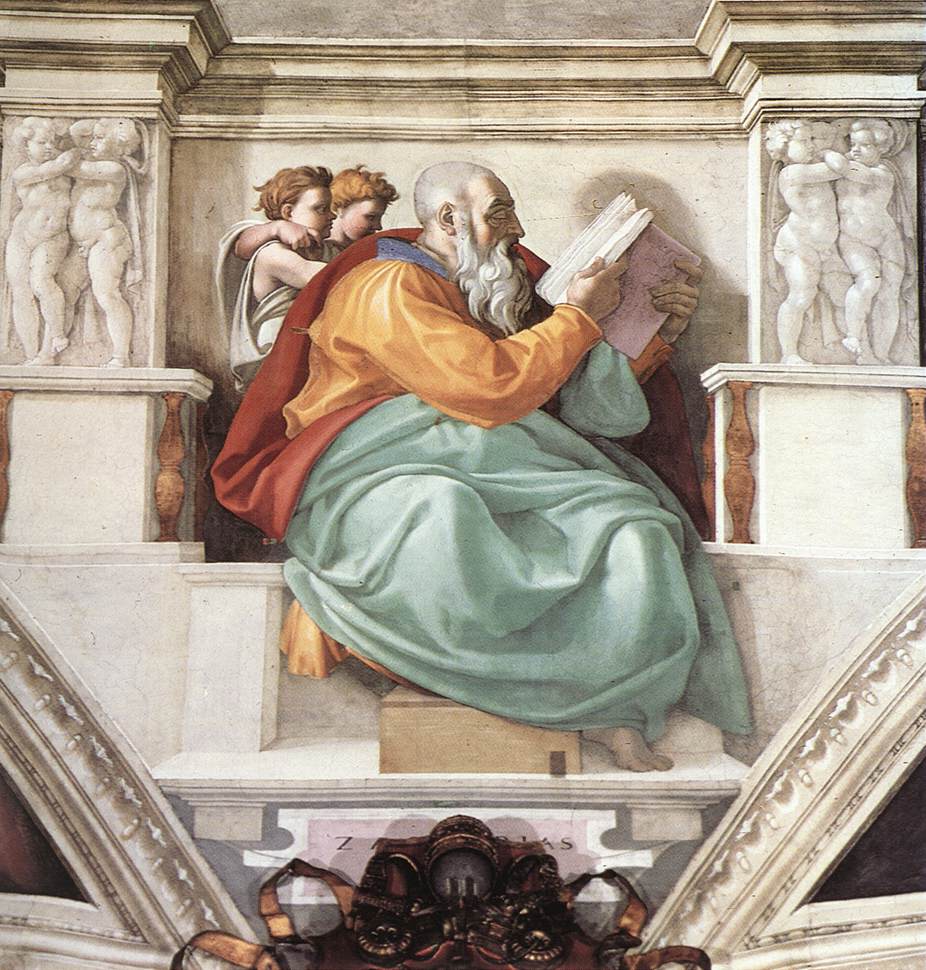
An old prophet bends quietly over a great book, high above the door of the Sistine Chapel. Zechariah was one of the very first figures Michelangelo painted on the ceiling, and he greets every pope who walks in.
The story behind the painting
Michelangelo painted this fresco, about 360 by 390 cm, around 1508, as part of the Sistine Chapel ceiling commissioned by Pope Julius II. He worked across the vault starting near the entrance door, used for the solemn entries of the pope and his court, and ended above the altar. Because Zechariah sits directly over that door, he was one of the first figures to be made. Before modern restoration the prophet had been repainted many times, including an intervention by Alessandro Mazzuoli in the eighteenth century. A charcoal study of his head, with a very different profile, is kept in the drawings and prints room of the Uffizi in Florence.
What to look for
Zechariah belongs to the series of Seers, each enthroned on a large marble seat flanked by painted reliefs of putti in pairs. He is shown in profile, his head and upper body turned to leafing through a large prophetic book, calm and absorbed, without the restless energy of the other seers. His robe is ochre yellow, with a pale green mantle over his legs that turns at the shoulder to show a crimson lining. Behind him two children also look at the book, painted with very soft glazes, especially graceful in their hair, and finished in a single day. Under his throne, instead of a name plaque, is the Della Rovere coat of arms.
Meaning and intent
Why is Zechariah above the door? According to the source, he is the prophet of Holy Week, who announced a king coming humble and riding on a donkey. The rites of that feast took place in the chapel, so he was placed solemnly where the pope makes his entrance. His meaning is echoed at the opposite end, above the altar, by Jonah, commonly read as a prefiguration of the risen Christ, because he came out of the whale after three days. Between the quiet reader at the door and the twisting Jonah at the altar, the whole ceiling reads like a journey from promise to fulfilment.
Legacy
Michelangelo made a few small changes as he worked, visible to restorers: corrections painted in true fresco on the lower sleeve, in mezzo fresco where the yellow tunic was enlarged near the shoulder and back, and a secco on the neck. These traces let us watch the young fresco painter adjusting his first figure on the vault. Wikidata lists the work under the Vatican Museums as High Renaissance religious art. For visitors today, Zechariah remains the first face of the ceiling, a figure of patience and study before the great drama of Genesis unfolds overhead.
Le saviez-vous ?
- One of the first figures Michelangelo painted on the Sistine ceiling, around 1508.
- Placed above the entrance door used by the pope.
- The Della Rovere arms appear below his throne instead of a name plaque.
- A charcoal study of his head is in the Uffizi.
À propos de l'artiste
Michel-Ange Buronarroti (1475-1564)
art religieux · Haute Renaissance · musées du Vatican
Autres œuvres de Michel-Ange Buronarroti
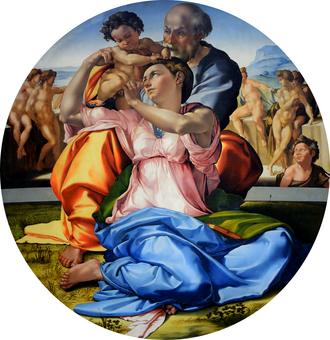 Tondo Doni - Michelangelo (1500s)
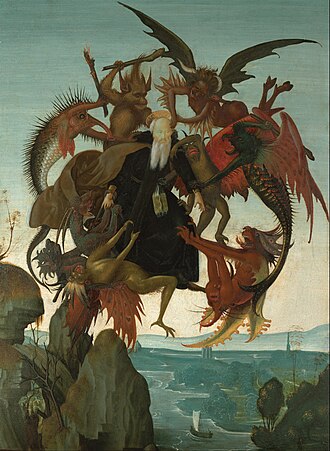 Le Tourment de saint Antoine - Michelangelo (1487)
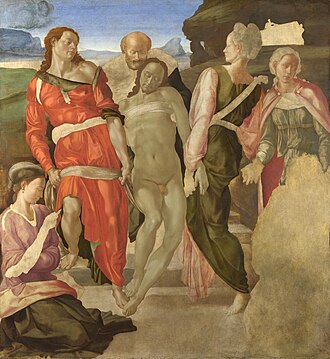 La Mise au tombeau - Michelangelo (1500s)
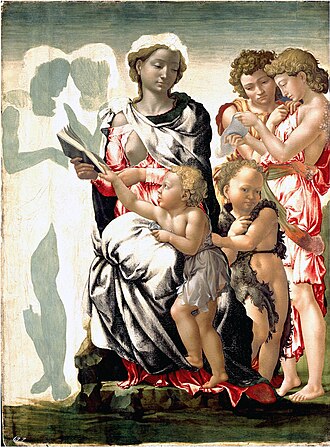 Madone de Manchester - Michelangelo (1494)
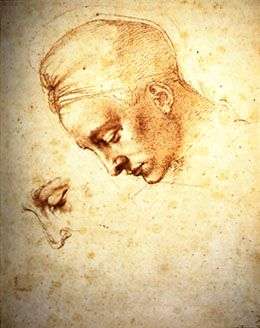 Léda - Michelangelo (1530)
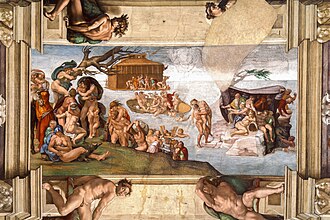 Le Déluge - Michelangelo (1508)
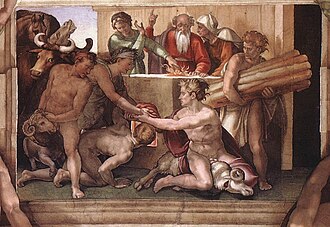 Le Sacrifice de Noé - Michelangelo (1508)
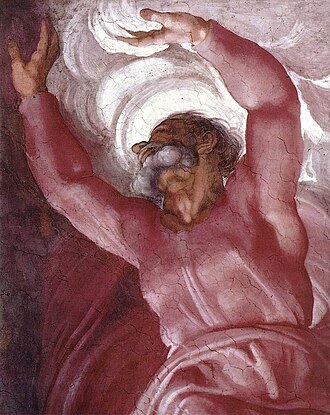 La Séparation de la lumière et des ténèbres - Michelangelo (1512)
Œuvres d'artistes liés
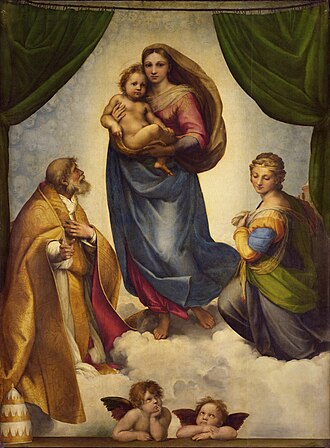 La Madone Sixtine - Raphael (1510s)
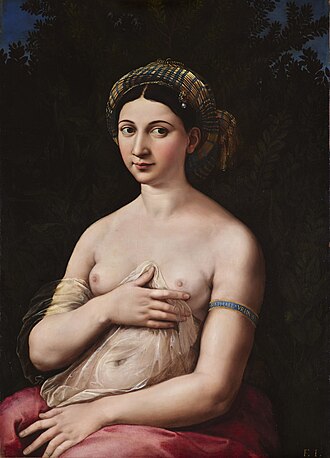 La Fornarina - Raphael
 Vénus d'Urbin - Titian (1538)
 L'Assomption de la Vierge - Titian (1510s)
 La Joconde - Leonardo da Vinci (1503-1519)
 La Dame à l'hermine - Leonardo da Vinci (1490)
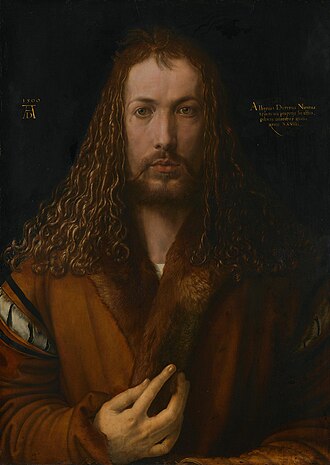 Autoportrait - Albrecht Dürer (1500)
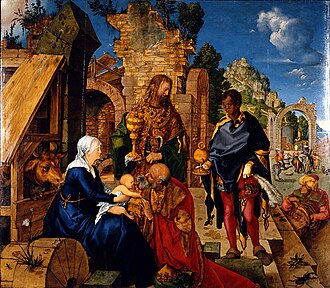 Adoration des mages - Albrecht Dürer (1504)
 La Naissance de Vénus - Sandro Botticelli (c. 1485)
 Le Printemps - Sandro Botticelli (1480s)
 Le Jardin des délices - Hieronymus Bosch
 La Nef des fous - Hieronymus Bosch (1500s)