Portrait of Ohm Friedrich Corinth
Lovis Corinth · 1900
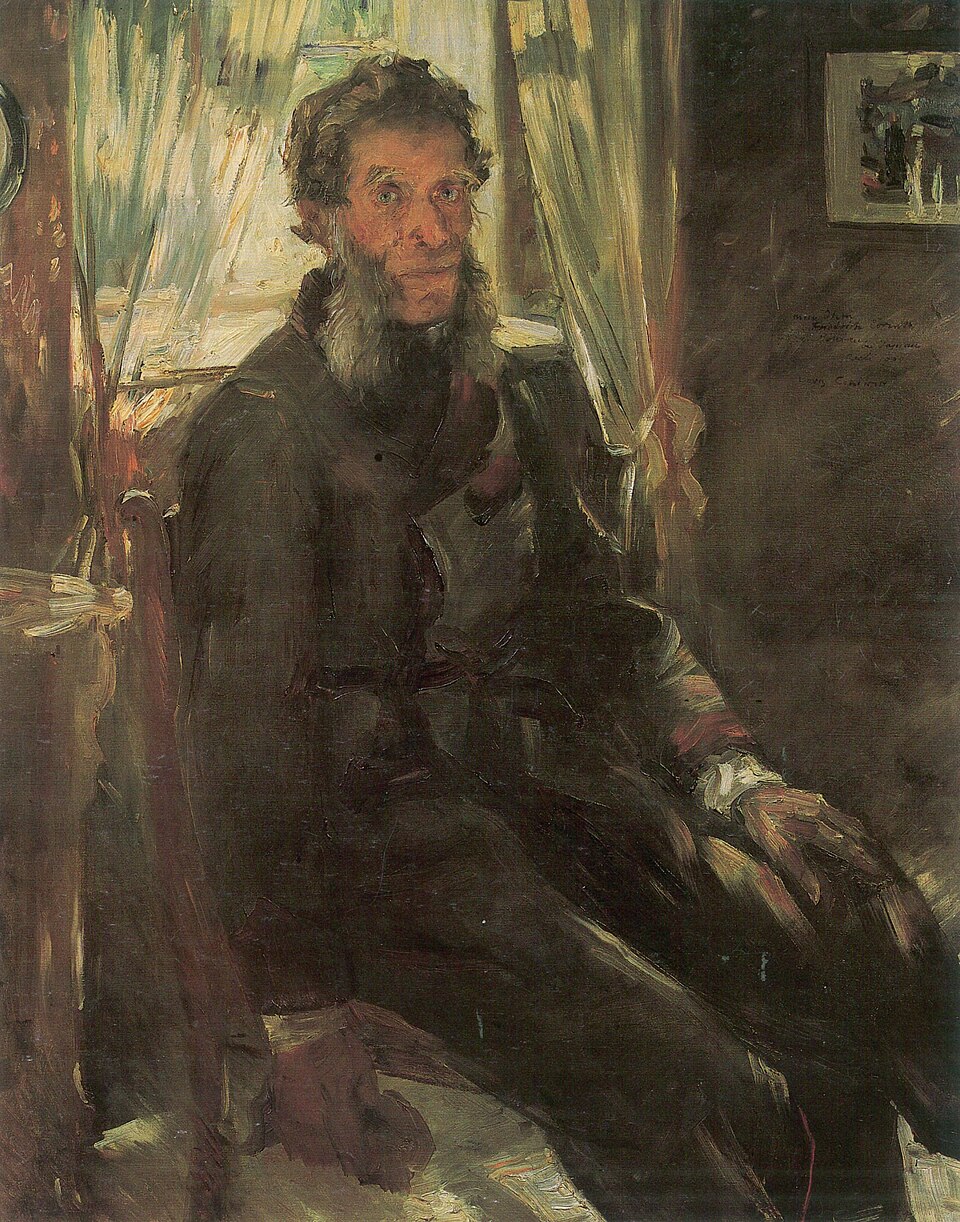
An old farmer sits on a wooden chair with his back to a bright window, light blue eyes wide open, beard thick and grey. Lovis Corinth painted his uncle Friedrich in July 1900, in the farmhouse he had visited since childhood.
The story behind the painting
Lovis Corinth came from a farming family in Tapiau in East Prussia. His uncle, his Ohm, Friedrich Corinth, was also a farmer and lived nearby in Moterau. As a boy Corinth watched the Ohm and his aunt come to visit on high holidays for church and a better meal, the Ohm needing no shave because of his full beard. Corinth had already painted the couple in 1880 in two of his earliest oil sketches, now lost. In July 1900, during a trip around Konigsberg, he visited again and painted this portrait. His life was in upheaval: he would soon move from Munich to Berlin.
What to look for
The canvas measures 98 by 79 cm. Friedrich sits in his living room in a brown robe, against the light of an open window hung with light yellow curtains. The light splits the room into a bright left side and a darker right side, and picks out his face and left hand. His body is vague under the grey cloth. His face turns to us, framed by thick grey hair and strong whiskers that leave the chin free. On the wall hangs a picture of a figure by a lake. Upper right, Corinth wrote: my Ohm, 78 years old, Moterau, July 1900.
Meaning and intent
Art historian Andrea Barnreuther sees the backlight, which leaves the uncle only vaguely visible, as a restraint that respects his dignity and leaves him the mystery of life. In the calm of someone waiting for death, she writes, he faces us with eyes wide open and mouth slightly parted, the look of a person who has lived his life. By showing the room, Corinth places the old man at the margins of a changing society. Sabine Fehlemann sees the painting as a step away from fixed academic composition, letting mood and atmosphere flow in.
Legacy
The portrait stayed with Lovis Corinth and passed through his family to his daughter Wilhelmine Corinth in New York; it may first have belonged to Charlotte Berend-Corinth, who brought it to New York. In 1987 the government of the Federal Republic of Germany bought it, together with the painting Kuhstall, for the newly founded Ostpreussisches Landesmuseum in Luneburg, where it remains. A farmer from a village now called Sabarje still looks out, eyes open, from a museum dedicated to the land he lived in.
Le saviez-vous ?
- Painted in July 1900 at Moterau, East Prussia.
- The sitter is Corinth's uncle Friedrich, aged 78.
- Corinth had first painted him in 1880, in a sketch now lost.
- Bought in 1987 for the Ostpreussisches Landesmuseum in Luneburg.
À propos de l'artiste
Lovis Corinth (1858-1925)
Autres œuvres de Lovis Corinth
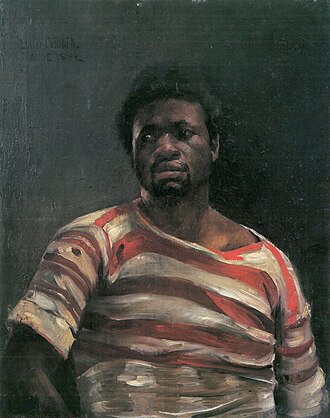 Le Nègre Othello - Lovis Corinth (1884)
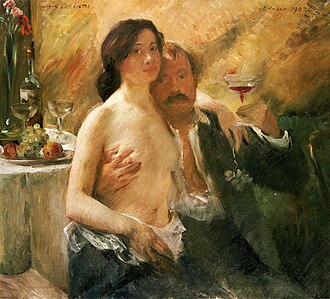 Self portrait with his wife Charlotte Berend-Corinth and a sekt glass - Lovis Corinth (1902)
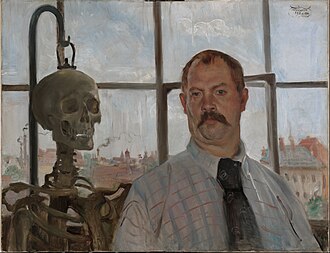 Autoportrait au squelette - Lovis Corinth (1896)
 Innocentia - Lovis Corinth (1890)
 Susanna in the Bath - Lovis Corinth (1890)
 The Red Christ - Lovis Corinth (1922)
 Reading Woman - Lovis Corinth (1911)
 Carmencita - Lovis Corinth (1924)